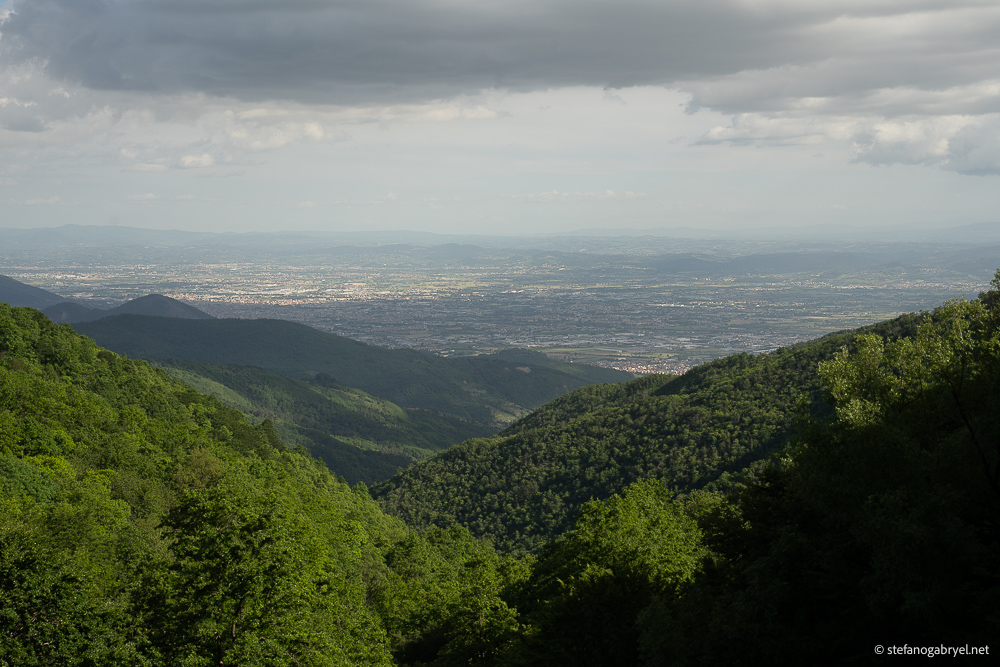
People ask me this often.
And the honest answer—the one that never quite satisfies—is that the whole year works.
Not because I’m being diplomatic or trying to fill my calendar in slow months. But because Tuscany is a genuinely different place in each season, and which version of it appeals to you depends almost entirely on what you’re actually looking for.
Most travel guides will tell you spring or early autumn, avoid the summer crowds, skip winter. That’s not wrong, but it’s not the whole picture either. Let me give you the version shaped by years of guiding, hiking, and photographing this region across all twelve months.
Summer: Crowded, Expensive, and Still Worth It (For the Right Reasons)
I’ll be direct: summer is probably the hardest season to love if you’re here for the landscapes and the quiet.
June through August brings prices that climb steeply across accommodation, restaurants, and experiences. Florence and Siena feel genuinely overwhelmed. The Chianti hills—beautiful as they are—fill with tour buses. And the heat, particularly in July and August, is not gentle Tuscan warmth. It is relentless, dry, and by early afternoon it makes serious hiking impractical.
That said, summer has something the other seasons cannot offer: the coast.
The Tyrrhenian coastline—from the Versilia Riviera down through the Maremma—is at its full, unapologetic best. The water is warm, the beaches are full of life, and if you’re travelling with people who need sand and sea as part of any holiday, summer gives you that.
There’s also an argument for the higher elevations. The Apennines north of Pistoia and the peaks of the Apuan Alps stay cooler than the valleys, and summer is actually when some of the alpine wildflower displays peak. Lago Scaffaiolo, a glacial lake sitting at 1,775 metres in the Tuscan-Emilian Apennines, is reachable on a summer day and feels genuinely alpine—rare in this region.
But if you’re asking me personally: summer is the season I tend to work around rather than toward. The light for photography is harsh from mid-morning, the forest trails are dusty, and Tuscany’s nature experiences are harder to access quietly when everywhere is full.
Autumn: The Season I Wait For All Year
September through November is when Tuscany reveals what it’s actually made of.
The summer crowds thin quickly after the first week of September. Prices begin to come down. The light changes—lower, warmer, the kind of light that makes every landscape photograph itself. The forests start their slow turn from green through ochre and bronze.
And the mushrooms arrive.
For anyone curious about Tuscany’s wilder side, autumn is the season that unlocks it. The forests of the Acquerino reserve and the Appennino Pistoiese come alive with porcini, chanterelles, black trumpets, and dozens of other species across October and November. This is the season for guided mushroom foraging—slower hiking, a different quality of attention, the particular satisfaction of understanding what’s happening beneath the surface of the forest you’re walking through.
Autumn is also honest about its downsides. Rain becomes a real variable from October onward, and the later you push into November, the more you’re negotiating with weather. This isn’t a reason to avoid it—Tuscany’s forests after rain are extraordinary, and a wet October day in the Apennines has its own atmosphere—but it does mean packing appropriately. My guide on layered clothing for mountain hiking is worth reading before any autumn mountain trip.
The rolling hills of the Crete Senesi and the Val d’Orcia also hit their visual peak in autumn, particularly after the harvest when the landscape opens up and the earth colours deepen. If the postcard Tuscany is what you’re after, late September through October is when it earns that postcard.
Spring: The Underrated Season
Spring is the quiet argument for coming when everyone else hasn’t thought of it yet.
April and May bring prices that haven’t yet climbed to summer levels, crowds that are manageable, and weather that is—with some patience—genuinely lovely. The hills green up dramatically after winter. Wildflowers cover the meadows at higher elevations. The days are long enough to justify full-day hikes without needing to be on the trail before sunrise.
The forests in spring carry a particular energy worth experiencing: the first flush of the year. Some mushrooms—chanterelles can begin as early as June at lower elevations, and various spring species appear in April and May—mean the forager’s eye is already useful, even if autumn is the main event.
Photography in spring is exceptional. The light is softer than summer, the landscapes are saturated with green, and there’s a clarity to the air after winter that makes distant ridgelines sharp in a way they never quite are in the heat haze of July. My nature photography hikes are popular in spring for exactly this reason.
The honest caveat: April can still be genuinely cold in the mountains, and rain is a real possibility throughout the season. This is not the Mediterranean spring of postcards. But with a flexible itinerary and the right gear, it’s one of the best times to be here.
Winter: For Those Who Prefer a Place to Themselves
Winter in Tuscany is a different proposition from the other three seasons, and I think it’s consistently underestimated.
From December through February, you have the region largely to yourself.
The famous hilltowns—Volterra, San Gimignano, Montepulciano—feel like actual places people live rather than stages for tourism. Restaurants are quieter. Accommodation prices drop significantly. And the landscape, stripped of summer’s heavy green, shows its bones: the structure of the hills, the bare lines of the cypresses, the grey of the stone.
Hiking in winter requires thought. The mountains can be genuinely challenging and require proper preparation—snowfall is possible at elevation from December onward, and the shorter days compress your window. But the nature reserves at lower elevations remain accessible and beautiful, and there’s a quality of stillness in a winter forest that no other season quite replicates. I’ve written about winter tours combining hiking and photography for those who want to make the cold months work in their favour.
The real risk is simply the weather. Winter rain in Tuscany can be persistent, and a grey week can feel limiting if you’ve built an itinerary around outdoor activity. This is the season that rewards flexibility more than any other.
The Honest Summary
Every season has a genuine case to be made for it. The question is which trade-offs you can live with.
Summer gives you the coast, the social energy, and the heat—but you’ll pay for it in price and crowds, and the mountains are better saved for morning hours. Autumn is the season I wait for: the light, the forests, the mushroom season, the sense that Tuscany has exhaled after the tourist summer. Spring is underrated and often overlooked—good value, beautiful landscapes, and the first hints of what summer will become. Winter is for the genuinely curious, willing to accept rain in exchange for having the place to themselves.
What I’d tell anyone asking: don’t let the standard advice push you into the consensus answer. The busiest times are busy because they’re good—but Tuscany in the off-season has a quality that the peak-season version rarely matches.
Come in autumn if you can. Come in spring if autumn isn’t possible. Come in winter if you want to see a place rather than a tourist attraction.
And if you do come in summer—go to the mountains in the morning, and the beach in the afternoon.
Traveling by train?
No car? No problem. I’ve mapped out the best hikes accessible by train from Lucca, Pisa, and Florence—so you can experience Tuscany’s mountains without renting a vehicle.
Read: Car-Free Hikes in Tuscany: Train-Accessible Routes Near Lucca & Pisa
Plan Your Tuscany Trip
Interested in exploring Tuscany beyond the obvious itinerary? Book a consultation to discuss guided experiences tailored to your season, interests, and pace.

or head to the contact page
Explore Hidden Tuscany
Guided hiking experiences combining expert trail knowledge, professional photography, and wilderness mindfulness.
Latest posts
 4 March 2026
Galium Aparine: Cleavers in Tuscan Hedgerows
4 March 2026
Galium Aparine: Cleavers in Tuscan Hedgerows 3 March 2026
Umbilicus Rupestris: Wall Pennywort in Tuscany
3 March 2026
Umbilicus Rupestris: Wall Pennywort in Tuscany 3 March 2026
Laurus Nobilis: Bay Laurel in Tuscan Landscapes
3 March 2026
Laurus Nobilis: Bay Laurel in Tuscan Landscapes 2 March 2026
Guided Tours for Exploring Marble Quarries in Apuan Alps
2 March 2026
Guided Tours for Exploring Marble Quarries in Apuan Alps 26 February 2026
Photographing Nottolini Aqueduct: Light & Geometry
26 February 2026
Photographing Nottolini Aqueduct: Light & Geometry