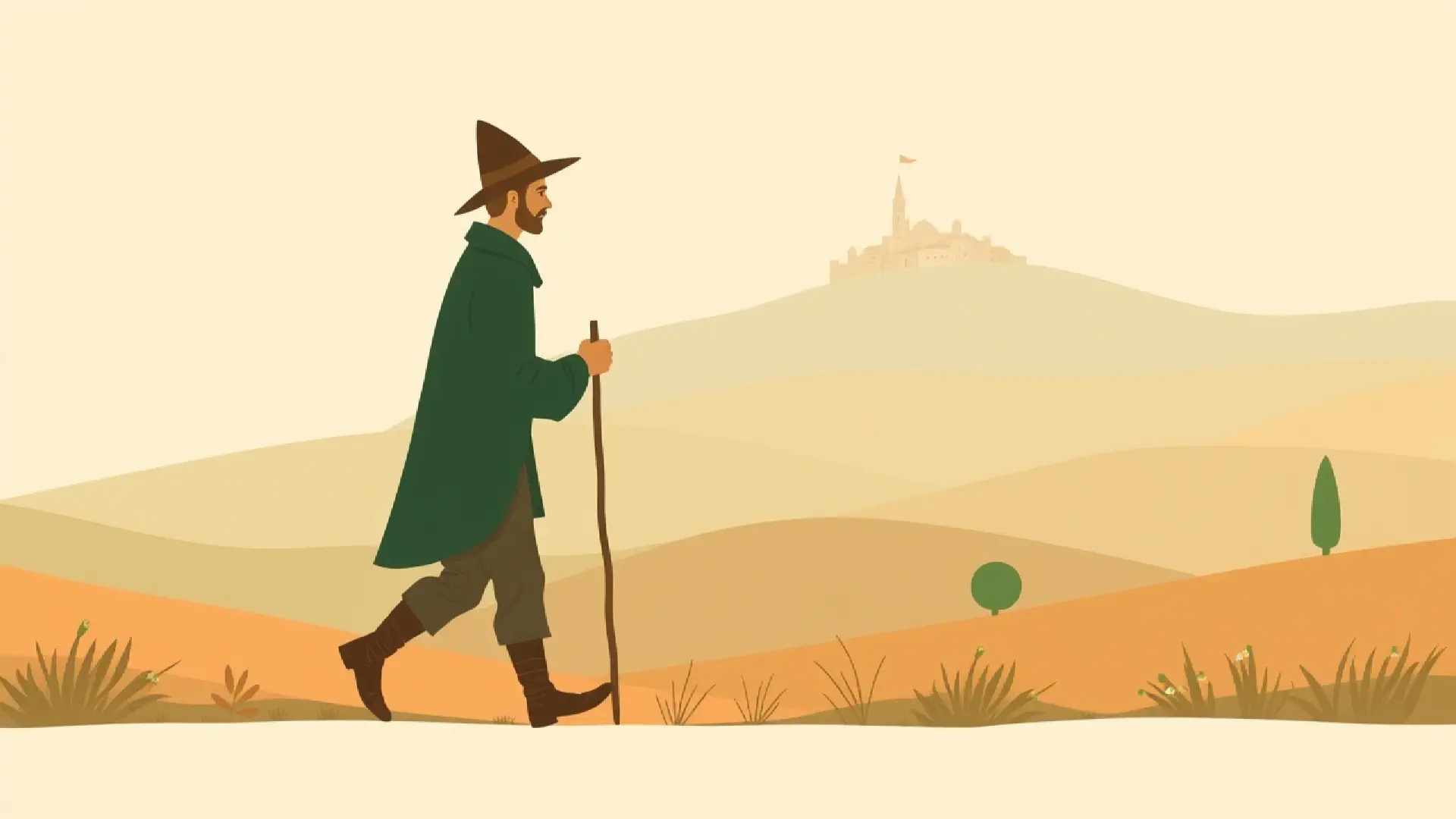
Most people meet the Via Francigena by accident. They are walking the walls of Lucca, or climbing toward a hilltop town, when a worn signpost points the way. It marks an old pilgrim road that has carried travellers to Rome for over a thousand years.
The best of that road runs through Tuscany. The Via Francigena in Tuscany links Lucca, San Gimignano and Siena, among the finest walking in Italy.
You do not need to walk the whole route to feel it. A single day on the right stretch is enough.
What the Via Francigena Actually Is
The Via Francigena is the medieval pilgrim road from Canterbury to Rome. It is not one trail. It is a corridor of old roads, farm tracks and quiet lanes, now waymarked end to end.
We know the route in such detail thanks to one traveller. In 990, Sigeric, Archbishop of Canterbury, walked home from Rome and recorded every overnight stop along the way.
Tuscany holds the stretch that pilgrims and walkers love most. It is also the easiest to reach and the easiest to taste in a single day.
The Tuscan Stretch, Town by Town
The route enters Tuscany from the north, crossing the Apennines down into the Lunigiana near Pontremoli. From there it works its way inland through a chain of towns that need no introduction.
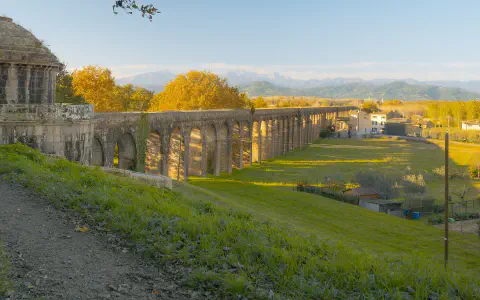
- Lucca. A walled city and a major waypoint, and a fine place to start. These are my home hills. I have gathered the best ways out of the city in my guide to day trips from Lucca. I also explain how a private guided day here works. Just outside the walls, the neoclassical Nottolini aqueduct makes an easy, beautiful walk in its own right.
- Altopascio and San Miniato. Old hospice towns on the ridge, with long views over the Arno valley.
- San Gimignano. Its medieval towers rise from the vineyards long before you arrive.
- Monteriggioni. A perfect walled circle on a hill, unchanged for centuries.
- Siena. The great arrival, its shell-shaped square the reward at the end of the Tuscan stages.
Beyond Siena the road runs on through the Val d’Orcia toward Lazio. But the section above is the heart of it.
The Best Day Walks
You do not have to be a pilgrim to walk here. The most rewarding parts make excellent day walks on their own.
- The approach to San Gimignano, where the towers grow on the horizon with every step.
- The walls of Monteriggioni, a short, scenic stage that ends inside a medieval ring.
- The entry into Siena, the classic final approach to the city.
- The Lucca to Siena section as a whole, a multi-day walk that most people split into stages.
Pick one stage that fits your time and fitness. Walk it well, and you will understand the whole road better than someone who rushed all of it.
Looking for private hiking in Tuscany?
Browse my full collection of small-group, fully private hikes across the region.
Walking It Well
A few honest pointers from someone who walks these hills year-round:
- Go in spring or autumn. Summer in the Tuscan hills is hot and exposed, and the light is far better in the shoulder seasons.
- Don’t try to do everything. A single good stage beats a forced march.
- Carry water and start early. Shade is scarce on the ridges between towns.
I do not guide the multi-week route end to end. What I do is walk these same hills as day hikes. I also help independent walkers plan their own stages when they want local eyes on the map.
A Quieter Cousin
If the Francigena feels busy in high season, Tuscany hides a gentler pilgrimage. The Cammino di San Jacopo runs from Florence to Pisa, and almost no one walks it.
It crosses much of the same landscape with a fraction of the foot traffic. For a first taste of pilgrim walking, it is the calmer choice.
Tuscany also marks the start of the Way of St Francis, the forested pilgrim road to Assisi.
The Bigger Picture
Walking an old road changes how you see a place. At pilgrim pace, Tuscany stops being a list of towns and becomes a single, connected landscape.
That slow reading of the land is the whole point of how I guide. For the broader picture, start with my pillar guide to hiking in Tuscany.
Frequently asked questions
Walk Tuscany at Pilgrim Pace
I guide day hikes across the same hills the Via Francigena crosses, and help independent walkers plan their stages. Book a free consultation and we’ll shape a day that fits you.