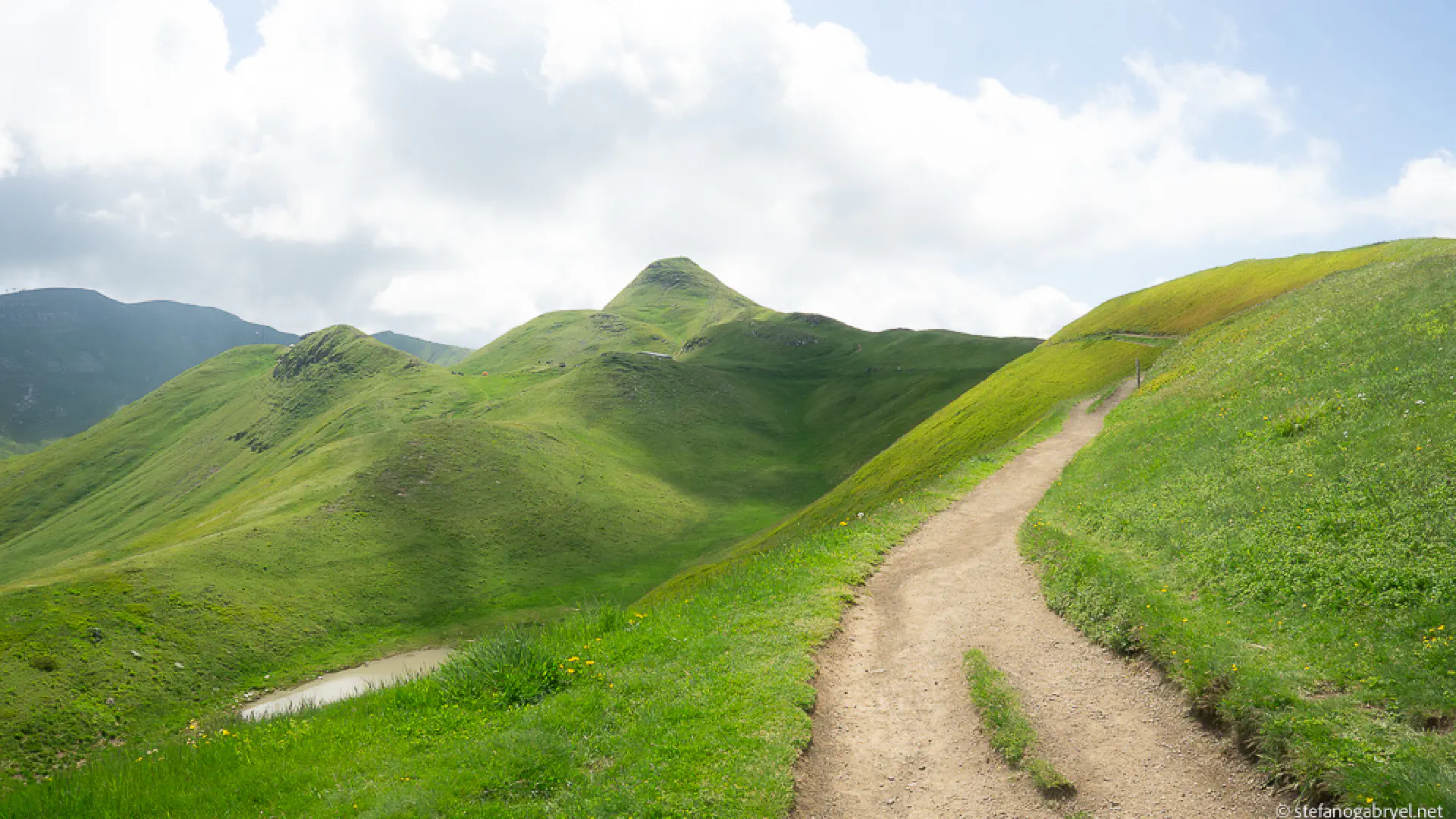
Most visitors picture Tuscany as vineyards and gentle hills.
They miss the high country entirely.
Along the northern border runs the Apennine ridge—the Appennino Tosco-Emiliano—where the land climbs past the tree line and turns genuinely mountainous. This is where I spent yesterday, and it is the Tuscany almost no guidebook shows you.
Hiking in the Apennines is a different experience from the rolling south. This high stretch—the Tuscan Apennines—has thinner air. The forest gives way to open crest. And within a single day, you walk from shaded beech wood to a wind-scoured ridge with a glacial lake on the far side.
Here is how that day actually unfolds.
First Light at the Trailhead
I started early, froma parklot close to Cutigliano.
The first hour is the quiet one. The car park empties of sound the moment you step onto the path, and the forest takes over.
Early light in the Apennines is worth the alarm. It comes in low and sideways through the trees, and the temperature still holds the night’s cool.
At this height the woods are mostly beech. In June the canopy is fully out—dense, green, and shaded—so the climb begins gently, under cover, before the mountain opens up.
Up Through the Beech
The trail gains height steadily rather than steeply.
You feel the forest change as you rise. The beech thins. The undergrowth shortens. And then, almost suddenly, the trees stop and the sky takes over.
This is the threshold that makes the Apennines special:
- Below the tree line: shade, birdsong, soft ground
- At the tree line: the first long views back over Tuscany
- Above it: open grass, wind, and exposed rock
The climb was rich in mountain wild flowers. These small encounters are the reason I walk slowly here. The mountain rewards the patient eye.
The Ridge
Then comes the Sentiero di Cresta—the crest path.
This is the spine of the range, and walking it is the heart of the day. On one side the land falls toward Tuscany. On the other it drops toward Emilia-Romagna.
You are walking the exact seam where two regions meet. The same wind crosses both. The same beech forests climb both flanks. The boundary is bureaucratic; the mountain does not care.
Wind is the constant up here. The ridge is famously exposed, so even on a warm day I carry layers. The temperature on the crest rarely matches the valley you left behind.
The morning told this whole stretch in sunlight—trailhead, beech wood, and the open path out to the refuge.
All gallery images are original photographs taken by me.
Lunch at the Refuge
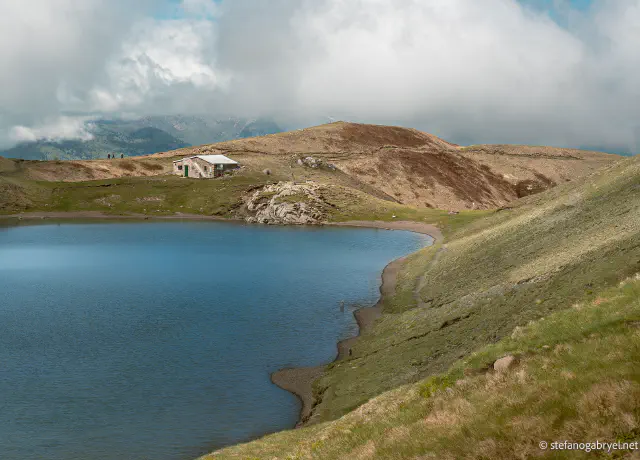
The ridge leads to the day’s destination: a high mountain lake in a glacial basin, with a stone refuge beside it.
The lake is Lago Scaffaiolo, resting at 1,775 meters in a cirque older than any city below it. The refuge is the historic Rifugio Duca degli Abruzzi, perched right at the water’s edge.
I stopped here to eat Tagliatelle with Porcini Mushroom. There is a particular pleasure in a hot plate of mountain food after a morning of climbing, with the wind pushing at the windows.
All gallery images are original photographs taken by me.
If you want the full route, season notes, and how I run this as a private day, I keep a dedicated page for it:
Scaffaiolo Lake Private Tour: High Ridges & Refuge Life
Book a private guided hike to Scaffaiolo Lake. 360° Apennine views & Rifugio visit. Expert tours from Lucca, Pistoia & Pisa. Reserve your …
View this hikeThe Walk Down
Descending is its own chapter.
The legs work differently. The light has shifted. And the views you climbed past in the morning now open ahead of you, all the way down to the Tuscan plain.
Going down well is a skill of its own. I keep the pace measured, watch the footing on the looser ground, and let the afternoon light do its work on the forest.
By mid-afternoon I was back under the beech, the ridge already a memory above me.
The mountain did not stay the same all day. By the time I turned downhill, the clear morning ridge had vanished into cloud. The same path, a different world. That shift is normal here, and it is part of the pleasure: you can get two mountains in one day.
All gallery images are original photographs taken by me.
What a Guided Day Reads That a Map Doesn’t
A map shows you distance and elevation. It does not show you the mountain’s mood.
Here is what I watch on a day like this:
- The wind on the crest—how strong, from where, and how it will change by afternoon
- The cloud—the Apennines can sit clear below and fog the ridge within an hour
- The ground—where rain has left mud, where ice can linger near the top into late spring
- The forest—what the beech, the soil, and the season are quietly telling you
None of this is on a signpost. It is the difference between a day that simply happens to you and one that is read for you as it goes.
Why the Apennines Reward Slowness
The high Apennines are not a checklist. They are a place to move through deliberately.
This is medium hiking—no real exposure, no technical difficulty—so the effort goes into noticing, not surviving. That suits the way I guide: slow, present, and attentive to what most people walk straight past.
If you are coming from the other side of the range, I have also written about reaching the same ridge from the Bologna side. And if you are still choosing when to come, my notes on the best time for hiking in Tuscany apply to this high country too—the ridge is at its finest from late spring through autumn.
A single day here gives you a Tuscany that vineyards never will.
Walk the Tuscan Apennines With Me
Want a real mountain day on the Apennine ridge—trailhead to lake, read for you as it unfolds? Book a consultation call and let’s plan your day in the high country.