
I'm Stefano, and I guide people through the Tuscany most tourists never see. Want to hike in Tuscany with me?
Last updated 8 October 2026
Of all the small creatures people ask me about, the tick is the one that deserves the attention.
Not because it is dangerous in the way people fear. Because it is the only one on this list you are genuinely likely to meet, and the only one where what you do in the first ten minutes actually matters.
Wolves, boar, vipers, scorpions: interesting, memorable, statistically irrelevant. Ticks: unremarkable, and worth five minutes of your time.
Here is what is actually true on Tuscan trails.
Walking here without a guide? An Expert Brief is my written read on the ground you’ll actually cover: which terrain, which season, and the small practical things like this one.
Are there ticks in Tuscany?
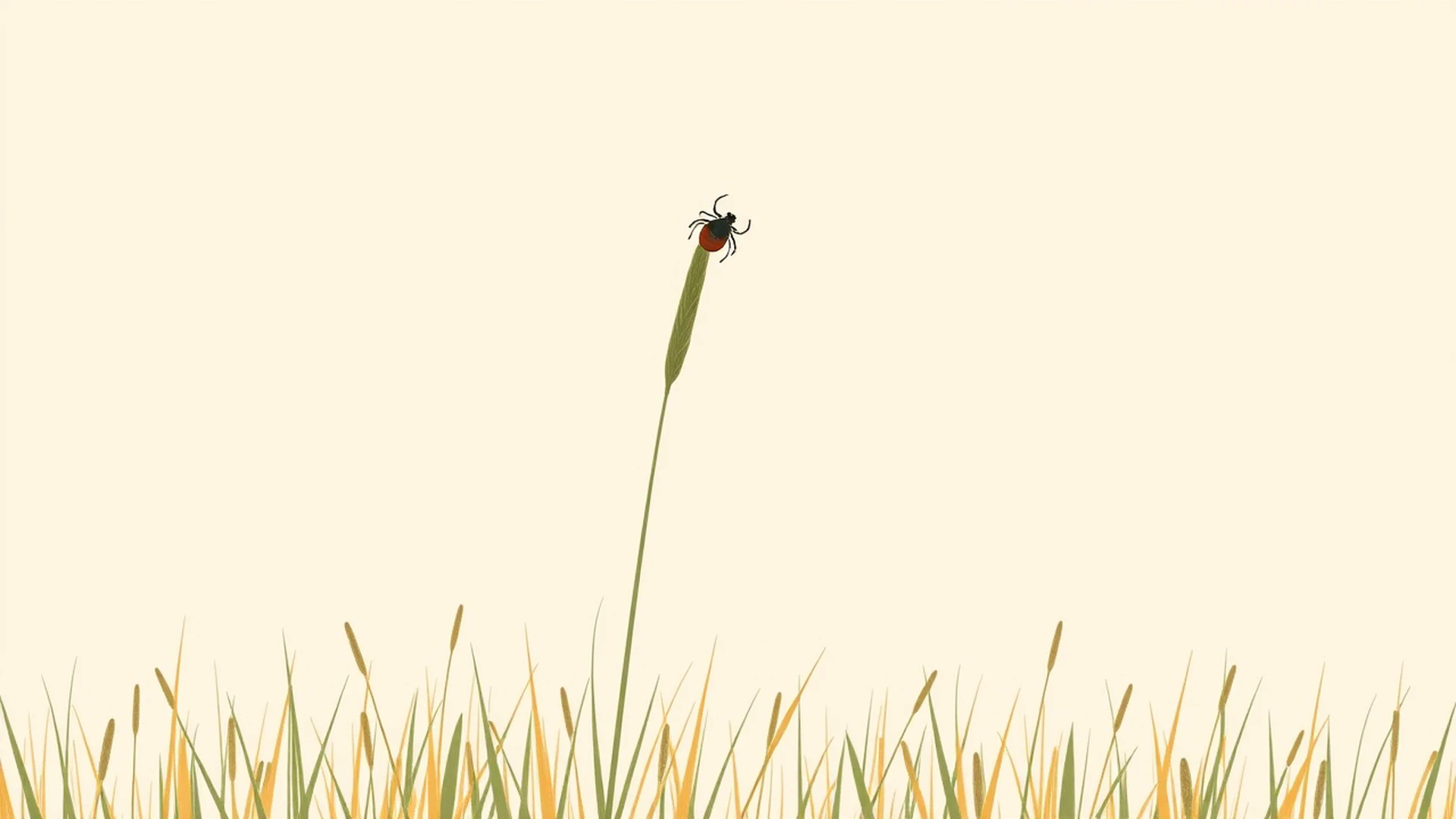
Yes. The species that matters is the castor bean tick, Ixodes ricinus, the same one found across most of Europe. If you have hiked in Bavaria, Austria or Switzerland, you already know it.
They are not evenly spread. Ticks need humidity, so they concentrate in predictable places:
- Tall grass and the edges of meadows, especially where grass meets woodland
- Bracken and undergrowth along the sides of a path
- Damp broadleaf woodland: oak, chestnut, beech
- Anywhere livestock and deer pass regularly, because that is what they feed on
And where they are largely absent:
- Open rock and high, exposed ridges
- Dry, exposed maquis in high summer
- The middle of a well-trodden path, which is why staying on the trail is the simplest protection there is
The season runs roughly March to November, with the strongest activity in late spring and a second rise in early autumn. A mild winter can produce active ticks in February, and I have picked one off in December after a warm spell.
The question German and Austrian hikers actually ask
Almost every guest from a German-speaking country asks about TBE: tick-borne encephalitis, Frühsommer-Meningoenzephalitis, FSME. It is a reasonable question, because in parts of Germany and Austria it is a genuine concern and vaccination is routine.
Tuscany is not a known TBE risk area. In Italy’s surveillance data the documented TBE foci sit in the north-east, in the Triveneto: Friuli Venezia Giulia, Veneto and Trentino-Alto Adige. Tuscany is not among them. Whether to get vaccinated is a question for your own doctor, especially if your trip also takes you to the north-east.
You do not have to take my word for it. The endemic area is described as “historically restricted” to those north-eastern regions in Riccò 2021 in Acta Biomedica, and the individual foci were mapped by a 2020 study in Emerging Microbes & Infections. The Europe-wide picture is kept by the ECDC.
One caveat worth stating plainly: TBE has been expanding in Europe, both northward and to higher altitudes. What is true now was not true everywhere thirty years ago, and may not hold in another thirty. If you are reading this years after I wrote it, check again before you travel.
Lyme borreliosis is the one that exists in Tuscany, and it is uncommon. Italy as a whole reports far lower incidence than Germany, Austria or Scandinavia, and within Italy most reported cases come from the north. That is not a reason to be careless. It is a reason to be proportionate.
Removing a tick: the only part worth memorising
Get it out early. Transmission risk rises the longer a tick stays attached, and for Lyme the meaningful window is measured in many hours, not minutes. Removing it promptly lowers the risk, though it doesn’t take it to zero, so keep an eye on the spot in the weeks after.
Do this:
- Fine-tipped tweezers. Grip as close to the skin as you can: the mouthparts, not the body. A tick card or hook works too; then follow the instructions that come with it.
- With tweezers, pull steadily, straight out. No twisting, no jerking. Slow and firm.
- Clean the spot with soap and water or disinfectant, and wash your hands.
- Note the date. Take a photo of the bite. If anything develops later, a doctor will want that.
Do not do this, however often you have heard it:
- No oil, no butter, no glue, no nail polish. Suffocating a tick makes it stay longer, not leave.
- No burning it with a match or a lighter.
- No squeezing the body. That is the one action that genuinely raises the risk.
If the mouthparts break off and stay in, it is not an emergency. Treat it like a splinter and let a pharmacist or doctor look if it does not settle.
When to see a doctor
See someone if:
- A red patch spreads out from the bite, often but not always in a ring, the classic erythema migrans. The ECDC puts its start at 3 to 30 days after the bite. It is often not itchy or painful, which is exactly why it gets ignored. Most people who catch Lyme get the ring. Some never do.
- You get flu-like symptoms in the days or weeks after a bite: fever, deep fatigue, headache, aching joints or muscles. That counts with or without a rash. Tell the doctor when and where the tick bit you.
- The bite site becomes hot, swollen and increasingly sore, which suggests ordinary infection rather than anything exotic.
Italian pharmacies (farmacia) are excellent and genuinely helpful for this, and every town has one. The European emergency number is 112. Preventive antibiotics after a routine tick bite are not standard practice here, so expect a doctor to tell you to watch and wait. That is normal practice here, not dismissiveness.
I’m a hiking guide, not a doctor. This page is general information, the same things I tell guests on the trail, and it isn’t medical advice. Please don’t let it be your only source. After a bite, or if you’re in any doubt, ask a doctor or a pharmacist.
What I actually do, and what I ask guests to do
None of this is dramatic:
- Long trousers when we cross tall grass. Tucking them into socks looks silly and works.
- Light-coloured fabric, purely because you see a tick on it before it finds skin.
- Repellent on ankles and lower legs if we will be in meadow or bracken. That is where they wait. They do not drop out of trees.
- A check at the end of the day. Behind the knees, groin, waistband, armpits, hairline, and behind the ears on children. This is the habit that matters most.
- Stay on the path. The simplest thing on this list, and it is free.
On the trails I guide most often, the risk splits neatly. The high Apennine ridges (Scaffaiolo, Monte Gennaio, Croce Arcana) are open, breezy and largely tick-free. The lower woodland walks, the meadow edges and the old chestnut terraces are where I actually pay attention, especially in May and June. On the Acquerino beech forest paths I do a check afterwards as a matter of routine, not because anything has gone wrong.
Ticks and dogs
If you are walking with a dog, the calculation changes: dogs pick up far more ticks than people, and they bring them indoors. Talk to your vet about a preventive treatment before you travel. For where dogs can actually come along, I have written a guide to dog-friendly hiking in Tuscany.
The honest summary
A tick bite in Tuscany is a minor event handled with tweezers and a note in your phone. TBE is not a Tuscan problem. Lyme exists, is uncommon, and is very treatable when caught early. Catching it early takes a few weeks of paying attention. The spreading red ring is the usual sign, but it doesn’t show up in everyone, so a fever or unexplained tiredness after a bite is reason enough to see a doctor and mention the tick.
Compared with the things that genuinely end walks here (heat, dehydration, a bad ankle on loose limestone, an underestimated descent), ticks are far down the list. They are simply the item on that list where a small, boring habit removes almost all of the risk.
For the rest of the picture, including the animal that actually causes trouble on Tuscan trails, see my guide to dangerous animals in Tuscany.
Frequently asked questions
Walking here and want the local read?
I live and guide in these hills. If you’d rather someone who knows the ground picked the route, read the season and handled the small stuff, that’s what a private day with me is for.