There is a version of Tuscany that exists almost entirely for tourists.
Rolling hills, cypress trees, terracotta rooftops, wine estates. It is beautiful. It is also, by now, extraordinarily well-documented.
Every travel magazine has run this story. Every influencer has photographed these views.
If that is what you are looking for, the infrastructure to deliver it is flawless.
But if you have already done it — or if you arrived in Tuscany and felt, quietly, that something was missing — it is worth knowing that a completely different region exists alongside the postcard version.
One with mountain ranges that most tourists never visit. Ancient forests. High glacial lakes. Neoclassical engineering hidden in the countryside. And the kind of silence that is genuinely difficult to find in crowded Tuscany.
This is the Tuscany I work in.
The Apennines: Tuscany’s Forgotten Mountain Range
Ask the average visitor to name a Tuscan mountain and they will struggle.
The Apennines run the entire length of Italy’s spine, and a substantial section of the range forms the northern and eastern boundary of Tuscany. Yet the tourist infrastructure almost entirely ignores them.
This creates an unusual situation.
These are genuine mountains — peaks above 1,800 metres, high ridges, exposed cirques, glacial lakes, beech forests that close completely overhead — within an hour or two of Florence, Lucca, Pistoia, and Prato.
And they are almost empty.
Not empty in the sense of lacking infrastructure — there are rifugi, marked trails, and local guides with decades of territorial knowledge. Empty in the sense that you can walk for an entire day and encounter almost no one.
The landscape has a quality that surprises visitors who are expecting the gentle Tuscan hills they know from photographs.
Parts of the high Apennine ridge, on an overcast morning in late summer or early autumn, genuinely resemble the Scottish Highlands. Open moorland, dark water, low cloud moving across the ridge, a quality of light that is entirely different from the Chianti valley below.
Tuscany contains this, and almost no one knows.

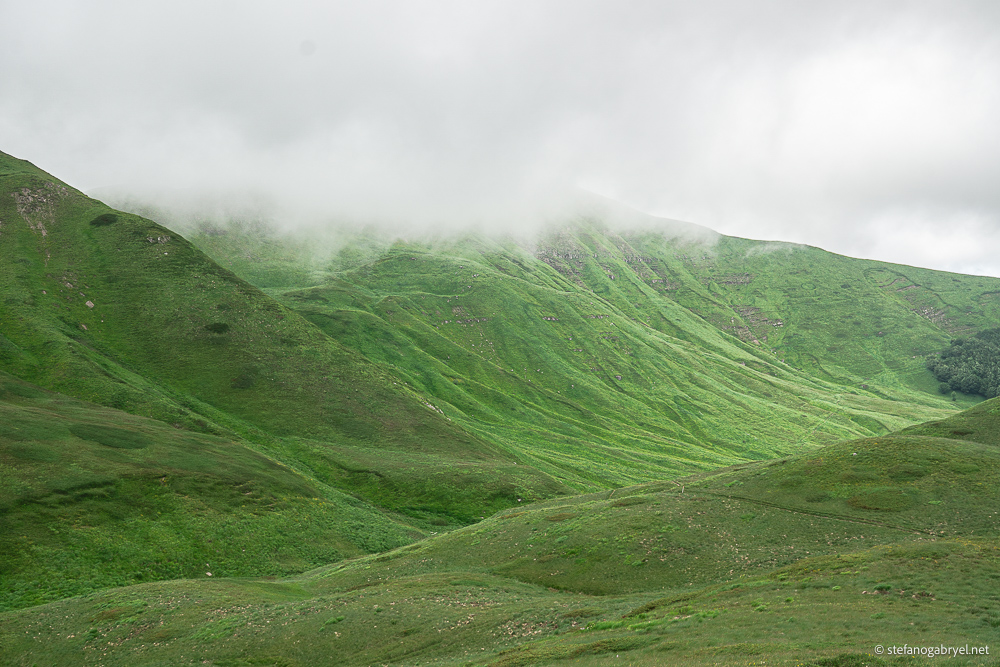
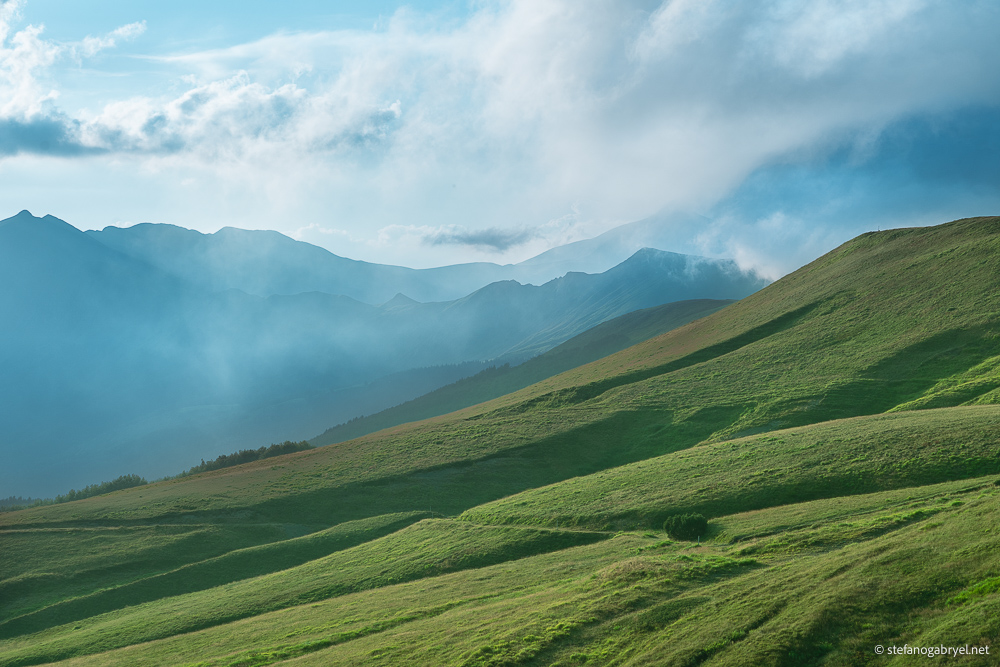
All gallery images are original photographs taken by me.
Lago Nero and the High Pistoiese Apennines
The most direct route into this landscape is through the Appennino Pistoiese — the section of the Apennines that rises above the province of Pistoia.
Lago Nero — the Black Lake — is the destination that most clearly demonstrates what these mountains are.
A glacial basin at high elevation, surrounded by steep slopes and rocky outcrops. The water’s depth and stillness give it a near-black appearance in certain light conditions. The surrounding terrain is sparse, exposed, and dramatic in a way that feels completely foreign to anyone whose Tuscany has been limited to hill towns and vineyards.
The approach passes through successive ecological zones — valley forest giving way to open high grassland, the vegetation becoming increasingly sparse as you gain elevation — until the lake appears below the ridge, apparently out of nowhere.
Above it, continuing along the ridge, lies Lago Piatto — the flat lake — occupying a shallower, broader basin that contrasts sharply with its neighbour.
From the ridge between them, on a clear day, the view extends north into Emilia-Romagna and south across the whole of Tuscany.
This is the region I find myself returning to consistently, both as a guide and as a photographer. The light at this elevation has a quality and a direction that the valley simply cannot replicate.
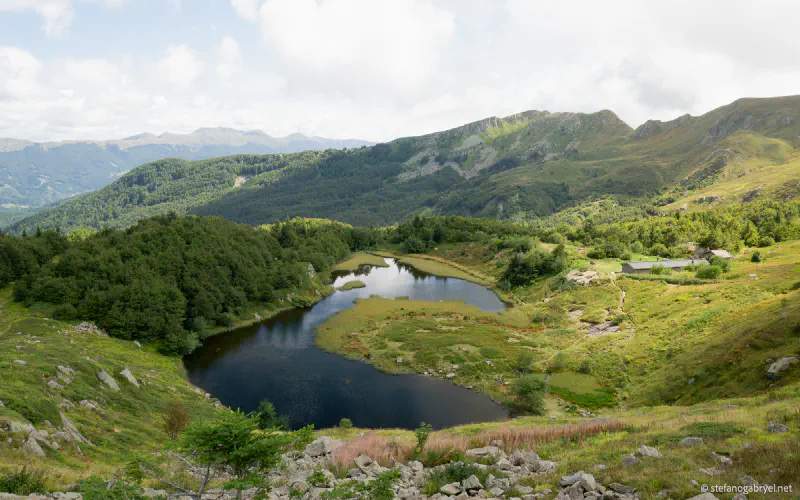
Book a private guided hike to Lago Nero. Professional trekking tours from Pistoia, Lucca & Florence. Discover Tuscany's glacial lakes. Reserve now!
The Apuan Alps: Where Marble Meets Mountain
Northwest of the Apennines, separated from them by the Garfagnana valley, the Alpi Apuane rise to nearly 2,000 metres above the Versilia coast.
These are not limestone mountains. They are marble.
The same stone that Michelangelo selected for the David. The same material that has been extracted from these hillsides since Roman times. The Pantheon in Rome was built with Apuan marble. So was Pisa’s cathedral. So, more recently, is much of the world’s architectural stone.
The visual effect of this geology is unlike anything else in Italy. White and grey veins cut through green forested slopes. The peaks above the treeline are pale where the rock is exposed. In afternoon light, certain faces of the mountains appear to glow.
The quarries are still active — massive industrial operations that have reshaped significant sections of the range over centuries. Some of the largest can be seen from the coast below. Others are hidden in high valleys, accessible only by unpaved mountain roads that the marble trucks share with hikers on weekends.
One of these roads — the Marmifera del Corchia — has become one of my preferred routes in the Apuan Alps precisely because it makes this industrial and natural history simultaneously visible.
You walk where the marble moves. The scale of extraction becomes comprehensible in a way that looking at a finished cathedral floor never quite achieves.
The surrounding mountain scenery is exceptional: views across neighbouring peaks, the sea visible on clear days to the west, and the strange, bleached quality of light that white stone produces.
Full details on the Apuan Alps marble hike are here.
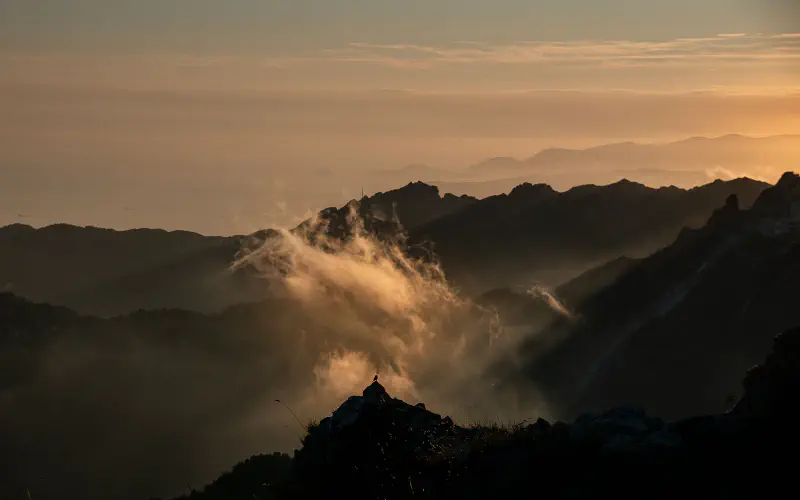
Hike a marble quarry road into the heart of the Apuan Alps, near Lucca, Pisa, Viareggio. A private guided adventure on the Marmifera del Corchia.
Ancient Engineering in the Countryside: The Nottolini Aqueduct
Not all of Tuscany’s hidden experiences require mountains.
Some of the most rewarding walks in the region follow routes that are flat, accessible, and within easy reach of major cities — but invisible to most visitors because they are not in any standard guidebook.
The Acquedotto Nottolini is the clearest example.
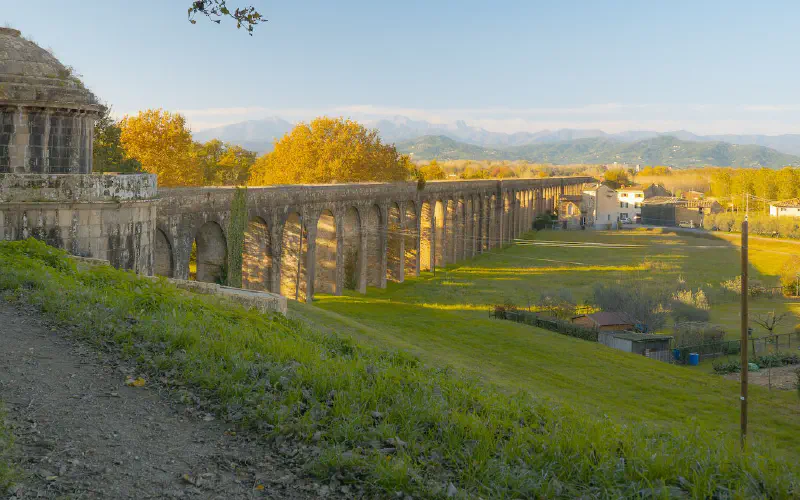
Lorenzo Nottolini designed and built this aqueduct in the 1820s to carry water from springs in the hills above Lucca into the city. What he constructed was not merely functional infrastructure.
It is a procession of neoclassical arches, nearly three kilometres long, marching across the Lucca plain into open countryside.
The scale is difficult to grasp from photographs. Walking alongside it — beneath arches that rise well above head height, the geometry repeating into the distance — is a different experience from viewing it from a distance.
The walk follows the aqueduct from the edge of Lucca’s historic centre out into farmland, olive groves, and eventually the spring sources themselves.
Elevation gain is essentially zero. The pace is contemplative rather than athletic. And the light on the stone — particularly in morning or late afternoon — produces the kind of composed, geometric photography that this structure seems to have been built to invite.
It is reachable by train from Pescia, Montecatini, Pistoia, and Florence.
It is, in my view, one of the most underrated walks in all of Tuscany.
No car required: Walk the 400 arches of Nottolini Aqueduct from Lucca. Guided tour accessible by train. Discover 'Parole d'Oro'. Book now!
Forest Foraging: Mushrooms and the Language of the Forest
Tuscany’s forests are exceptional, and autumn turns them into something else entirely.
The combination of Apennine elevation, mixed broadleaf and conifer woodland, and the region’s rainfall patterns creates conditions for one of Europe’s most productive wild mushroom environments.
Porcini. Chanterelles. Black trumpets. Caesar’s mushroom. Parasol mushrooms. The seasonal sequence runs from late summer through early winter, each species appearing according to its own logic of temperature, moisture, and mycelial readiness.
Finding them requires reading the forest as a system. Soil indicators like bracken fern signal acidity. Tree species tell you which mycorrhizal partners might be nearby. The angle of a slope, the depth of the leaf litter, the timing of recent rainfall — all of it is information.
This is a form of landscape literacy that takes years to develop independently, and a day to begin understanding with an experienced guide.
The complete guide to mushroom foraging in Tuscany is here.
Where to Start
The easiest entry point depends on where you are based and how much time you have.
From Lucca or Pescia: The Nottolini Aqueduct walk requires no car and almost no fitness. It is an afternoon that most visitors to the area never take.
From Pistoia or Montecatini: The Acquerino nature reserve is thirty minutes by car and offers easy-to-moderate forest hiking suitable for most fitness levels. Full details on Acquerino are here.
For the high Apennines: Lago Nero and the Pistoiese ridgeline require a full day, reasonable fitness, and ideally an autumn or early summer visit for the best conditions.
For the Apuan Alps: The marble quarry hike runs weekends only and requires a car, but offers a completely distinctive landscape unlike anything else in the region.
All of these are guidable experiences — meaning the difference between arriving somewhere beautiful and actually understanding what you are looking at is, in most cases, the person walking next to you.
Tuscany’s famous landscapes have been explained, photographed, and packaged extensively.
The landscapes in this article mostly haven’t.
That gap is exactly where the more interesting experiences tend to live.
Find the Tuscany Most Visitors Never See
Whether you’re interested in high mountain terrain, forest foraging, or architectural history hidden in the countryside — book a consultation to find the right guided experience for your time in Tuscany.

or head to the contact page
Explore Hidden Tuscany
Guided hiking experiences combining expert trail knowledge, professional photography, and wilderness mindfulness.