
I'm Stefano, and I guide people through the Tuscany most tourists never see. Want to hike in Tuscany with me?
Last updated 17 October 2026
Tuscany in summer means heat. On 5 August 2026 Florence reached 39.7°C, and the city hit 35°C on 47 of the 92 days between June and August. That same afternoon, up at Lago Scaffaiolo, the high was 25.8°C.
If you’re asking whether Tuscany is too hot in summer, my answer is yes in the cities, and no once you climb above about 1,000 metres. From Pistoia, the nearest cool forest is a 35-minute drive away. You either walk into deep forest shade, or you go up to where the air is thin and the wind rarely stops.
Those two escapes suit different days, different people and different weather. Here’s how I choose between them.
Coming to Tuscany in the heat? A local’s Expert Brief times your days for the cool hours.
Is Tuscany Too Hot in Summer?
I’ve always told people the mountains run about ten degrees cooler than the cities. This year I checked it against the summer’s numbers, place by place, and ten turned out to be the low end.
| Place | Altitude | Average afternoon high, June to August 2026 | 5 August 2026 |
|---|---|---|---|
| Florence | 50 m | 34.2°C | 39.7°C |
| Lucca | 19 m | 32.4°C | 36.6°C |
| Acquerino forest | about 900 m | 25.6°C | 30.4°C |
| Abetone | 1,388 m | 23.5°C | 30.1°C |
| Lago Nero | 1,730 m | 20.3°C | 25.7°C |
| Lago Scaffaiolo | 1,775 m | 20.1°C | 25.8°C |
On every one of those 92 days, Lago Scaffaiolo stayed at least 10.9°C cooler than Florence. The average gap was 14.1°C. Lago Nero never once climbed above 26°C, and neither lake reached 30°C all summer, while Florence did it on 77 days.
These numbers come from the Open-Meteo historical weather archive, which rebuilds each day from weather models and corrects for altitude. Nobody stood by the lake with a thermometer, me included, so I’d trust the gap more than any single reading. A degree either way doesn’t change the picture. The long-term official averages, month by month, are in my Tuscany weather by month guide.
July and August were close to identical down in Florence (35.0°C and 35.1°C average highs). June ran milder at 32.4°C, and on the ridges it felt like spring, with Scaffaiolo averaging 18.3°C. If your dates are flexible and you hate heat, June is the kinder month.
The City Heat You’re Escaping
Let me set the scene first, because the contrast is the whole point.
A summer afternoon in Florence has little shade and no breeze, and the same goes for Pistoia and the streets inside the walls of Lucca. In August the old centres turn into reflectors. Pavement, brick and limestone soak up sun all day and hand it back to you well into the evening, which is why the nights in Florence averaged 20.4°C this summer.
You feel that heat as a wall the moment you step outside. Now picture the alternative.
Option One: Into the Forest at Acquerino
The first escape is shade and water. A 35-minute drive north of Pistoia, the Riserva Biogenetica di Acquerino sits under a continuous canopy of mature beech, fir and Douglas fir. The trailhead is at 830 metres.
The air up there averaged 25.6°C in the afternoons this summer, while Florence sat at 34.2°C. Under the canopy you lose the direct sun on top of that. The ground stays damp, and you notice the difference within a few steps of leaving the car.
What makes Acquerino work in summer goes beyond the shade, though. It’s the water.
- You walk for long stretches beside running creeks.
- The streams stay cold even in the hottest weeks.
- The sound of moving water makes the air feel cooler on its own.
- With that much shade you can keep walking comfortably through the middle of the day.
This is the gentler option. The trails roll more than they climb, and you’re enclosed in green the whole way. I pick it on a day of relentless flat sun, when you simply want to disappear into the woods and cold water for a few hours.
It also suits anyone who finds altitude or exposure tiring. The forest never asks you to put up with the sun. It just removes it.
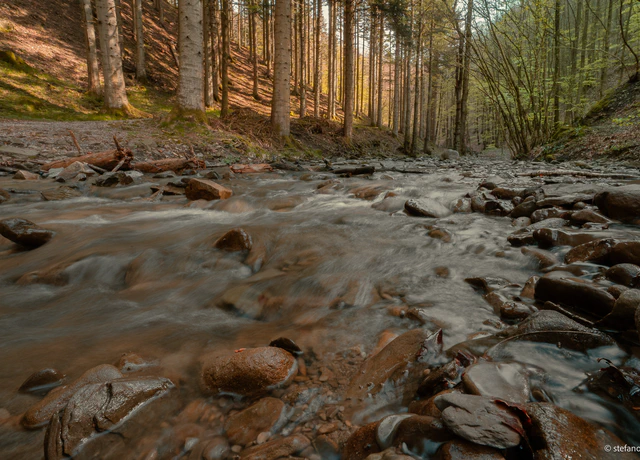
Riserva Acquerino
The reserve is famous across Italy for its red deer, and in autumn you may hear the stags calling through the valleys.
- About 6 hours
- €240 per group
- Shorter or longer day on request
Medium-Easy · 10.9 km (6.8 mi) · 375 m (1,230 ft) ascent
View this hikeOption Two: Up to the High Ridges
The second escape works on a completely different principle. You climb above the heat.
On the high Apennine ridges, at Lago Scaffaiolo and Lago Nero, you trade tree cover for altitude. There’s less shade up here, and the sun feels stronger because there’s less atmosphere to filter it. The air itself is a different story. On the hottest afternoon of the year it stayed below 26°C at both lakes, and it rarely stays still.
Wind and weather on the Apennine ridges change by the hour. You can start in full sun, walk into cloud, cross a patch of fog and come back out into clear sky, all in a single morning. That movement keeps a summer day interesting.
A few things to understand before you go high:
- Stronger sun, colder air. Bring sun protection and a layer for wind, even in July.
- Wind is constant. It cools you fast, and it can turn sharp when cloud rolls in.
- The weather really does change. Sun, cloud and fog can trade places quickly.
- Less shade. You’re exposed up here, so plan water and timing accordingly.
For me, this is the more rewarding kind of summer day. A full day under flat sun is tiring and visually dull. The ridges give you shifting light, proper cool air, long views and the feeling of weather happening around you.
Lago Scaffaiolo
Scaffaiolo sits high on the ridge at 1,775 metres, with a mountain refuge beside the lake. The wind here is part of the experience, and the 360° views open across the whole Apennine crest. On a clear-then-cloudy summer day, the light is never the same twice.
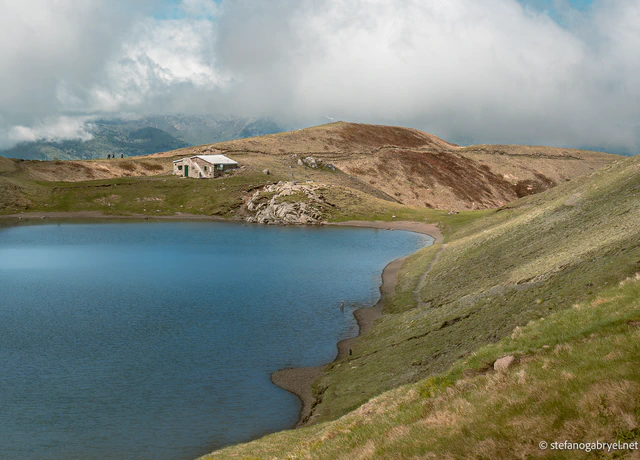
Lago Scaffaiolo
Once you’re up, the path runs along a broad, grassy crest to the lake, with Tuscany on one side and Emilia-Romagna on the other.
- About 6 hours
- €240 per group
- Shorter or longer day on request
Medium · 9.5 km (5.9 mi) · 370 m (1,214 ft) ascent
View this hikeLago Nero
Lago Nero is a glacial lake tucked below the ridgeline at 1,730 metres, slightly more sheltered but still firmly in high-mountain territory. It’s a strong choice when you want altitude and cool air without the full exposure of the very top.
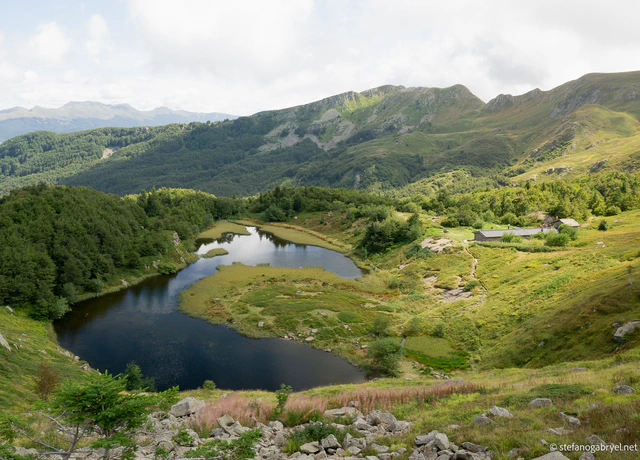
Lago Nero
Nero means black. From most angles the water looks it, and on a still day the surface mirrors the peaks around the basin.
- About 5 hours
- €240 per group
- Longer day on request
Medium · 8 km (5 mi) · 450 m (1,476 ft) ascent
View this hikeWhich One Should You Choose?
Both options solve the same problem, escaping the city heat, but they feel like opposite experiences.
Choose Acquerino when you want enclosure, deep shade, the sound of cold water and an easier pace. It’s reliable, and the forest stays cool whatever the sky is doing.
Choose the high ridges when you want air, distance and changing weather. It’s the more variable choice, and that variability is the appeal. You’re also walking into the coldest air you’ll find on any of my hikes in July.
On a settled, blazing week, I often suggest the forest. When the forecast shows that classic Apennine mix of sun and moving cloud, I point people up to the ridges. Either way, you’ll end the day somewhere between eight and fourteen degrees cooler than the people who stayed in town.
The Bigger Picture
Heat doesn’t have to cost you a day outdoors in Tuscany. It tells you where to go. The region stacks its landscapes vertically, from cities near sea level to shaded forests around 900 metres and open ridges near 1,800, and each band holds the summer differently.
Most visitors never use that range. They sweat through the cities and assume the countryside is just as hot. Drive north into the Apennines and climb, and it isn’t.
Frequently asked questions
Plan a Cool Summer Day in the Mountains
Tell me your dates and how you handle heat, and I’ll match you to the right escape: shaded forest and creeks, or a breezy high ridge with shifting Apennine weather. Reach out through the contact page or book an expert consultation to plan it properly.