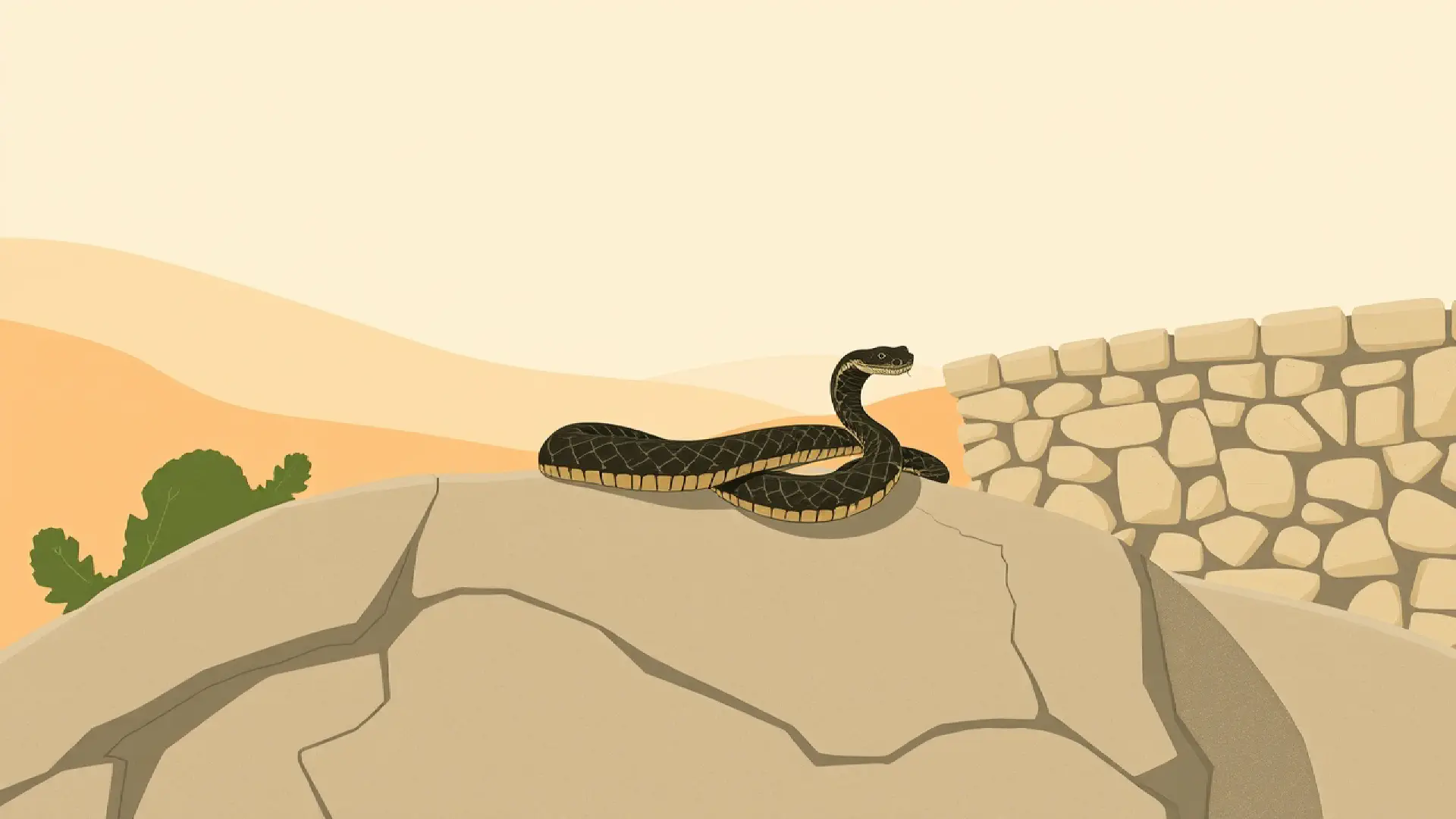
On a warm spring morning, something slides off a sun-baked rock as you pass. For many hikers, that is the moment they dread most.
Yet snakes in Tuscany are almost all harmless. Only one is venomous — the asp viper (Vipera aspis) — and even it would rather flee than bite.
I meet snakes regularly while guiding. They are part of a healthy landscape, not a reason to stay home. Let me show you what actually lives here, and how to read it.
How Many Snakes Live in Tuscany?
Tuscany has several snake species. The large majority are non-venomous colubrids.
The one you see most often is the western whip snake (Hierophis viridiflavus), known locally as the biacco. It is slim, fast, and patterned black-green and yellow.
It looks alarming when it bolts across the trail. It is completely harmless to you.
You may also meet a few other gentle species:
- Aesculapian snake (Zamenis longissimus) — long, slender, a good climber.
- Grass snake (Natrix natrix) — found near water, often swims.
- Dice snake (Natrix tessellata) — also a water snake, fond of rivers and lakes.
None of these can hurt you. They eat rodents, lizards, frogs, and eggs.
A landscape with snakes is a functioning one. They keep the rodent population in check.
The Asp Viper: Tuscany’s Only Venomous Snake
Tuscany has exactly one venomous snake: the asp viper (Vipera aspis), the vipera comune in Italian.
It is small. Adults usually measure 50 to 70 centimetres, rarely more.
It is shy and defensive by nature. It does not hunt people or chase them.
A viper bites only when trodden on, grabbed, or truly cornered. Given any escape route, it leaves.
The real risk is not the snake itself. It is where you put your hands and feet without looking.
How to Tell a Viper From a Harmless Snake
You do not need to be an expert. A few field marks separate the viper from every harmless species here.
- Body shape: the viper is short and stocky. Harmless colubrids are long and slender.
- Head: the viper has a broad, triangular head, clearly set off from the neck.
- Pattern: a dark zigzag band runs down the viper’s back. This is the clearest tell.
- Pupils: vertical and slit-like, like a cat’s. Harmless snakes have round pupils.
- Movement: the viper is slow and reluctant. The biacco is fast and flees in a flash.
The pupil check needs you to be close, which you should not be. Trust the size, the stocky shape, and the zigzag instead.
If a snake is long, thin, and disappears at speed, it is harmless. That describes almost every snake you will ever see here.
Where and When You Meet Them
Vipers are creatures of warmth and stone. Knowing their favourite spots is most of the safety lesson.
They bask to raise their body temperature, so you find them on:
- Warm rocks, scree, and dry-stone walls.
- Sunny, south-facing slopes and forest edges.
- Stony pathsides on cool but bright days.
They are active from spring through autumn. On hot summer days they hide during the midday heat. In winter they hibernate, so a cold-season hike carries no viper risk at all.
The danger window is simple. A sunny rock, a warm wall, a hand or foot placed without looking.
If You Are Bitten
First, the reassurance. Asp viper bites are rare, and almost never serious for a healthy adult. Fatalities in Italy are extremely uncommon, and antivenom is available.
Children, elderly people, and anyone with an allergy face higher risk. They need care quickly.
If a bite happens, the protocol is calm and simple:
- Stay calm. Panic raises your heart rate and spreads venom faster.
- Keep still. Immobilise the bitten limb and keep it below heart level.
- Remove rings, watches, and tight clothing before swelling sets in.
- Call 112 (the European emergency number) and get to a hospital.
- Do not cut, suck, apply ice, use a tourniquet, or pour on alcohol.
Note the time of the bite and how symptoms develop. That information helps the doctors.
Most bites cause local pain, swelling, and bruising rather than anything dramatic. The worst outcomes come from panic and rough first aid, not the venom itself.
Simple Habits That Remove the Risk
In years of guiding across the Apuan Alps and the Apennines, I have never had a client bitten. The reason is habit, not luck.
- Watch your hands on warm rocks and stone walls.
- Watch your feet on sunny pathsides and scree.
- Never reach blindly into crevices or under stones.
- Wear proper boots, not sandals or low trainers.
- Walk with a steady tread. Vibration sends snakes away long before you arrive.
Do these things and the viper becomes what it really is: a shy animal you will rarely even glimpse.
The Bigger Picture
Fear of snakes is older than any of us. But the fear is wildly out of proportion to the actual risk on a Tuscan trail.
The asp viper is one strand of a rich web. It controls rodents, it feeds birds of prey, and its presence signals clean, undisturbed habitat.
It also fits a pattern I see with every animal here. As I explain in my guide to dangerous animals in Tuscany, the wild creatures all fear us and flee. The genuine risks are mundane: terrain, heat, and getting lost.
If you walk alone, my guide to solo hiking in Tuscany covers those everyday hazards in detail. For the warm months, see my notes on summer hiking in the Tuscan heat.
A guide who knows the ground removes the guesswork. I know which rocks the vipers favour and which slopes catch the morning sun. That reading of the land is the whole point. For the broader picture, start with my pillar guide to hiking in Tuscany.
Frequently asked questions
Hike Tuscany Without the Guesswork
I guide year-round across the Apuan Alps and the Tuscan Apennines, reading the land so you don’t have to. Book a free consultation and we’ll plan a hike that fits you.