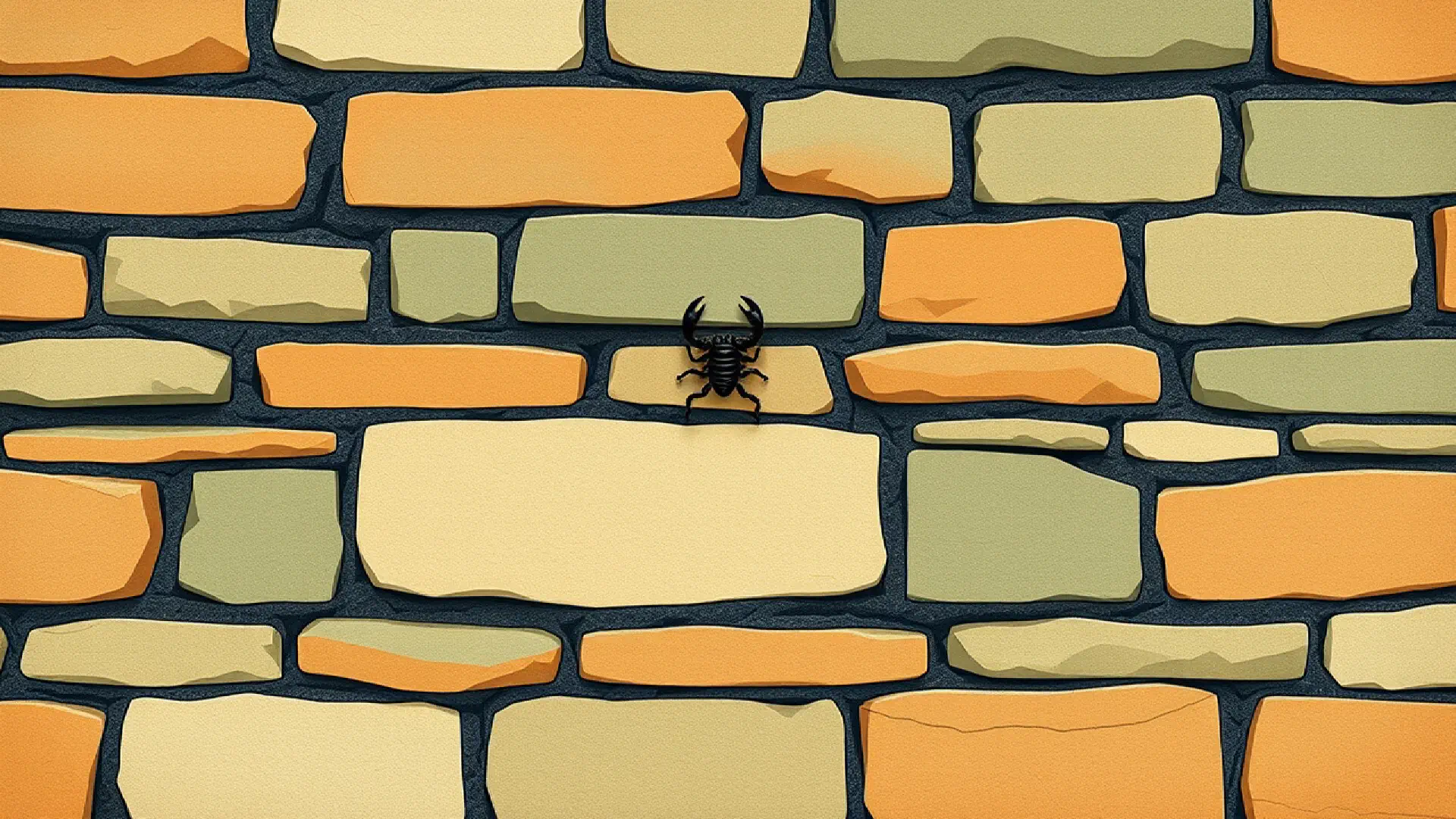
Sooner or later, a guest lifts a stone and sees a small dark shape with claws. Then comes the question: are there scorpions in Italy?
The fear is understandable. The reality is calmer.
Yes, there are scorpions in Tuscany, and Italian scorpions can sting. But a sting from a Tuscan scorpion is closer to a mild bee sting than a medical emergency.
They are shy and nocturnal. They want to escape you, not sting you.
Which Scorpions Live in Italy and Tuscany
Most scorpions in Italy are small members of the family Euscorpiidae. Their venom is mild. For a healthy adult, a sting feels like a bee sting, not a danger.
People picture the venomous giants of desert films. Italy has nothing of the sort on its hills.
In Tuscany you are likely to meet two:
- The common Tuscan scorpion (Euscorpius italicus): dark brown to nearly black, small, usually under 5 cm.
- The yellow-tailed scorpion (Euscorpius flavicaudis, recently reclassified as Tetratrichobothrius flavicaudis): paler legs and tail, more often near the coast.
The family that produces the world’s dangerous scorpions is the Buthidae. In Italy it is represented by a single Sicilian species, and none of it reaches Tuscany.
How to Identify One
Italian scorpions are easy to place once you know the signs:
- Size: small, usually under 5 cm, often less.
- Colour: dark brown to near black, with paler legs and tail on the yellow-tailed kind.
- Shape: broad, heavy claws and a thin tail.
That last point is the most useful rule of thumb. Worldwide, fat claws and a thin tail signal mild venom. Thin claws and a thick tail signal the dangerous species. Tuscan scorpions sit firmly in the harmless group.
Are Italian Scorpions Dangerous or Poisonous?
First, a small correction. Scorpions are venomous, not poisonous. Poison is something you swallow or absorb. Venom is injected, here through the stinger in the tail.
Now the answer most people want. A scorpion sting in Tuscany causes only local effects: pain, redness, a little swelling. It feels like a mild bee or wasp sting. The pain usually fades within an hour or two.
There are no recorded deaths from Italy’s native scorpions. Serious reactions are rare. The scorpions that kill people live in North African and desert regions, and none of them live here.
I would rather be precise than glib. Reference databases describe the venom of these scorpions as harmless. The one documented exception was a child. After a yellow-tailed sting, the child had a stronger reaction with brief neurological symptoms. So the honest version: harmless for a healthy adult, with extra care for children and anyone prone to allergies.
As with any sting, the real risk is an allergy. A few people react badly to scorpion stings, just as some do to bees and wasps. That is rare, and it is the only situation that becomes an emergency.
Where You Actually Meet Them
This part surprises people. You are more likely to meet a scorpion indoors than on the trail.
These scorpions love old stone. Drystone walls, cellars, woodpiles, and the cool cracks of old buildings are their favourite homes. An old farmhouse or agriturismo in the countryside is exactly their kind of place.
They hunt at night and hide by day. They are not aggressive. A scorpion stings only when trapped against skin. That usually means a hand in firewood, a foot in a shoe, or a roll onto one in bed.
Looking for private hiking in Tuscany?
Browse my full collection of small-group, fully private hikes across the region.
What to Do If You Find One
Found one indoors? Do not crush it. Cover it with a glass, slide a card underneath, and carry it outside. It eats the insects you like even less.
In scorpion country, a few habits remove almost all the risk:
- Shake out boots and shoes before putting them on.
- Check bedding and towels left on the floor overnight.
- Wear gloves to move firewood or shift stones.
- Carry a light around an old house at night.
If you are stung, treat it at home:
- Clean the spot with soap and water.
- Cool it with a cold pack for the pain and swelling.
- Ease symptoms with a painkiller or antihistamine if needed.
- Watch for any wider allergic reaction.
Seek medical help only for allergic signs: spreading hives, a swollen face or throat, trouble breathing, or faintness. For everyone else, it fades on its own.
The Bigger Picture
A scorpion under a Tuscan stone is not a threat. It is a sign of an old, healthy landscape. These animals lived in these hills long before the farmhouses they now shelter in. They keep insect numbers down and feed larger predators.
The fear they cause is mostly imported. It belongs to deserts and films, not to a drystone wall in the Apuan Alps.
On the trail I give scorpions the same calm respect as the vipers and the spiders. Look, do not touch, and let them pass. For the wider list, see my guide to the dangerous animals of Tuscany. And if you are planning to walk here, start with hiking in Tuscany.
Frequently asked questions
Walk Tuscany With Someone Who Knows the Ground
Curious about the wildlife under your feet? I read these mountains every day, and I am happy to talk it through before you arrive. Book a free consultation and we will plan a walk that suits you.