Last Update: 28 Feb 2026
Florence draws millions of visitors every year. Most of them spend their time moving between the Duomo, the Uffizi, and crowded piazzas, perhaps taking a day trip to Pisa or Siena. They return home with photographs that look exactly like everyone else’s photographs.
What they don’t know—what nobody tells them—is that within an hour’s drive north of Florence, the landscape transforms completely.
Rolling hills give way to rugged mountain ranges. Tourist crowds disappear. Ancient forests, abandoned medieval villages, and glacial lakes wait for the people curious enough to look beyond the guidebook.
I’ve been guiding through these mountains for years. What follows aren’t the famous trails—these are the places I take clients who want to experience something genuinely wild, genuinely Tuscan, and genuinely unforgettable.
In This Guide
- Riserva Acquerino: Where Silence Lives
- Monsummano Alto: A Ghost Town in the Hills
- Lago Nero: The Black Lake
- Lago Scaffaiolo: On the Border Between Regions
- Why These Places Matter
- Traveling by Train
Riserva Acquerino: Where Silence Lives
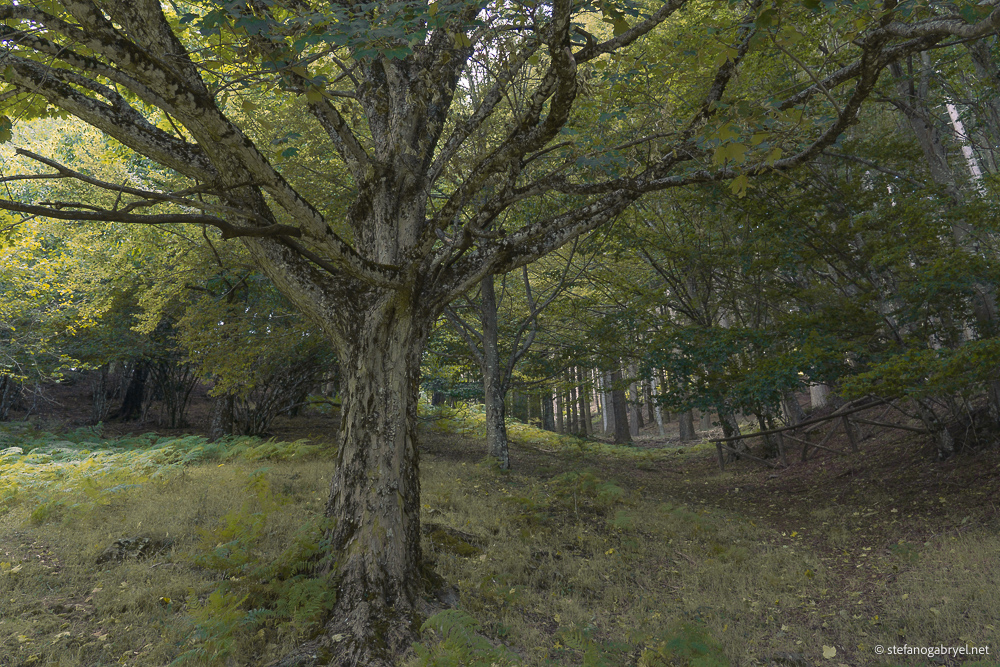
An hour north of Florence, two protected reserves—Riserva Naturale Acquerino-Cantagallo and Riserva Biogenetica Acquerino—share a border, forming a continuous wilderness in the Tuscan-Emilian Apennines. Despite being close to Pistoia and Prato, walk deep enough into these forests and you’ll encounter hours of complete solitude.
I’ve written extensively about Acquerino because it’s the place I return to when I need silence. The Douglas fir groves that glow gold at dawn. The wild boar, deer, and foxes moving through the forests. The spring meadows of white asphodel. The mushroom-rich autumn woods.
This is where you go when you’re tired of crowds and need to remember what wilderness feels like.
Book a private guided hike in Riserva Acquerino-Cantagallo. Expert trekking tours from Pistoia, Prato & Florence. Escape the crowds—reserve your tour!
Monsummano Alto: A Ghost Town in the Hills
Just 40 kilometers west of Florence sits something most tourists will never see: an almost completely abandoned medieval village perched on a hilltop above Monsummano Terme.
Monsummano Alto dates to at least the 13th century, with castle ruins, medieval archways, and the ancient church of San Nicolao still standing among the stones. By the mid-20th century, the mountain village had been abandoned in favor of the valley town below, leaving behind a remarkably intact medieval landscape frozen in time.
But what makes this hike exceptional isn’t just the ruins—it’s what grows around them.
The hillside is a biodiversity hotspot. In spring (March-April), wild orchids bloom throughout the meadows and forest edges. The geological trail passes through ancient limestone quarries where the rock changes from deep greenish-grey to soft red. The panoramic views from the summit extend across the entire Valdinievole valley to the distant Fucecchio marshes.
The ascent gains about 600 meters through Mediterranean scrub and woodland, following well-marked trails. It’s not technically difficult, but it demands reasonable fitness. And when you reach the top and find yourself virtually alone among medieval stones and orchid meadows, you’ll understand why this place remains hidden.
Lago Nero: The Black Lake
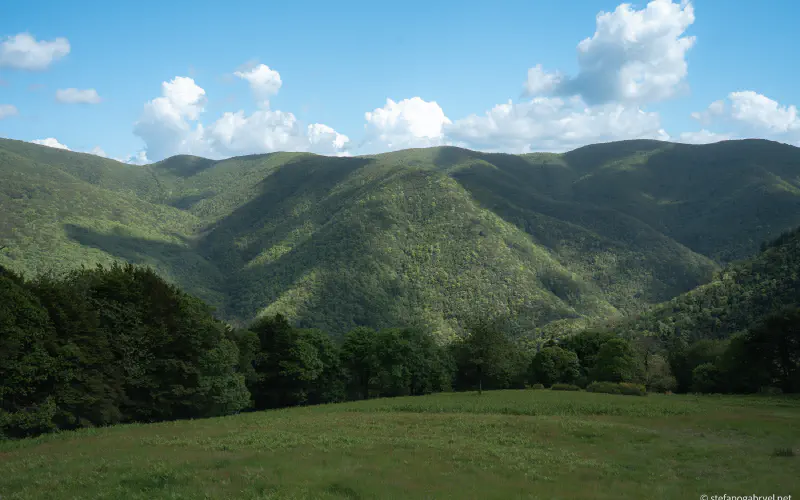
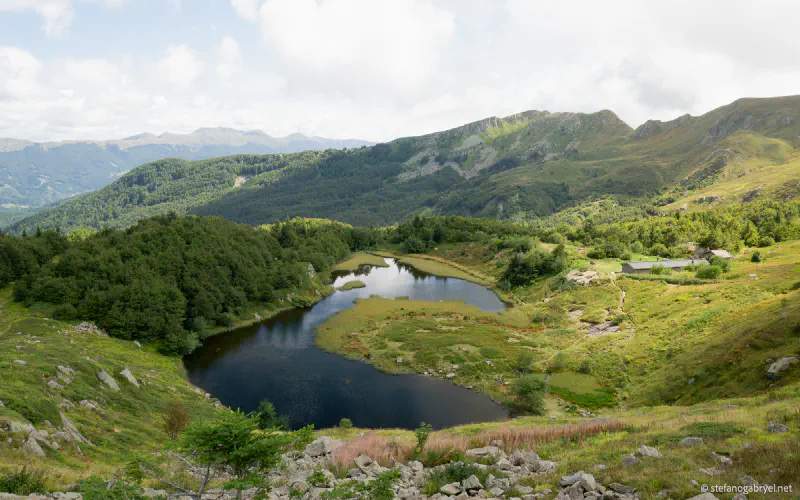
Deep in the Pistoiese Mountains at 1,730 meters sits a glacial lake so dark it earned the name Lago Nero—Black Lake. The darkness comes from the color of the rocks surrounding the basin and the depth of the water itself. When conditions are still, the surface becomes a perfect black mirror reflecting the imposing Apennine peaks that rise to 2,000 meters around it.
This is moody, dramatic mountain landscape that feels nothing like the Tuscany in postcards.
The lake sits between Alpe delle Tre Potenze and Monte Gomito, accessible via trails from the Sestaione Valley or Abetone. The route climbs through dense beech and fir forests before emerging above the treeline into the exposed alpine zone where the lake waits. A small refuge sits at the water’s edge—open on summer weekends, with a four-bed shelter always available when the main building is closed.
The Great Apennine Excursion (GEA), a 425-kilometer trail that crosses four regions of central Italy, passes directly by Lago Nero. But you don’t need to hike the entire route to experience this place. A focused day hike brings you to the lake, gives you time to absorb its particular atmosphere, and returns you to civilization with memories that won’t fade.
The wildlife here includes marmots, golden eagles, and protected species of alpine newts that live in and around the lake. The flora transitions from forest species to true alpine plants—blueberry and raspberry, mountain pines, wild garlic, beech giving way to the hardy vegetation that survives above the treeline.
Book a private guided hike to Lago Nero. Professional trekking tours from Pistoia, Lucca & Florence. Discover Tuscany's glacial lakes. Reserve now!
Lago Scaffaiolo: On the Border Between Regions
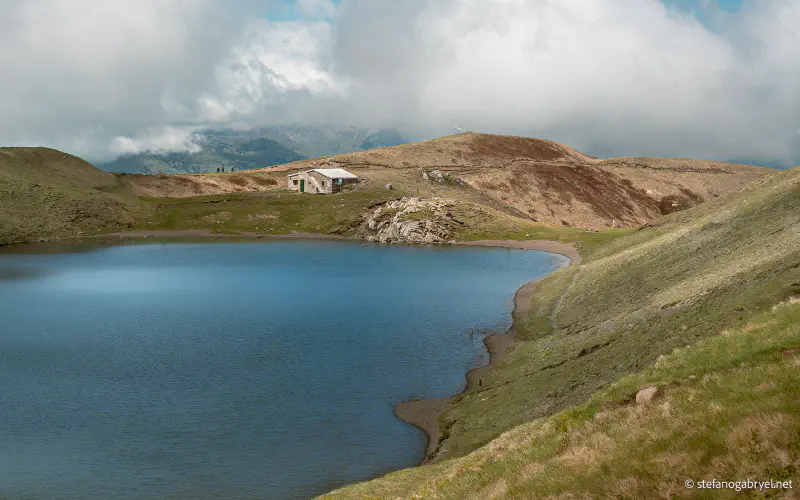
Technically in Emilia-Romagna but sitting precisely on the Tuscan border at 1,787 meters, Lago Scaffaiolo is one of the most mysterious bodies of water in the entire Apennines. The lake has no tributaries flowing in and no outflow. The water simply appears and stays, held in a glacial cirque on the ridge between two regions.
Dante Alighieri referenced it in his writings. Local legends speak of strange winds and unexplained phenomena. Stand at the water’s edge on a windy day and you’ll feel why this place has accumulated centuries of stories.
The views from here extend across both Tuscany and Emilia-Romagna simultaneously. On exceptionally clear days, you can see the Tyrrhenian Sea to the west. The summit of Corno alle Scale (1,944 m) rises nearby, accessible via the same trail system.
Book a private guided hike to Scaffaiolo Lake. 360° Apennine views & Rifugio visit. Expert tours from Lucca, Pistoia & Pisa. Reserve your trek!
Why These Places Matter
I could list a dozen more trails within an hour of Florence that tourists never discover. But what matters more than the list is understanding what you’re missing.
These mountains offer something that the famous cities and classic landscapes simply cannot: genuine solitude, authentic challenge, and the satisfaction of discovering places that require effort to reach and knowledge to find.
Every week during peak season, I meet clients who came to Tuscany for the art and architecture but leave talking about the mountains. They didn’t know these places existed. Nobody told them. The marketing machinery of Tuscan tourism has so successfully promoted one image that it has hidden everything else.
You’re in Florence for a week. You have one day free. You could join the crowds at the standard destinations, or you could spend that day in places where you’ll encounter perhaps a dozen other people all day.
Both are valid choices. But only one will give you a story nobody else is telling.
Traveling by train?
No car? No problem. I’ve mapped out the best hikes accessible by train from Lucca, Pisa, and Florence—so you can experience Tuscany’s mountains without renting a vehicle.
Read: Car-Free Hikes in Tuscany: Train-Accessible Routes Near Lucca & Pisa
Hike the Hidden Tuscany Near Florence
Ready to explore the mountains an hour north of Florence? Whether you want an easy introduction to these landscapes or a challenging full-day expedition, I design custom itineraries that match your fitness level and interests—and show you the Tuscany tourists never see.

or head to the contact page
Explore Hidden Tuscany
Guided hiking experiences combining expert trail knowledge, professional photography, and wilderness mindfulness.
Latest posts
 4 March 2026
Galium Aparine: Cleavers in Tuscan Hedgerows
4 March 2026
Galium Aparine: Cleavers in Tuscan Hedgerows 3 March 2026
Umbilicus Rupestris: Wall Pennywort in Tuscany
3 March 2026
Umbilicus Rupestris: Wall Pennywort in Tuscany 3 March 2026
Laurus Nobilis: Bay Laurel in Tuscan Landscapes
3 March 2026
Laurus Nobilis: Bay Laurel in Tuscan Landscapes 2 March 2026
Guided Tours for Exploring Marble Quarries in Apuan Alps
2 March 2026
Guided Tours for Exploring Marble Quarries in Apuan Alps 26 February 2026
Photographing Nottolini Aqueduct: Light & Geometry
26 February 2026
Photographing Nottolini Aqueduct: Light & Geometry