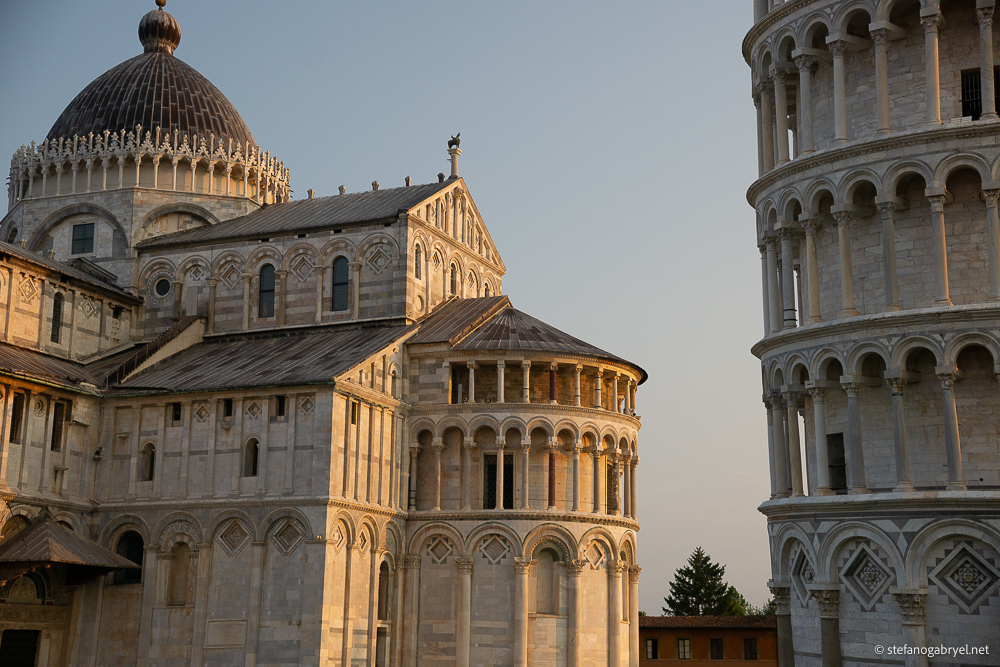
Most visitors spend only a couple of hours in Pisa. They photograph the Leaning Tower, walk through Piazza dei Miracoli, then leave for Florence or the coast. They never realize what they’re missing.
Pisa sits at the strategic center of western Tuscany, with excellent train connections radiating in every direction. Within 30 minutes by regional train, you can access medieval castle ruins, neoclassical aqueducts, and mountain trails. Within an hour by car, you reach marble quarries in the Apuan Alps.
If you’re planning time in Tuscany and want to combine famous landmarks with genuine nature exploration, Pisa deserves consideration as your base. Accommodation costs are generally lower than in Florence. Better train connections than smaller towns. And access to landscapes most tourists never discover.
Castello di Ripafratta: Train-Accessible Medieval Ruins
The most accessible nature destination from Pisa is also one of the most dramatic. Castello di Ripafratta sits 20 minutes north by regional train. The nearby train station even takes its name from the castle.
This 12th-century fortress commands the Serchio River gorge. The strategic position controlled passage between the rival republics of Pisa and Lucca for centuries. The ruined towers still rise above the narrowest point where limestone cliffs squeeze the river.
What makes Ripafratta exceptional is freedom. Unlike most Italian castle ruins with restricted access and guided-tour requirements, Ripafratta remains open. You can climb the towers. Explore the walls. Position your camera wherever you want. Spend hours photographing without guards or time limits.
The setting combines medieval military architecture with raw geological drama. The Serchio carved this gorge through solid limestone. The cliffs drop vertically to the water. The castle perches on the edge, its stones blending with the natural rock.
The hike from Ripafratta station takes roughly 1.5–2 hours. The trail climbs through Mediterranean scrubland and extensive bay laurel forests. These aren’t scattered shrubs—they’re nearly pure stands of wild bay reaching 10–15 meters tall. The aromatic air on warm days is overwhelming.
The trail is steeper than a flat walk. It’s a real mountain trail, not a paved path. But it remains accessible to anyone with reasonable fitness. The reward is exploring open ruins with panoramic views across the gorge and surrounding hills.
From Pisa, the logistics are simple. Regional train to Ripafratta station (20–25 minutes, €3–4). The trailhead is minutes from the station. Return trains run frequently throughout the day. No car required. No complicated connections.
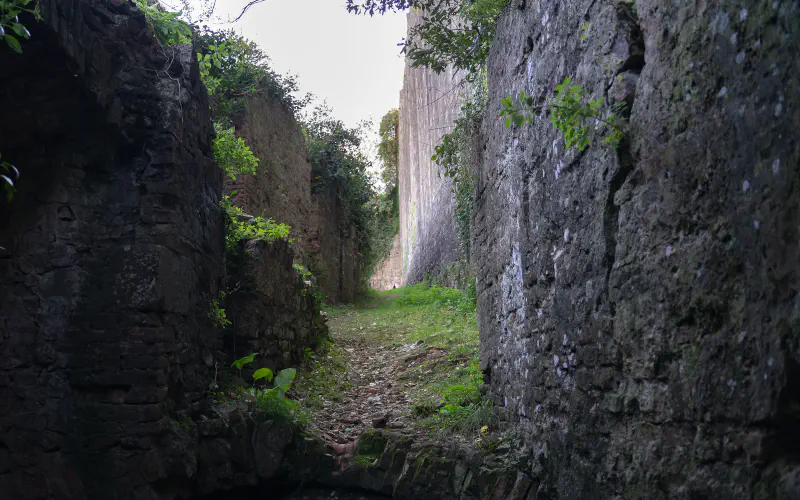
Book a private guided hike to Ripafratta Castle. Easy historical trekking from Pisa & Lucca. Discover 13th-century secrets. Reserve your tour now!
Acquedotto del Nottolini: Neoclassical Architecture Meets Countryside
Another train-accessible destination requires one connection through Lucca. From Pisa, regional trains reach Lucca in 25–30 minutes. From Lucca station, the Nottolini Aqueduct trailhead is a 10-minute walk.
This 19th-century neoclassical aqueduct features approximately 460 brick arches spanning about 3 kilometers. Built between 1823 and 1851 by architect Lorenzo Nottolini, the structure carried spring water from the Monte di Vorno hills to feed fountains throughout Lucca.
The structure also aligns with the sun at certain times of year. Light streams directly down the corridor created by the arches. This creates striking photographic opportunities when conditions align.
But the real value is the walk itself. You follow the aqueduct from city edge through Tuscan countryside. The path is flat, well-maintained, accessible to anyone. You’re walking beside elegant architectural geometry set against the surrounding countryside.
For photographers, the arches create perfect leading lines. The light changes dramatically throughout the day. Morning mist, golden hour glow, midday geometry—each offers different compositions. The walls host plant communities colonizing every crevice. Ferns, bay laurel, wall pennywort create vertical gardens on brick and stone.
The walk takes 45–60 minutes at photography pace. Most people complete it in an hour, stopping frequently for photos. You can turn around whenever you want. Or continue the full length to the source at Monte di Vorno.
From Pisa, the complete journey is: Train to Lucca (25–30 minutes). Walk from Lucca station to aqueduct (10 minutes). Walk the aqueduct (1–3 hours depending on pace). Explore Lucca’s city walls and center. Return train to Pisa. All doable in a half-day or leisurely full day.
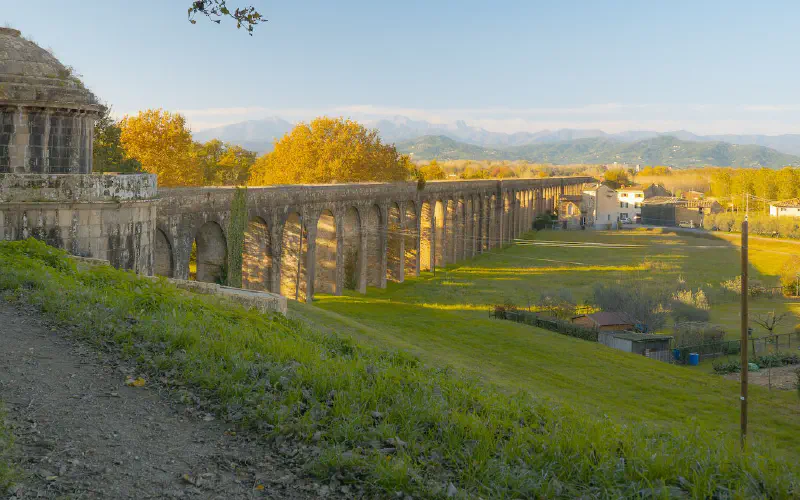
No car required: Walk the 400 arches of Nottolini Aqueduct from Lucca. Guided tour accessible by train. Discover 'Parole d'Oro'. Book now!
The Apuan Alps: Marble Mountains by Car
If you have a car or rent one, the possibilities expand dramatically. The Apuan Alps (Alpi Apuane) sit 45–60 minutes north of Pisa. These mountains are unlike anything else in Tuscany.
White marble peaks rise above dense green forests with the sea visible in the distance. This is the marble Michelangelo chose for his David. The same stone that built the Pantheon. The quarries have operated continuously for over two thousand years.
But the Apuan Alps aren’t just marble history. They’re genuine mountains reaching nearly 2,000 meters. They contain some of the highest biodiversity in Tuscany. They harbor extensive cave systems. And they offer hiking that ranges from gentle walks to technical alpine routes.
One particularly accessible experience is the Marmifera del Corchia. This unpaved mountain road was built to transport marble from the Corchia quarries. It’s now one of the most dramatic hiking routes in the Apuan Alps.
The road winds through spectacular mountain scenery. Views open across surrounding peaks and valleys. You walk where massive marble trucks normally operate on weekdays. But weekends? The road becomes eerily quiet. Just you, the mountains, and the particular quality of light that white marble reflects.
Important: This hike is only available on weekends. Saturday and Sunday, when trucks don’t operate. During the week, marble transport makes the road unsuitable for hiking.
You’ll pass alongside quarries. You can’t enter them, as they are active private industrial sites. But seeing them from the road, understanding the scale of extraction, observing how landscape has been reshaped by centuries of quarrying: this creates context that transforms the experience from scenic walk to genuine understanding.
From Pisa, the drive takes roughly 50–60 minutes to the trailhead. Early morning departure recommended. Full day including hiking time and return. This is a commitment—car required, specific weekend-only timing, mountain conditions. But it rewards that commitment with access to landscapes most tourists never see.
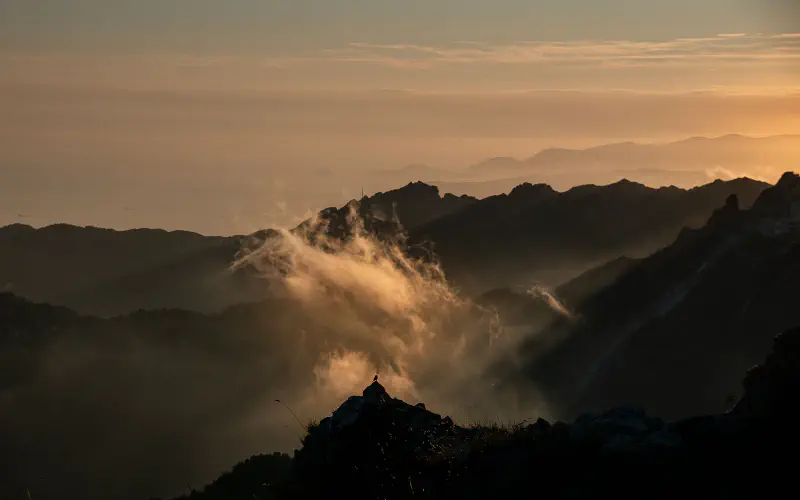
Hike a marble quarry road into the heart of the Apuan Alps, near Lucca, Pisa, Viareggio. A private guided adventure on the Marmifera del Corchia.
Why Pisa Works as a Base
Here’s the strategic argument for staying in Pisa rather than Florence or coastal towns:
Train connections are excellent. Pisa Centrale is a major hub. Frequent regional trains to Lucca (25–30 minutes), Florence (1 hour), Viareggio (30 minutes), La Spezia and Cinque Terre (1.5–2 hours). You can day-trip to multiple destinations without staying there.
Accommodation costs are generally lower than in Florence. You’re not paying tourist-trap prices near the Duomo. Competition from coastal towns keeps Pisa rates reasonable. The city has infrastructure for visitors without the crushing crowds.
You have the famous landmark. If clients or family want to see the Leaning Tower, you’re already there. Two hours covers Piazza dei Miracoli thoroughly. Then you have the rest of your trip for everything else.
The airport is right here. Pisa International Airport serves the region. In some cases you can even walk to the airport, or take the PisaMover shuttle. No expensive transfers or complicated logistics.
Train-accessible nature is rare. Most mountain hiking in Tuscany requires a car. But from Pisa, you can reach Ripafratta and Nottolini entirely by train. This matters enormously for travelers who don’t want to rent cars or navigate Italian traffic.
The city itself is comfortable and easy to stay in. It’s not beautiful like Lucca or overwhelming like Florence. It’s functional, with good restaurants and services. You won’t feel like you’re “settling” by staying here. You’re positioned strategically while maintaining quality of life.
Planning Your Days
Here’s how a week based in Pisa might look:
Day 1: Arrive, visit Piazza dei Miracoli, settle in, explore the city Day 2: Train to Ripafratta for castle ruins and gorge hiking Day 3: Train to Lucca, walk Nottolini Aqueduct, explore Lucca’s walls Day 4: Train to Florence for art museums and architecture Day 5: Drive to Apuan Alps for Marmifera del Corchia marble quarry hike Day 6: Train to Cinque Terre for coastal trails and villages Day 7: Relax, final Pisa exploration, prepare for departure
This isn’t a rigid schedule—just a framework. Adjust based on weather, energy, interests. The point is: you have options. Mountain days, city days, coastal days. All from one comfortable, well-connected base.
Most tourists never consider this combination. They stay in Florence and deal with crowds every day. Or they book Cinque Terre accommodations and miss the mountains. Or they rent cars and stress about parking and navigation.
Pisa allows all of it if you plan strategically. The famous landmark, the art cities, the mountains, the coast. All accessible. All without moving hotels every two nights.
The Reality: Not for Everyone
I should be honest about what Pisa isn’t.
It’s not charming like Lucca. Medieval walls and Romanesque churches create atmosphere Pisa can’t match. If you want picturesque Tuscan ambiance, Lucca wins.
It’s not Florence. The art and architecture don’t compare to Renaissance Florence. If you’re art-focused above all else, stay in Florence and day-trip out.
It’s not undiscovered. The Leaning Tower area swarms with tourists daily. But step two blocks away and it’s a normal Italian city. You won’t deal with Florence-level crowds throughout the entire town.
It’s not a mountain town. You’re in the lowlands. Mountains are accessible, but you’re not waking up to alpine views. You’re in a former maritime republic that happens to be well-positioned for mountain access.
If you want pure mountain immersion, stay in the mountains. If you want total coastal relaxation, stay on the coast. But if you want the strategic middle ground—famous landmark, diverse day trips, good connections, reasonable prices—Pisa deserves consideration.
The Mountains and Ruins Wait
Right now, regional trains run between Pisa and Ripafratta every hour. Lucca’s trains depart every 30 minutes. The Nottolini Aqueduct sits empty in morning light. Ripafratta’s towers rise above the Serchio gorge. The Apuan marble quarries cut white scars across mountain faces.
These places exist whether you discover them or not.
What changes is whether you position yourself to access them easily. Whether you build your itinerary around smart logistics rather than chasing every famous name. Whether you understand that the best experiences often come from places you’ve never heard of.
Most visitors to Tuscany spend their entire trip in Florence. They see the Uffizi, the Duomo, the Ponte Vecchio. They return home with the same photos everyone takes. Beautiful, certainly. But also predictable.
You now know something different is possible.
The real question is whether you’re willing to plan differently. To choose a comfortable, well-connected city as your base. To use trains and short drives to access wild mountains and medieval ruins. To combine the famous with the hidden.
Pisa isn’t spectacular on its own. But as a strategic base for experiencing everything western Tuscany offers? It’s better than most people realize.
Plan Your Pisa-Based Adventures
Staying in Pisa and want to explore the surrounding mountains, castles, and nature? I design custom hiking and photography expeditions accessible from the city—whether you prefer train-accessible day trips or full-day mountain expeditions by car. Contact me to plan your exploration.

or head to the contact page
Explore Hidden Tuscany
Guided hiking experiences combining expert trail knowledge, professional photography, and wilderness mindfulness.