Last updated 16 July 2026
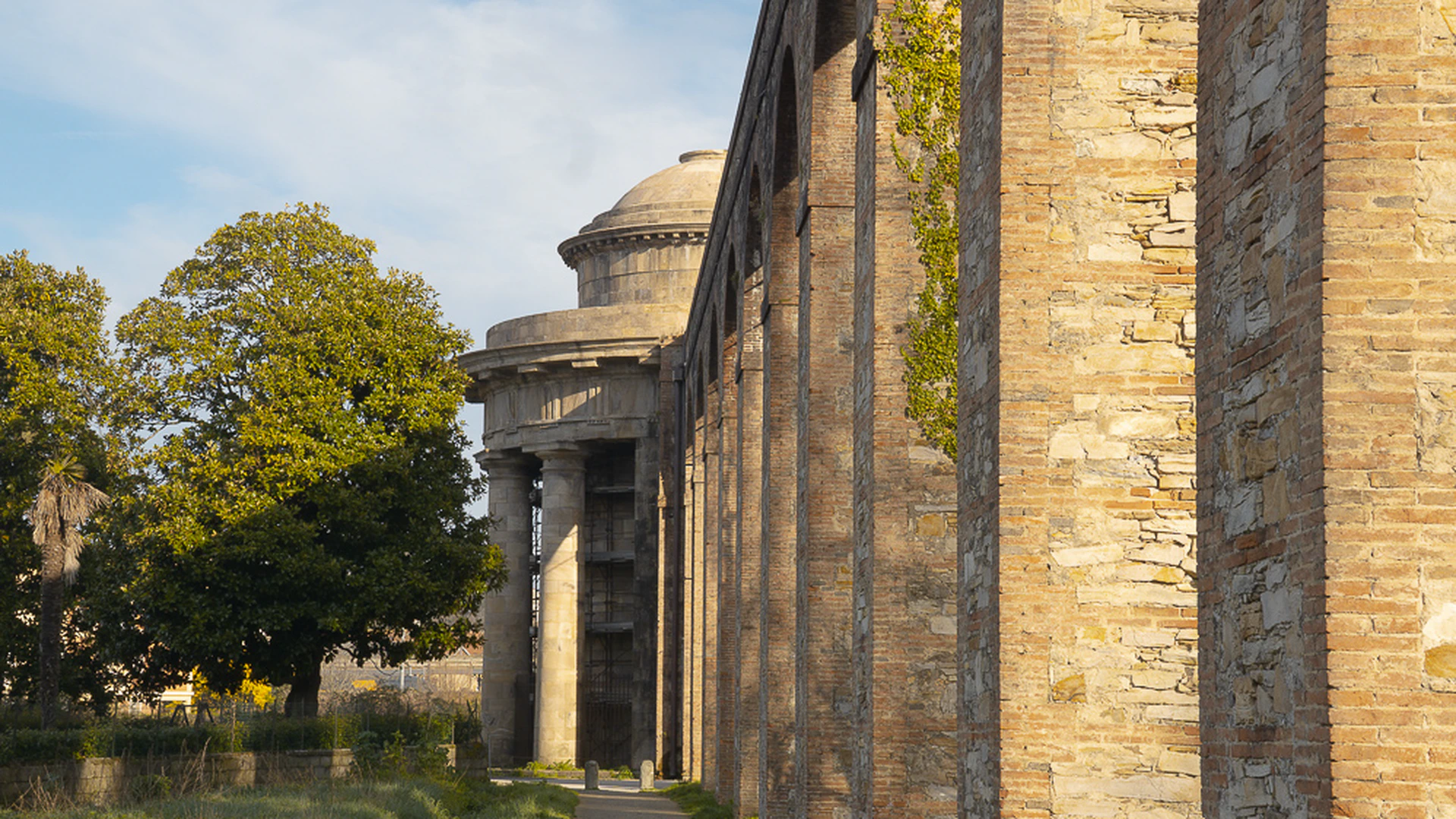
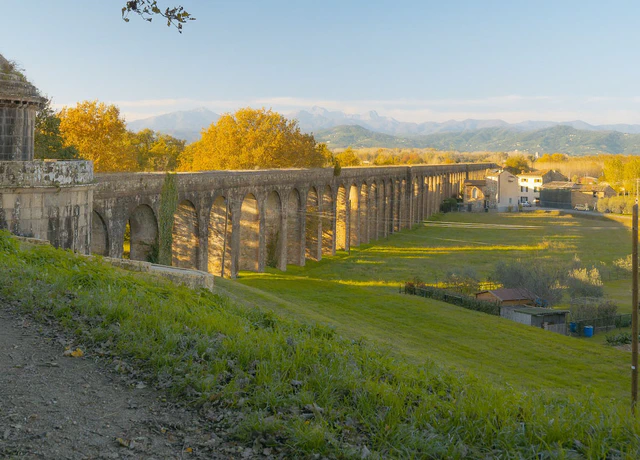
The Lucca Aqueduct is one of Tuscany’s most extraordinary sights, and almost nobody notices it. Just beyond the city’s train station, a neoclassical arcade of roughly 460 arches marches about three kilometres across the countryside, built to double as one of the longest sundials in the world. Its proper name is the Acquedotto del Nottolini, it is walkable end to end, and you can reach it on foot from the station in minutes.
Most visitors to Lucca circle the ramparts, photograph the Duomo and Piazza dell’Anfiteatro, then move on to Florence or Pisa. This guide is for the ones who want what the crowds miss: what the aqueduct is, how to get there, how to walk it, and why a 19th-century waterworks is worth an afternoon.
Basing yourself in Lucca? A local’s Expert Brief shows you which walks are worth your days.
The secret sundial
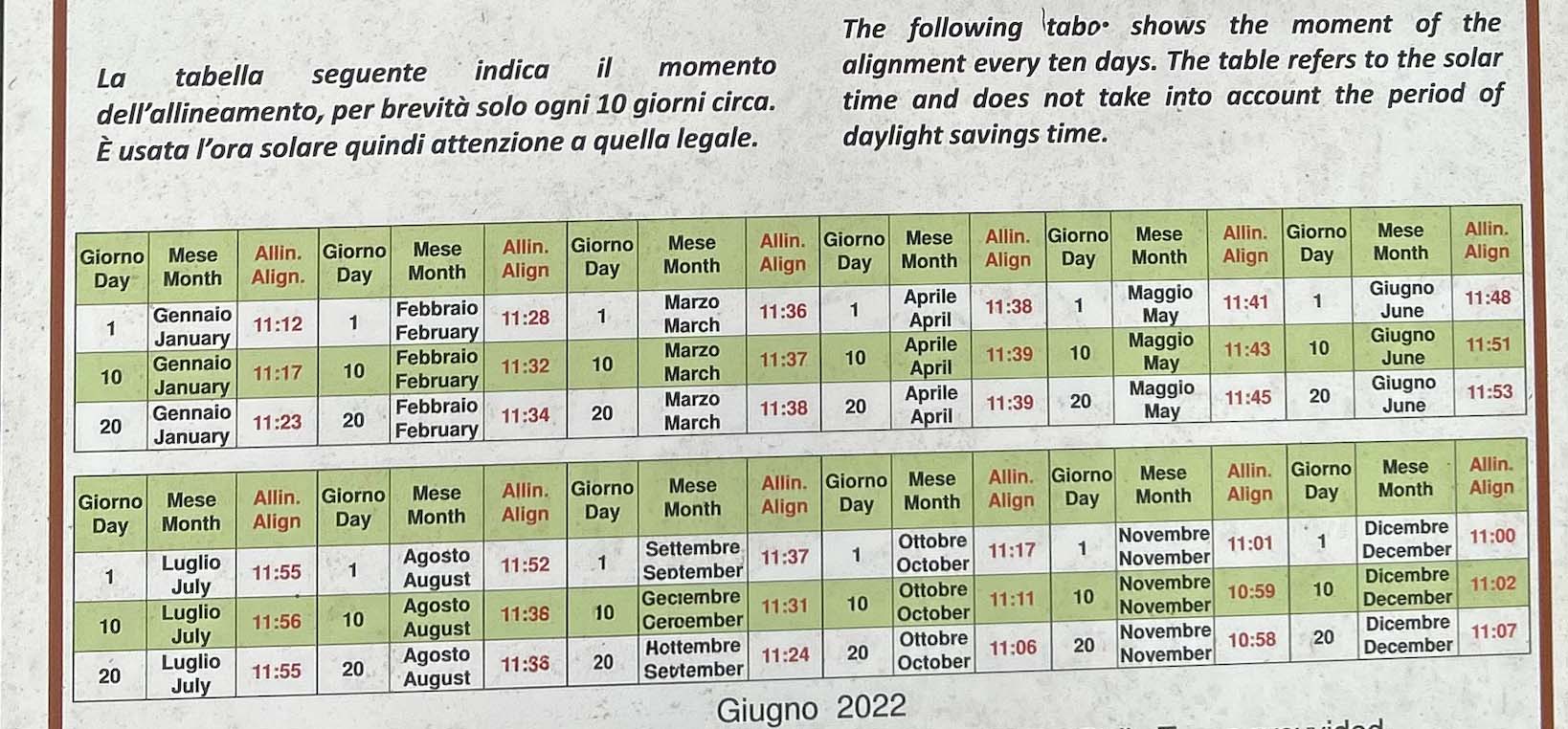
Here is what makes the Acquedotto del Nottolini genuinely unusual: the structure is oriented as a solar meridian, with the sun aligning along the aqueduct’s axis at specific times of the year. At those moments the light runs straight down the corridor of arches, illuminating it end to end in a way that only happens when architecture and astronomy line up.
Lorenzo Nottolini, who designed it between 1823 and 1851, was both engineer and artist. He built a working water system that doubles as an astronomical instrument: roughly three kilometres of brick and stone that still read the sun.
A short history: why Lucca built it
The aqueduct was commissioned in 1822 by Maria Luisa of Bourbon, Duchess of Lucca, to solve a public health crisis. The city’s wells were contaminated and stagnant, and people were falling ill. The wealthy had water carted in from the countryside; the poor drank whatever they could find.
Nottolini’s solution channelled spring water from the Monte di Vorno hills, using gravity flow through elevated channels carried on hundreds of arches. It took 28 years to complete (1823 to 1851) and fed fountains across Lucca, delivering clean water for the first time in centuries. The design looks back to Roman aqueduct engineering, that same neoclassical aesthetic, even though it was built with 19th-century methods rather than ancient ones.
The “Parole d’Oro” (Golden Words). Near the source at Serra Vespaiata, Nottolini set a commemorative inscription in brass letters. Local farmers, convinced the letters were gold, prised them off to sell. The spot has been called “Parole d’Oro” ever since, even though the lettering was eventually repainted in gold rather than replaced.
Walking the aqueduct: from city to secret garden
What makes the walk memorable is not only the aqueduct itself. It is the transformation you experience along the way.
You start close to the city walls. The arcade begins right at the edge of Lucca’s historic centre, emerging from the streets as a piece of civic 19th-century infrastructure.
You follow the arches. The elevated line runs ahead almost perfectly straight. Step by step the town falls away: buildings give way to gardens, gardens to open fields, and the arches become your corridor through the change.
Then you are in the countryside. Olive groves, vineyards and fields stretch toward the Monti Pisani, with those arches still cutting a clean geometric line through it all.
Finally you reach what I call the “secret garden.” The fields do not disappear, but the aqueduct creates something else here: an architectural sanctuary inside the landscape, where the arches frame cypresses and distant hills and the whole place feels at once ancient and timeless. It is neither fully wild nor fully built, and it is the kind of quiet you rarely find so close to a city.
All gallery images are original photographs taken by me.
Nottolini Aqueduct Private Tour: Neoclassical Engineering & Sacred Springs
No car required: Walk the 400 arches of Nottolini Aqueduct from Lucca. Guided tour accessible by train. Discover ‘Parole d’Oro’. …
View this hikeHow to visit the Lucca Aqueduct
Where it starts. The aqueduct begins just outside Lucca’s historic centre, a few minutes’ walk from the train station.
Getting there:
- By train: Lucca station sits almost on top of the aqueduct’s start. This may be the most accessible walk of its kind in Tuscany, since you can be under the arches minutes after stepping off the platform.
- By car: free parking is available at various points along the route.
- By bike: a popular ride. Rent in Lucca and you are at the arches within minutes of leaving the centre.
The walk itself is flat, easy and family-friendly, following the line of the arches out into the countryside and back. There is shade, there are benches, and there is very little traffic once you leave the edge of town, which makes it a good outing with children or on a warm afternoon.
Experience the Aqueduct by Bike
The Nottolini is a joy to ride as well as to walk. For bikes, e-bikes and local routes, I point my guests to Tuscanybiking, my trusted cycling partner near Lucca.
When to visit
The aqueduct is open, free and rewarding year-round, but each season changes its character:
- Spring: wildflowers along the path and fresh green countryside.
- Summer: golden fields and strong light; set out early to avoid the midday heat.
- Autumn: soft light, turning leaves and misty mornings.
- Winter: dramatic skies and bare trees that reveal the full line of the structure, often with the path to yourself.
Early morning is the quietest time of day. Late afternoon brings out local walkers and cyclists, along with warm light on the brick that turns the repeating arches into one of the most photogenic sights near Lucca.
Walk it with a guide
You can absolutely walk the aqueduct on your own. But much of what makes it remarkable is invisible without context: that you are standing in a working sundial, why Nottolini spent 28 years on it, where the “secret garden” begins, which stretch rewards slowing down.
That is what I offer on a private walk from Lucca: not just the route, but the story behind it, at an easy pace, with time to enjoy the quiet. It is train-accessible, family-friendly, and a genuine break from the crowds inside the walls.
Nottolini Aqueduct Private Tour: Neoclassical Engineering & Sacred Springs
No car required: Walk the 400 arches of Nottolini Aqueduct from Lucca. Guided tour accessible by train. Discover ‘Parole d’Oro’. …
View this hikeNearby: Castello di Ripafratta
The aqueduct is not the only train-accessible discovery near Lucca. Just 20 minutes away by regional train sits the Castello di Ripafratta, a dramatic 12th-century fortress perched above the Serchio gorge.
Unlike many Italian castles hedged with fences and guided-tour-only rules, Ripafratta is an open ruin you can wander freely. The castle guarded the strategic passage between Lucca and Pisa for centuries, and its ruined towers still rise above the river’s narrowest point, where the rock walls squeeze the Serchio into a dramatic flow.
Together, the two places make Lucca an ideal base for travellers who want to look beyond the famous city walls: both accessible by train, both genuinely uncrowded, and both unlike anything in the tourist-heavy centres.
Rocca di San Paolino Private Tour: Medieval History & Laurel Forest
Book a private guided hike to Ripafratta Castle. Easy historical trekking from Pisa & Lucca. Discover 13th-century secrets. Reserve now!
View this hikeWorth following the arches
Most people leave Lucca without ever knowing the Nottolini is there. They see the walls, the towers and the piazzas, and never walk the ten minutes it takes to reach one of the strangest and most beautiful pieces of engineering in Tuscany.
Now you know it is there. The only question is whether you follow the arches.