Most photographers visiting Lucca never leave the city walls. They capture the Duomo, Piazza Anfiteatro, and the famous ramparts, then move on to Florence or Pisa with images that look exactly like everyone else’s.
What they miss—what almost nobody knows—is that just beyond Lucca’s train station sits one of the most extraordinary photographic subjects in all of Tuscany: a neoclassical aqueduct with approximately 460 arches spanning about 3 kilometers that functions as one of the longest sundials in the world.
I’m not talking about another rustic Tuscan landscape. I’m talking about architectural geometry, light physics, and the kind of photographs that make people stop scrolling and ask “where is that?”
The Secret Sundial
Here’s what makes the Acquedotto del Nottolini genuinely unique: the structure is oriented as a solar meridian, with the sun aligning perfectly with the aqueduct’s axis at specific times throughout the year.
Think about what that means photographically. At precise moments, sunlight streams directly down the corridor created by the arches, illuminating the structure from end to end in a way that only happens when architecture and astronomy align. The shadows cast by each arch create rhythmic patterns that change minute by minute as the sun moves across the sky.

This isn’t accidental beauty. Lorenzo Nottolini, the architect who designed the aqueduct between 1823 and 1851, was both engineer and artist—someone who understood that functional infrastructure could also create spectacular visual experiences. He built a working water system that doubles as a astronomical instrument spanning about three kilometers.
Why Photographers Love This Place
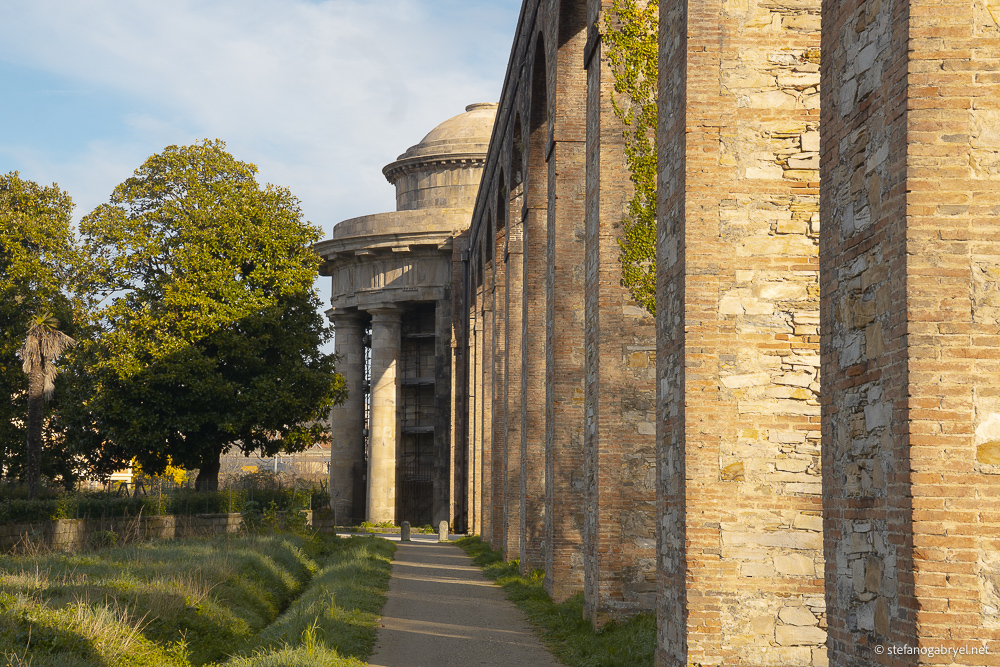
The geometry is perfect. Approximately 460 brick arches march across the landscape in an almost perfectly straight line. At regular intervals, Nottolini inserted reinforced buttresses—both structural support and visual punctuation. The repetition creates leading lines that photographers dream about.
The scale is cinematic. The structure reaches 12 meters high in places, creating compositions where human figures become tiny elements dwarfed by neoclassical engineering. It’s the kind of scale that makes images feel epic without requiring mountains or dramatic weather.
The light is transformative. This is where the magic happens. At different times of day, the arches cast shadows that create completely different photographs from the same position.
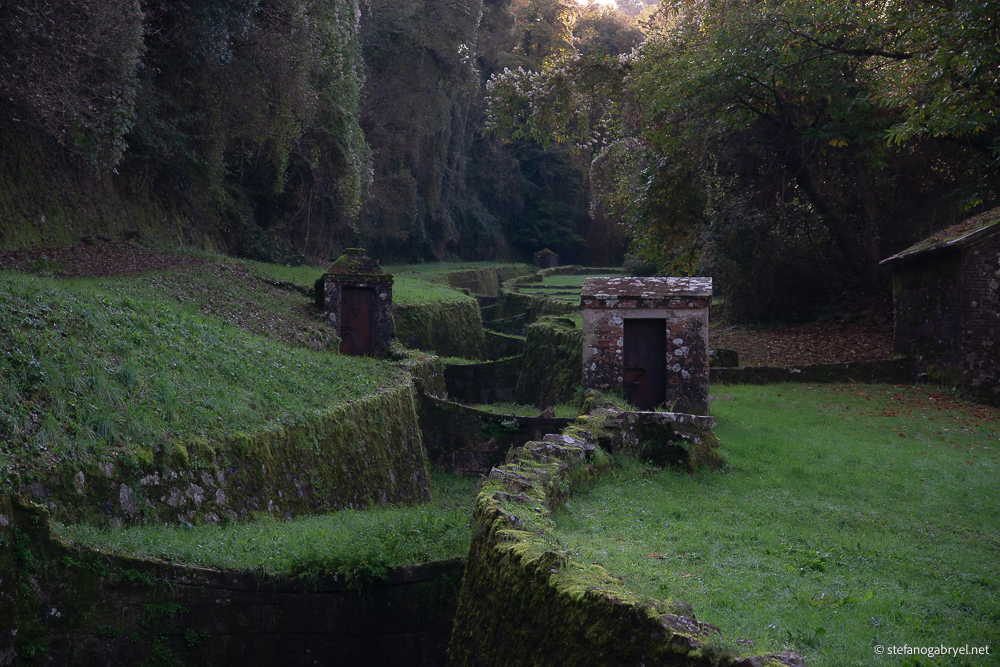
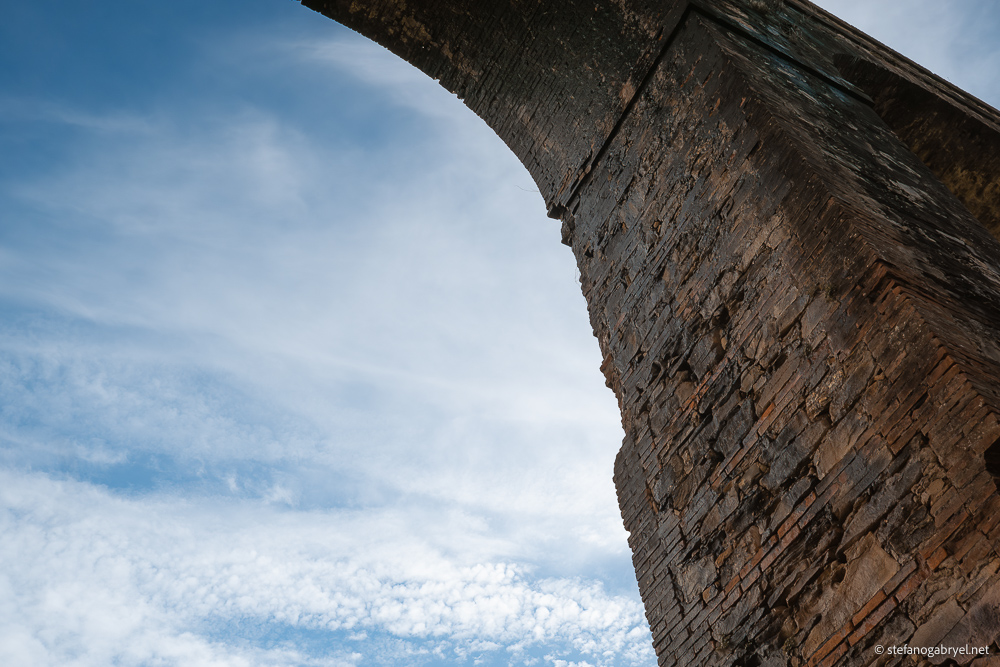
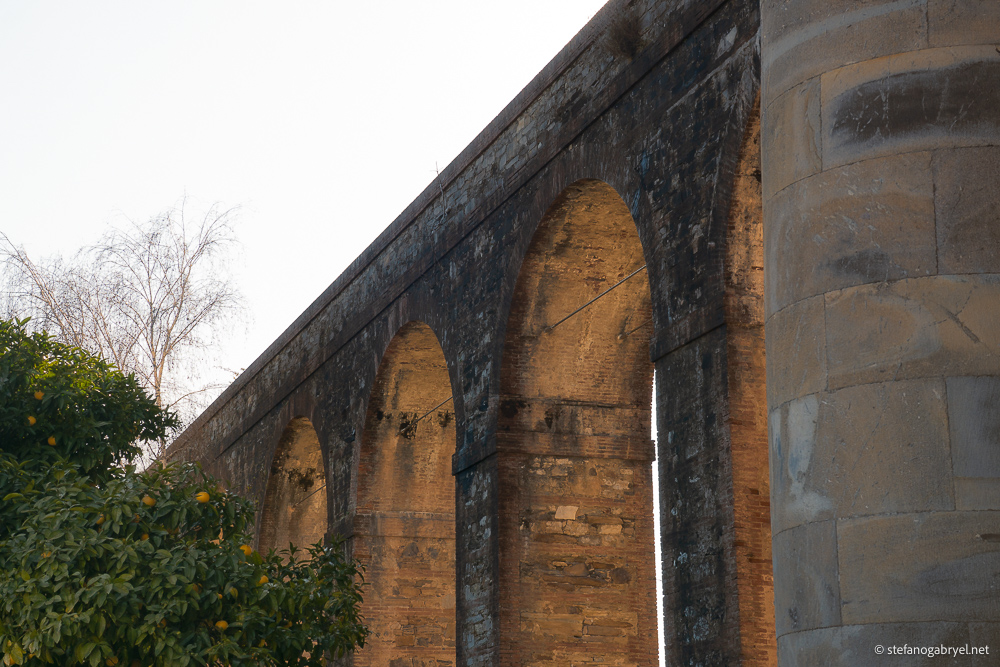
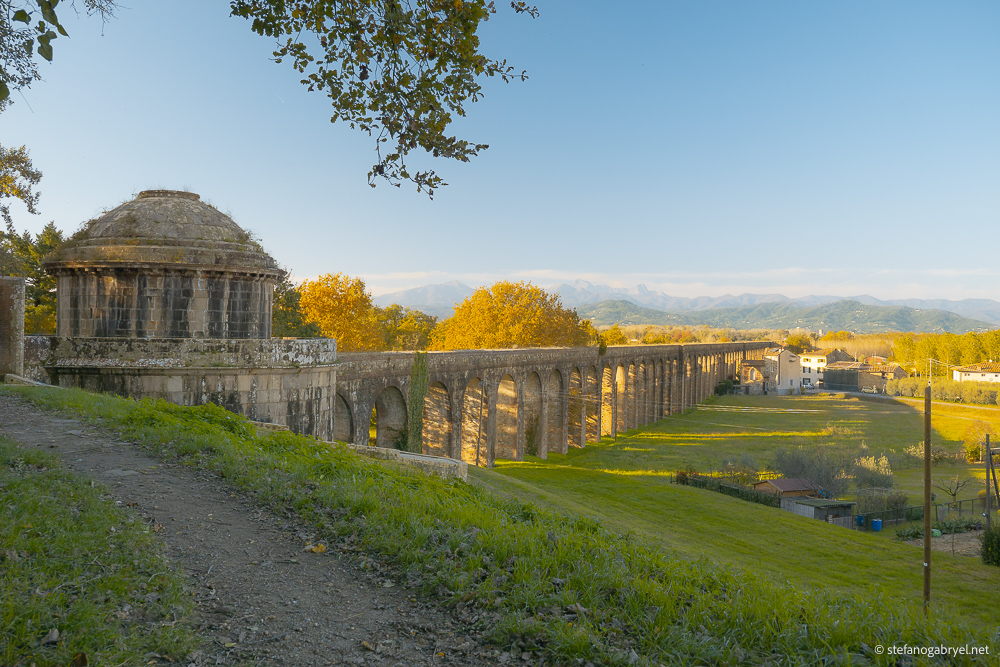
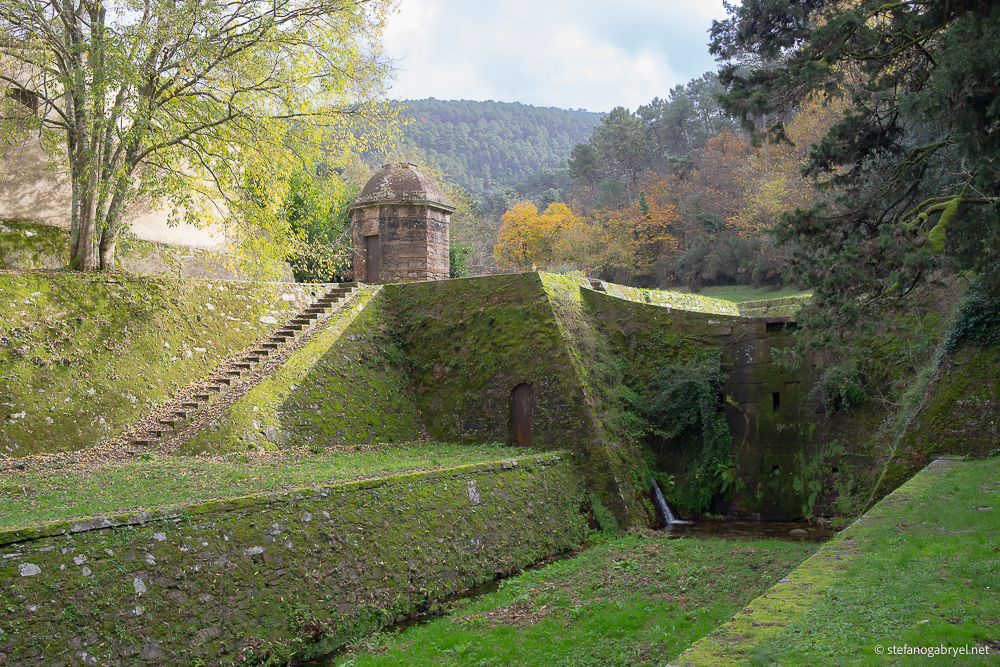
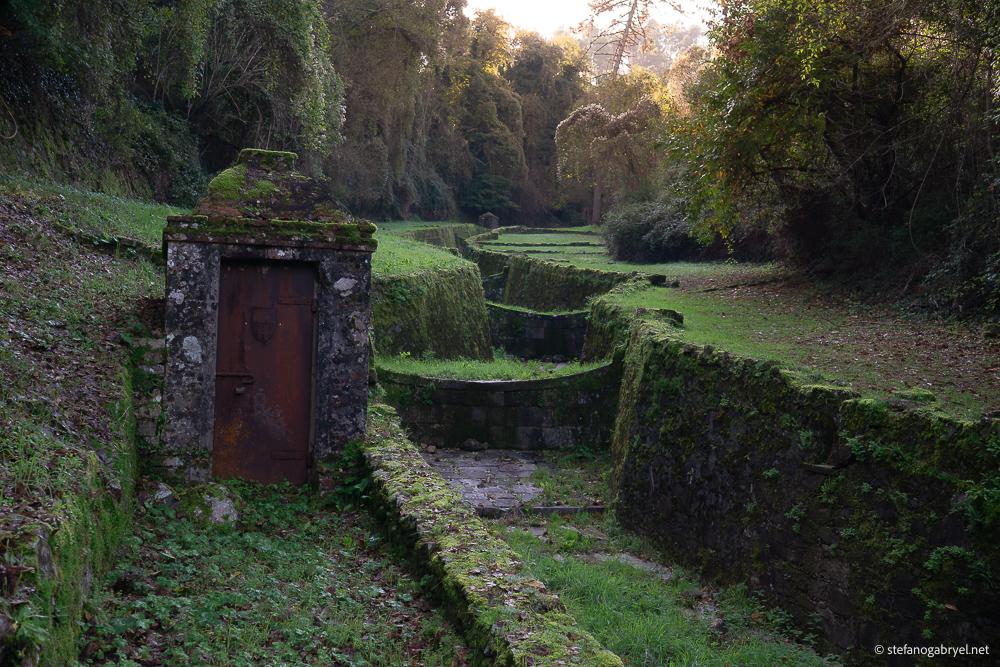
All gallery images are original photographs taken by me.
The Best Light: A Photographer’s Timeline
Dawn (6:00-8:00 AM): Morning mist often settles in the valleys, with the arches rising above fog banks like islands. The low sun creates long shadows that emphasize the structure’s depth and rhythm. Colors are cool—blues and soft golds. This is my favorite time for mystery and atmosphere.
Mid-Morning (9:00-11:00 AM): Strong, clean light. Good for emphasizing the geometric precision of the arches. Shadows are still long enough to create definition without being dramatic. Ideal for architectural documentation and detail shots.
Midday (11:00-2:00 PM): Generally harsh, but interesting for high-contrast black and white photography. The vertical shadows beneath the arches become pure black voids. Not for everyone, but powerful if you know what you’re doing.
Late Afternoon (3:00-5:00 PM): The light warms up, moving from neutral to gold. Shadows begin lengthening again, creating that three-dimensional quality that makes architecture pop. The brick and stone glow. This is when the aqueduct becomes warm and inviting rather than stark and geometric.
Golden Hour (5:30-7:00 PM, depending on season): The arches become backlit, creating silhouettes if you shoot into the sun or warm, glowing forms if you position yourself with the light behind you. The countryside around the aqueduct takes on that classic Tuscan golden quality. Arguably the most beautiful time, but also the most crowded with local walkers and cyclists.
Blue Hour (Post-sunset): Underrated. The structure becomes a dark form against a deep blue sky. If you have a tripod and know long exposure technique, you can capture something genuinely different from what everyone else shoots.
The Journey: From City to Secret Garden
What makes this walk remarkable isn’t just the aqueduct itself—it’s the transformation you experience along the way.
You start close to the city walls. The aqueduct begins right at the edge of Lucca’s historic center, emerging from the urban fabric as a functional piece of 19th-century infrastructure. At this end, it feels civic, purposeful—part of the city’s story.
You walk following the arches. The elevated arcade stretches ahead in an almost perfectly straight line. Step by step, the urban surroundings fall away. Gradually, buildings give way to gardens, gardens to fields. The arches become your corridor, your guide through the transition.
Then you’re in the countryside. Olive groves, vineyards, agricultural fields stretching toward the Monti Pisani. The landscape is beautiful but familiar—the Tuscany of postcards. Yet you’re still walking beneath or alongside those arches, that geometric human intervention cutting through natural landscape.
Finally, you reach what I call the “secret garden.” Here’s where the magic intensifies. The countryside doesn’t disappear—you’re still surrounded by fields and trees—but the aqueduct creates something else: an architectural sanctuary within nature. It feels simultaneously ancient and timeless, where 19th-century engineering transcends pure function and becomes art. The arches frame views of cypresses and distant hills. Light filters through the structure in ways that shift constantly. It’s neither fully wild nor fully built—it exists in that liminal space between human ambition and natural landscape.
The scale shifts your perception. You’ve walked from city to countryside, guided by approximately 460 brick and stone arches that somehow make the journey feel like discovering a hidden world that was always there, just waiting for someone to follow the path.
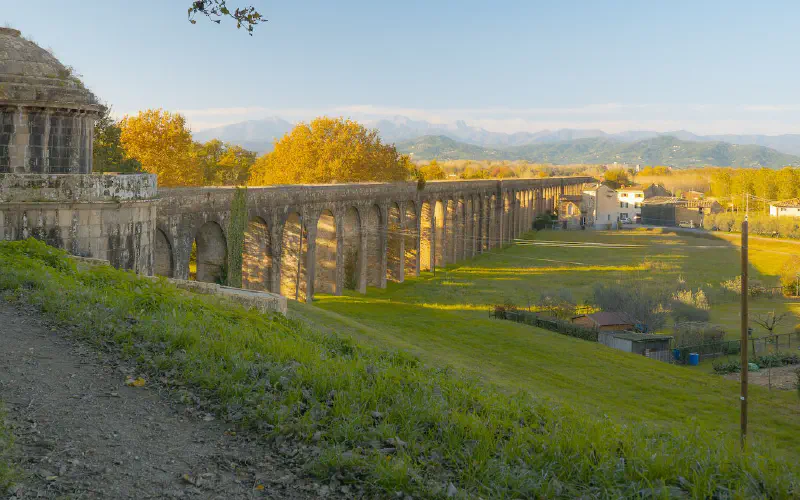
No car required: Walk the 400 arches of Nottolini Aqueduct from Lucca. Guided tour accessible by train. Discover 'Parole d'Oro'. Book now!
Compositions That Work
Leading Lines: The obvious approach, but effective. Position yourself dead center between the arches and shoot straight down the line. Use a wide lens (16-24mm) to emphasize perspective convergence, or a telephoto (70-200mm) to compress the arches into rhythmic patterns.
Single Arch as Frame: Stand beneath one arch and frame the countryside beyond through its opening. This creates natural vignetting and focuses attention on whatever landscape element you choose—a cypress tree, a distant farmhouse, the hills.
Human Scale: Include a person (yourself with timer, a companion, a passing cyclist) to emphasize the structure’s height and create narrative. Position them small against the arches—not as the subject, but as scale reference.
Detail and Texture: Get close to the brick and stonework. Nottolini used different materials in specific patterns—capture that craftsmanship. Photograph the reinforced buttresses. Find where vegetation has begun reclaiming the structure, creating that romantic aesthetic even though it’s relatively modern.
The Interruption: Where the A11 motorway cuts through the aqueduct, several arches were demolished in the 1930s. This break in continuity creates an unexpected compositional element—the contrast between 1820s neoclassical precision and brutal mid-20th-century pragmatism.
From Above: If you have a drone (check local regulations), aerial perspectives reveal patterns invisible from ground level—the perfect straightness, the rhythm of shadows, the relationship between the aqueduct and surrounding landscape.
The Historical Context (Makes Your Photos More Meaningful)
The Acquedotto del Nottolini was commissioned in 1822 by Maria Luisa of Bourbon, Duchess of Lucca, to solve a public health crisis. Lucca’s wells were contaminated and stagnant. People were getting sick. The wealthy had water brought from the countryside; the poor drank whatever they could find.
Nottolini’s solution was to channel spring water from the Monte di Vorno hills, using gravity flow through elevated channels supported by those hundreds of arches. It took 28 years to complete (1823-1851). The system fed fountains throughout Lucca, delivering clean water for the first time in centuries.
The structure was inspired by Roman aqueduct engineering—that same neoclassical aesthetic that looked back to ancient precedents for both form and function. While not built using actual Roman construction techniques, Nottolini clearly understood and referenced that architectural lineage.
The “Parole d’Oro” (Golden Words) story: Near the source at Serra Vespaiata, Nottolini installed a commemorative inscription in brass letters. Local farmers, thinking the letters were gold, stole them to sell. The location became known as “Parole d’Oro”—a name that persists even though the letters were eventually repainted in gold paint rather than replaced with metal.
Understanding this history transforms your photographs from mere architectural studies into documents of civic engineering as art, of how humans shape landscape to serve society.
Practical Photography Details
Access:
- By car: Free parking available at various points along the aqueduct route.
- By train: Lucca station is extremely close to the aqueduct’s starting point. This might be Italy’s most accessible major photography location via public transport—you can literally walk from the train platform to the arches in minutes.
- By bike: Popular cycling route. You can rent bikes in Lucca and ride to the aqueduct within minutes of leaving the city center.
Equipment considerations:
- Wide-angle lens essential (16-35mm or equivalent)
- Telephoto useful for compression and detail (70-200mm)
- Tripod valuable but not essential
- Circular polarizer helps with sky and reduces haze
- Neutral density filters for long exposure if you want smooth water effects in channels
Crowds: Minimal compared to Lucca’s city center. You’ll encounter some locals walking or cycling, especially late afternoon, but nothing that interferes with photography. Early morning offers complete solitude.
Seasons:
- Spring: Wildflowers along the path, fresh green countryside
- Summer: Golden fields, strong light, can be hot midday
- Autumn: Soft light, changing foliage, often misty mornings
- Winter: Dramatic clouds, bare trees reveal structure, virtually empty
Why This Matters to You
If you’re visiting Tuscany with a camera—whether you’re a serious photographer or just someone who cares about bringing home images that don’t look like everyone else’s—the Nottolini Aqueduct represents something rare: a spectacular subject that remains genuinely under-photographed.
No crowds fighting for the same shot. No need for expensive permits or dangerous positions. No lottery-based access like some famous locations.
Just approximately 460 arches of neoclassical engineering, perfect light at predictable times, and compositions that work whether you’re shooting with an iPhone or professional equipment.
But here’s what I’ve learned after years photographing this structure: the technical opportunity is obvious, but the deeper value comes from understanding what you’re seeing.
Knowing that you’re standing in a solar meridian—one of the world’s longest sundials—changes how you observe light moving across the arches. Knowing Nottolini spent 28 years perfecting this system makes you notice the craftsmanship details. Understanding the “secret garden” quality of the transition from city through countryside to architectural sanctuary helps you frame that transformation in your images.
This is where a guide who’s also a photographer makes the difference.
I don’t just show you where to stand. I show you when to be there, which angles work at which times, what details to look for, and—perhaps most importantly—why this place matters beyond being photogenic. I help you create images with intention rather than just collecting pretty pictures.
The Photographs You’ll Take Home
Amateur photographers leave the Nottolini with decent architectural shots—nice arches, pretty light, acceptable compositions.
Serious photographers who understand the location leave with portfolio pieces. Images with depth, meaning, and technical quality that stand out.
The difference isn’t equipment. It’s knowledge.
Knowledge of where the sun will be at what time. Which positions create which effects. When the mist settles in the valleys. How the solar alignment works. What makes one section more interesting than another. Where the story is, not just the prettiness.
This is what I offer: not just access to a location, but understanding of how to photograph it properly.
No car required: Walk the 400 arches of Nottolini Aqueduct from Lucca. Guided tour accessible by train. Discover 'Parole d'Oro'. Book now!
Beyond Nottolini: Castello di Ripafratta
The aqueduct is spectacular, but it’s not the only train-accessible photographic subject worth exploring near Lucca. Just 20 minutes away by regional train sits the Castello di Ripafratta—a dramatic 12th-century fortress perched above the Serchio River gorge.
What makes Ripafratta exceptional for photographers is the freedom it offers. Unlike many Italian castles and monuments with restricted access, fenced areas, and guided-tour-only policies, Ripafratta is an open ruin. You can tripod wherever you want, and spend as long as you need finding the perfect composition.
The castle commanded the strategic passage between Lucca and Pisa for centuries. The ruined towers still rise above the narrowest point of the Serchio gorge, where rock walls squeeze the river into dramatic flow. The setting combines medieval military architecture with raw natural landscape—exactly the kind of subject that creates powerful, atmospheric images.
From a photography perspective, Ripafratta offers:
- Multiple vantage points (inside the ruins, from the gorge below, from surrounding trails)
- Dramatic vertical elements (towers, walls, cliffs)
- The contrast between human architecture and geological time
- Freedom to experiment without guards or time limits
- Accessible by train from Lucca (Ripafratta station)
Like the Nottolini, this is a location that rewards photographers willing to look beyond Lucca’s famous city walls. It’s accessible, spectacular, and under-photographed—the kind of place where you can spend hours working compositions without encountering another photographer.
The combination of Nottolini and Ripafratta makes Lucca the perfect base for photographers exploring Tuscany. Both locations accessible by train, both genuinely uncrowded, both offering subjects you simply won’t find in the tourist-heavy cities.
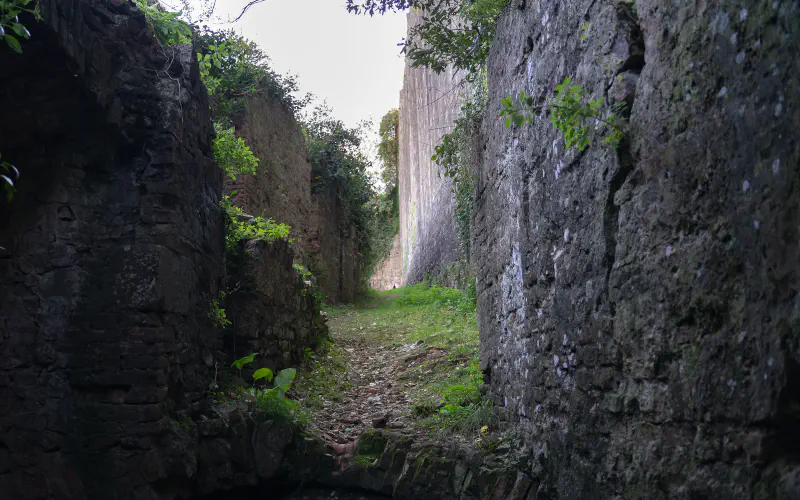
Book a private guided hike to Ripafratta Castle. Easy historical trekking from Pisa & Lucca. Discover 13th-century secrets. Reserve your tour now!
The Images That Wait
Right now, as you read this, light is moving across those arches. Shadows are shifting. The geometry is creating patterns that will never repeat exactly the same way.
The aqueduct doesn’t care whether you photograph it or not. It stands there regardless, being extraordinary, waiting for someone to notice.
What changes is whether you show up with knowledge and intention, or whether you miss it entirely because nobody told you it exists.
Most photographers visiting Tuscany never learn about the Nottolini. They leave with the same images everyone takes—beautiful, safe, forgettable.
You now know something they don’t.
The question is what you do with that knowledge.
No car required: Walk the 400 arches of Nottolini Aqueduct from Lucca. Guided tour accessible by train. Discover 'Parole d'Oro'. Book now!
Explore Hidden Tuscany
Guided hiking experiences combining expert trail knowledge, professional photography, and wilderness mindfulness.