Most visitors come to Montecatini Terme for one reason: the thermal baths. They spend days moving between spas. They take the funicular to Montecatini Alto for lunch. Then they leave, thinking they’ve experienced everything the area offers.
They’re missing the bigger picture.
Montecatini Terme sits in a strategic location. It lies north of Florence and south of Lucca, with excellent train and bus connections. Within an hour by public transport or car, you can access mountain forests, medieval castles, ancient aqueducts, and genuine mountain wilderness. All while returning each evening to comfortable accommodations and those famous thermal waters.
If you’re planning time in Tuscany and want to combine relaxation with nature exploration, Montecatini Terme deserves serious consideration as your base.
Montecatini Alto: The Medieval Village Above
The most famous attraction beyond the thermal baths is Montecatini Alto. This medieval village sits on a hilltop 290 meters above the thermal town. The contrast between the two is striking.
A historic funicular connects the two towns. Built in 1898, the funicular features two red carriages named “Gigio” and “Gigia.” They’ve been carrying passengers up the steep hillside for over 125 years. The ride takes about 10 minutes, covering 1,077 meters of track. The two cars pass each other halfway—a moment that delights children and photographers alike.
From the exterior balconies, you get wide views across the valley below. The Valdinievole plain spreads out beneath you. On clear days, you can see for kilometers across Tuscany’s agricultural landscape.
Important: The funicular operates seasonally. Typically from late March through early November.Always check current schedules before planning your visit. Winter closures mean car or foot access only during those months.
You can also drive to Montecatini Alto. But be warned: the roads are narrow and winding. Parking at the top is extremely limited. Most locals and regulars prefer the funicular for good reason.
Once at the top, Montecatini Alto offers exactly what you’d expect from a Tuscan hill town. Narrow cobblestone streets, medieval architecture, panoramic viewpoints, restaurants serving traditional cuisine. It’s pleasant, photogenic, and thoroughly discovered by tourists. Nothing wrong with it, but also nothing particularly surprising.
The Thermal Baths: World-Class Wellness
The terme (thermal baths) are what made Montecatini famous internationally. The town developed specifically around these mineral springs. By the 19th and early 20th centuries, it had become one of Europe’s premier spa destinations.
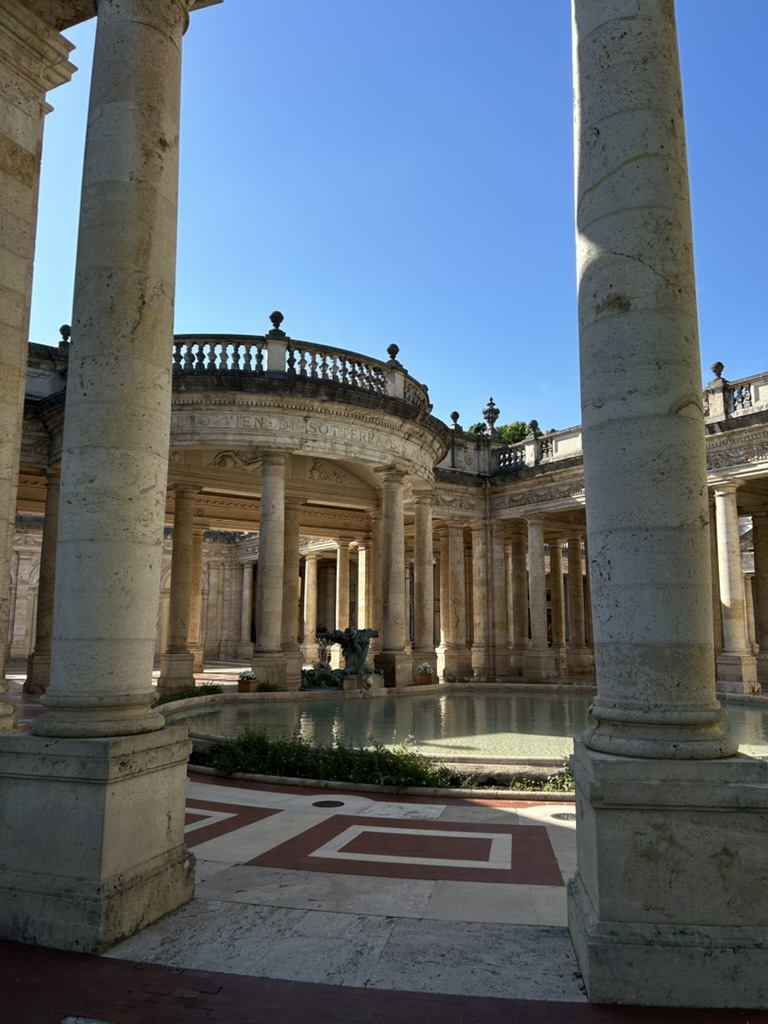
The facilities are impressive. Liberty-style (Italian Art Nouveau) buildings house various thermal establishments. Terme Tettuccio is the most famous, with its colonnaded halls, mosaics, and mineral water fountains. Terme Excelsior offers modern spa treatments. Others specialize in specific therapies.
The water emerges from underground at temperatures between 24-34°C. It contains salts, minerals, and other compounds believed to benefit various conditions. Digestive issues, liver function, metabolic disorders—these are the traditional medical applications.
Whether you believe in therapeutic benefits or just want to relax, the experience is worthwhile. The architecture alone justifies a visit. The treatments range from drinking mineral water to mud baths to massages. Prices vary dramatically depending on which establishment you choose and which services you want.
If spa experiences interest you, Montecatini delivers. But that’s not why I’m writing this article.
Train Connections: Lucca and Beyond
Here’s where Montecatini Terme becomes interesting as a base for nature enthusiasts.
The train station offers frequent connections to Lucca. The journey takes roughly 30 minutes. From Lucca, you can access two exceptional hiking and photography destinations within easy reach.
Acquedotto del Nottolini: Walking History
The Nottolini Aqueduct sits just outside Lucca’s historic walls. From Lucca station, it’s a 15-minute walk to the trailhead. No car required. No complicated logistics.
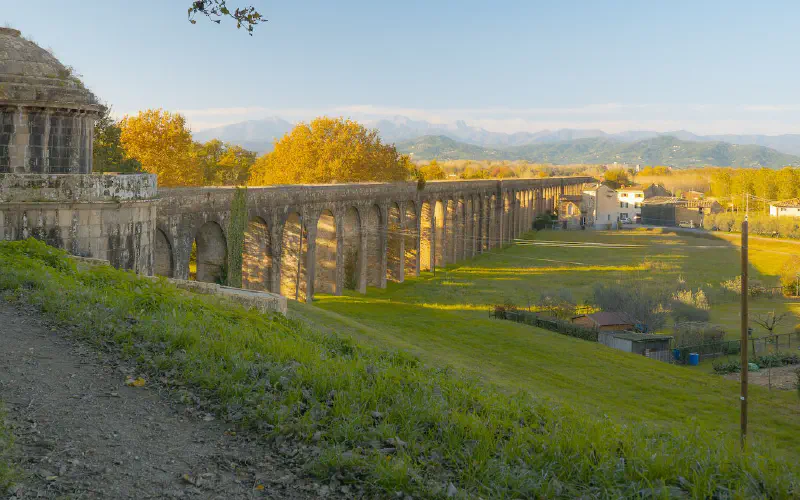
This 19th-century neoclassical aqueduct features approximately 460 brick arches spanning about 3 kilometers. The structure also aligns with the sun’s path, creating striking light effects at certain times of the year.
But the real value is the walk itself. You follow the aqueduct from city edge through Tuscan countryside. The path is flat, well-maintained, accessible to anyone who can walk a few kilometers. You’re surrounded by architectural geometry contrasting with the agricultural landscape. The walls host plant communities—ferns, bay laurel, wall pennywort colonizing every crevice.
For photographers, the arches create perfect leading lines. The light changes dramatically throughout the day. Morning mist, golden hour glow, midday geometry—each offers different compositions.
From Montecatini Terme, this makes a perfect half-day or full-day excursion. Train to Lucca, walk the aqueduct, lunch in Lucca, explore the city walls, return by evening. All without renting a car.
No car required: Walk the 400 arches of Nottolini Aqueduct from Lucca. Guided tour accessible by train. Discover 'Parole d'Oro'. Book now!
Castello di Ripafratta: Medieval Ruins and River Gorges
Also accessible from Lucca is the Castello di Ripafratta. This 12th-century fortress sits dramatically above the Serchio River gorge. Unlike many Italian castle ruins with restricted access, Ripafratta remains open. You can climb the towers, explore the walls, position your camera wherever you want.
The setting combines medieval military architecture with raw natural landscape. The Serchio cuts through limestone, creating dramatic cliffs. The castle commanded this strategic passage between Lucca and Pisa for centuries. The ruined towers still rise above the narrowest point.
The hike from Ripafratta train station takes roughly 1.5-2 hours. The trail climbs through Mediterranean scrubland and bay laurel forests before reaching the castle and gorge. It’s steeper than the Nottolini—actual mountain trail rather than flat path. But still accessible to anyone with reasonable fitness.
What makes Ripafratta special is the freedom to explore. You can spend hours photographing without guards or time limits. The ruins, the gorge, the surrounding landscape—all open for exploration. It’s the kind of place that rewards photographers willing to experiment with angles and light.
Again, accessible from Montecatini Terme without a car. Train to Lucca, transfer to regional train to Ripafratta. Or bus connections exist depending on season and day. It’s more involved than the Nottolini logistically, but absolutely doable for independent travelers.
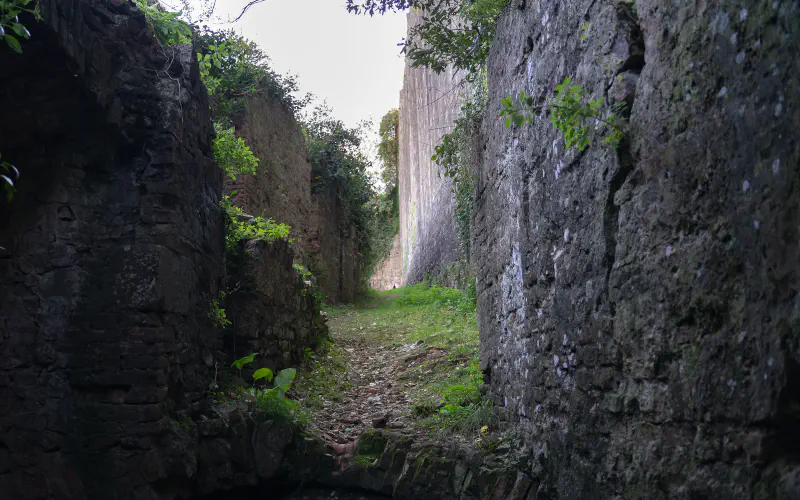
Book a private guided hike to Ripafratta Castle. Easy historical trekking from Pisa & Lucca. Discover 13th-century secrets. Reserve your tour now!
Riserva Acquerino: Wild Mountains an Hour Away
If you have a car (or rent one), the options expand dramatically.
From Montecatini Terme, you can reach Riserva Acquerino in roughly one hour. This protected wilderness in the Tuscan-Emilian Apennines offers something completely different from the train-accessible locations.
Acquerino is where I go when I need genuine solitude. Walk deep enough into these forests and you may spend hours without seeing another person. Wild boar, deer, foxes, badgers. Douglas fir groves that glow gold at dawn. Spring meadows of white asphodel. Autumn forests rich with mushrooms.
This is real mountain terrain. The trails range from gentle forest roads suitable for families to demanding ridge traverses for experienced hikers. The elevation reaches over 1,200 meters. Weather can change rapidly. It’s not theme-park nature—it’s genuine mountain wilderness that demands respect and preparation.
But that’s exactly what makes it valuable. If you want to experience Tuscan mountains without crowds, Acquerino delivers. If you want to photograph landscapes that tourists never see, this is where you go. If you need to remember what silence feels like, these forests provide it.
I’ve written extensively about Acquerino because it represents everything I value about mountain guiding. The place has become my personal sanctuary. When life gets complicated, I return there. Every time I leave feeling better than when I arrived.
From Montecatini Terme, this makes a full-day expedition. Early morning departure, full day on the trails, return by evening. You’ll drive through valleys and over passes. You’ll see Tuscany transform from hills to mountains. You’ll understand why this region offers so much more than postcards suggest.
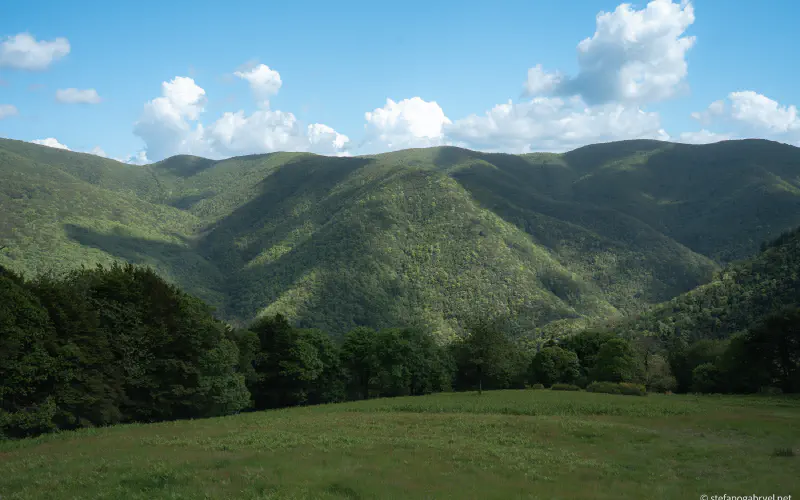
Book a private guided hike in Riserva Acquerino-Cantagallo. Expert trekking tours from Pistoia, Prato & Florence. Escape the crowds—reserve your tour!
Monsummano Alto: The Other Hill Town
Just 15 minutes from Montecatini Terme by car sits another abandoned medieval village: Monsummano Alto.
Unlike Montecatini Alto with its tourist infrastructure, Monsummano Alto remains genuinely ruined. By the mid-20th century, the mountain village had been completely abandoned. People moved to the valley town below. The hilltop village was gradually abandoned.
Today, stone houses stand roofless. Medieval archways frame views across valleys. The church of San Nicolao still dominates the summit. But you’re walking through ruins, not a functioning village. It’s atmospheric in a way that Montecatini Alto—with its restaurants and gift shops—simply isn’t.
The hike to Monsummano Alto gains about 600 meters. The trail climbs through Mediterranean scrubland and woodland. Spring brings wild orchids throughout the meadows. The geological trail passes through ancient limestone quarries. The panoramic views from the summit extend across the entire Valdinievole valley.
It’s not technically difficult. But it demands reasonable fitness. The sustained climbing will test your cardiovascular system. And when you reach the top, finding yourself virtually alone among medieval stones and orchid meadows makes the effort worthwhile.
I’ll be writing more extensively about Monsummano Alto in a dedicated article. For now, know that it belongs on the list of places accessible from Montecatini Terme. Particularly if you prefer genuine ruins over tourist-friendly reconstructions.
Why Montecatini Terme Works as a Base
Here’s the strategic argument for staying in Montecatini Terme rather than Florence or even Lucca:
Accommodation tends to be cheaper. You’re not paying Florence tourist prices. You’re not competing with tour groups for rooms. The town has excellent hotels because of its spa tradition. But prices remain reasonable compared to famous art cities.
Train connections are excellent. Frequent service to Florence (one hour), Lucca (30 minutes), Pisa (45 minutes). You can day-trip to art cities without staying there. You avoid urban noise and crowds while maintaining easy access.
You have actual parking. If you rent a car for mountain expeditions, Montecatini has parking infrastructure. Florence? Forget it. Even Lucca gets challenging. Montecatini was built during the automobile age. It accommodates cars.
The town itself is pleasant. Wide boulevards, parks, thermal establishments, restaurants. It’s not beautiful in the way Lucca or Florence are beautiful. But it’s comfortable, functional, and you won’t feel like you’re staying in a tourist trap.
Most importantly: you’re positioned perfectly for the combination of experiences most visitors want. Art and culture in the famous cities. Nature and wilderness in the mountains. Relaxation and wellness in the thermal baths. All accessible from one comfortable base.
The Reality: Not for Everyone
I should be honest about what Montecatini Terme isn’t.
It’s not charming in the way Lucca is charming. The architecture is 19th and 20th century. Liberty style has its appeal, but it’s not medieval walls and Romanesque churches.
It’s not a mountain town. You’re in the valley. The mountains are accessible, but you’re not waking up to alpine views. You’re in a spa town that happens to be well-positioned for mountain access.
It’s not undiscovered. The thermal baths attract visitors. The funicular brings tourists. You won’t have the town to yourself. But you also won’t deal with Florence-level crowds.
If you want pure mountain immersion, stay in the mountains. If you want Renaissance art overload, stay in Florence. But if you want the strategic middle ground—comfortable base, diverse options, good transportation—Montecatini Terme deserves consideration.
The Mountains Wait
Right now, trains run between Montecatini and Lucca every hour. The Nottolini Aqueduct sits empty in morning light. Ripafratta’s medieval towers rise above the Serchio gorge. Acquerino’s forests shelter deer and wild boar. Monsummano Alto’s ruins stand silent on their hilltop.
These places exist whether you discover them or not.
What changes is whether you position yourself to access them easily. Whether you build your Tuscan itinerary around strategic logistics rather than famous names alone.
Most visitors to Tuscany never learn that places like Acquerino exist. They return home with photos of the Duomo and the Leaning Tower. Beautiful images that look exactly like everyone else’s.
You now know something different is possible.
The real question is whether you’re curious enough to plan differently. To choose a comfortable spa town as your base. To use trains and short drives to access wild mountains. To combine the famous with the hidden.
Montecatini Terme isn’t spectacular on its own. But as a strategic position for exploring everything Tuscany offers? It’s better than most people realize.
Plan Your Montecatini-Based Adventures
Staying in Montecatini Terme and want to explore the surrounding mountains and nature? I design custom hiking and photography expeditions accessible from the town—whether you prefer train-accessible day trips or full-day mountain expeditions by car. Contact me to plan your exploration.

or head to the contact page
Explore Hidden Tuscany
Guided hiking experiences combining expert trail knowledge, professional photography, and wilderness mindfulness.