I'm Stefano, and I guide people through the Tuscany most tourists never see. Want to hike in Tuscany with me?
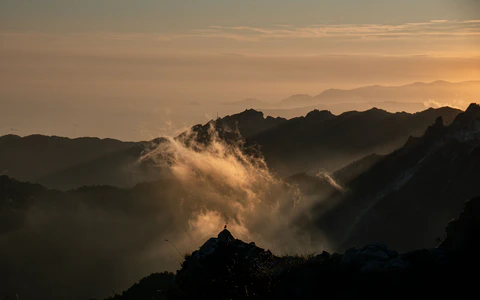
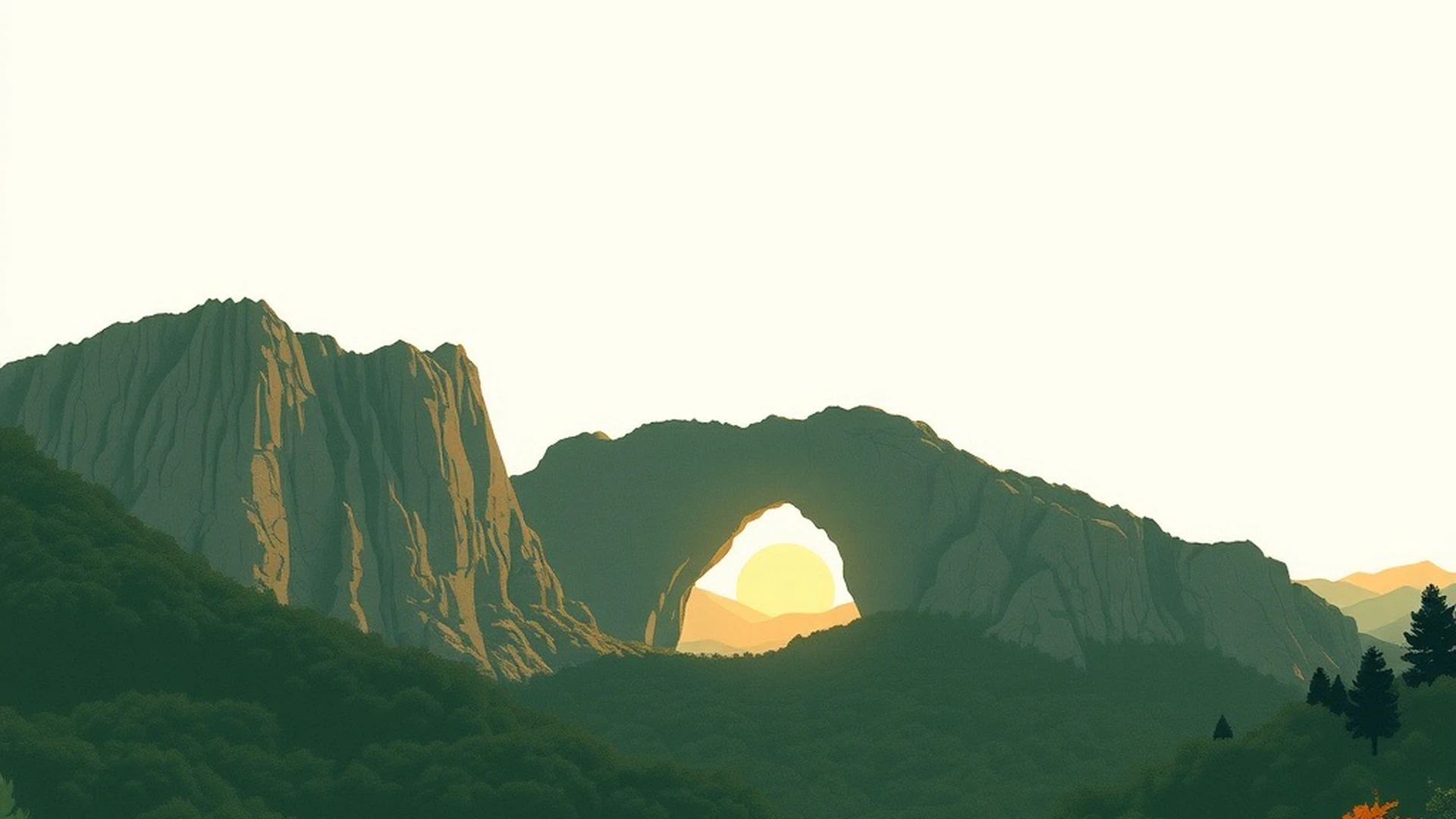
From the Versilia coast, on a clear morning, you can make out a mountain with a hole in it. Monte Forato stands in the Apuan Alps above Stazzema, two summits a little over 1,200 metres joined by a ridge, and between them the rock has been hollowed into an arch roughly 32 metres across and 25 high, so that sky shows through the skyline. The bridge of rock left on top is only about eight metres wide, and not much more than that deep. Both valleys see it: Versilia on the coast side, the Garfagnana on the Serchio side, and both have spent centuries explaining it.
How the Hole Got There
The dull answer is water. The Apuan Alps are limestone and dolomite, shot through with caves, and the caves that riddle the slopes around Forato’s summit tell you what the mountain is made of. Water working down through the rock and wind working across the ridge took out the weaker stone and left the arch. The exact sequence is still argued over by geologists; the short version is that the arch is a karst feature, limestone dissolved and carried away by water.
The Garfagnana answer is better. Saint Pellegrino, a hermit, was raising a great cross at San Pellegrino in Alpe, up on the Apennine ridge across the Garfagnana, when the devil came to tempt him, first as a dragon and then as a beautiful woman. The devil struck him; Pellegrino slapped back so hard that the devil flew clean across the valley and through the Apuans, and the hole in Forato is where he went. At San Pellegrino a ritual called the Giro del Diavolo keeps the story going.
The Sunset That Happens Twice
This is what the mountain is known for locally. On a few evenings a year, seen from the right spot on the Serchio side, the sun sets behind the ridge, reappears in the arch, and sets a second time. The best-documented viewpoint is Barga, where photographers wait for it around 30 and 31 January and again around 11 and 12 November; Gallicano and other villages along the valley get versions of it on neighbouring days. From the Versilia side the show is the other way round: from Volegno and Pruno, two hamlets of Stazzema under the mountain, the sun rises through the arch around the summer solstice.
The dates can be worked out for any given viewpoint, and the Lucca section of the Italian Alpine Club runs outings for it, but whether you’ll see anything is another matter: low cloud on the Apuans spoils a good share of attempts. That uncertainty is most of the charm.
The Peaks Around It
Forato is one tooth in a jaw. From the ridge the neighbours are:
- Pania della Croce, 1,858 metres, the highest of the Panie group and the blade you see from the whole coast.
- Monte Procinto, around 1,177 metres, a block of dolomite with vertical walls rising from a ledge that runs right round it. The iron way up it, finished in 1893, counts as the first via ferrata in Italy; CAI Firenze restored it in 2018.
- Monte Croce, about 1,314 metres, which in May turns white with wild narcissi. Picking them is forbidden.
- Monte Matanna and Monte Nona, the southern end of the group, above Camaiore.
- The Foce di Petrosciana, the 961-metre pass on the Garfagnana approach, where the view opens towards the coast.
The whole group sits inside the Parco Regionale delle Alpi Apuane, created by regional law in January 1985, a member of the European Geoparks network since 2011 and a UNESCO Global Geopark since 2015.
Under the Mountain
Two of Italy’s great show caves open at the foot of this ridge, one on each side. At Fornovolasco, on the Garfagnana side, the Grotta del Vento runs more than four kilometres into the base of Pania Secca, with an underground stream and a draught strong enough to give the cave its name. A four-year-old local girl is credited with the first entry in 1898. Cavers went in from 1909, and a 1961 expedition broke through the siphon that had stopped everyone before. At Levigliani, on the Versilia side, the Antro del Corchia was discovered in 1840 by Emilio Simi and opened to the public in 2001, with a visitor route on steel walkways and steps inside a system that runs for more than fifty kilometres. Levigliani is also where the old marble road begins that I describe in the marble quarry hike in the Apuan Alps, and the two days, the arch and the quarries, show you the same range from opposite ends.
Stazzema
The villages under Forato on the Versilia side belong to the municipality of Stazzema, and one of them carries a weight the others don’t. On 12 August 1944 SS troops and Italian collaborators killed around 560 people at Sant’Anna di Stazzema, about 130 of them children. The village is now a national peace park, set up by law in 2000, with a museum of the Resistance and an ossuary on the hill above. It isn’t on the way to the arch, and it isn’t a stop to tack on to a mountain day. It’s a place to go on purpose, and anyone walking these hills should know it’s there.
Which Side to Come From
Forato can be reached from Stazzema on the coast side or from Fornovolasco in the Garfagnana, and the two approaches feel like different mountains. The Versilia side rises straight off the plain with the sea at your back. The Serchio side comes up through chestnut woods from a valley on the inland side of the range, which looks towards the Apennines rather than the sea. The ridge between the two summits is narrow, and the mountain asks for a head for heights. How the range fits together, from the Panie down to Matanna, is in my day trekking from Viareggio post, and where the Apuans sit among Tuscany’s other ranges is in Tuscany’s mountain ranges.
I’d come in May for the narcissi on Monte Croce, or in late October when the chestnuts turn on the Fornovolasco side and the summer haze has gone off the sea.
Would you like to experience this?
Tell me when you’re in Tuscany and what you have in mind, and I’ll get back to you.Frequently asked questions
Looking for private hiking in Tuscany?
Browse my full collection of small-group, fully private hikes across the region.