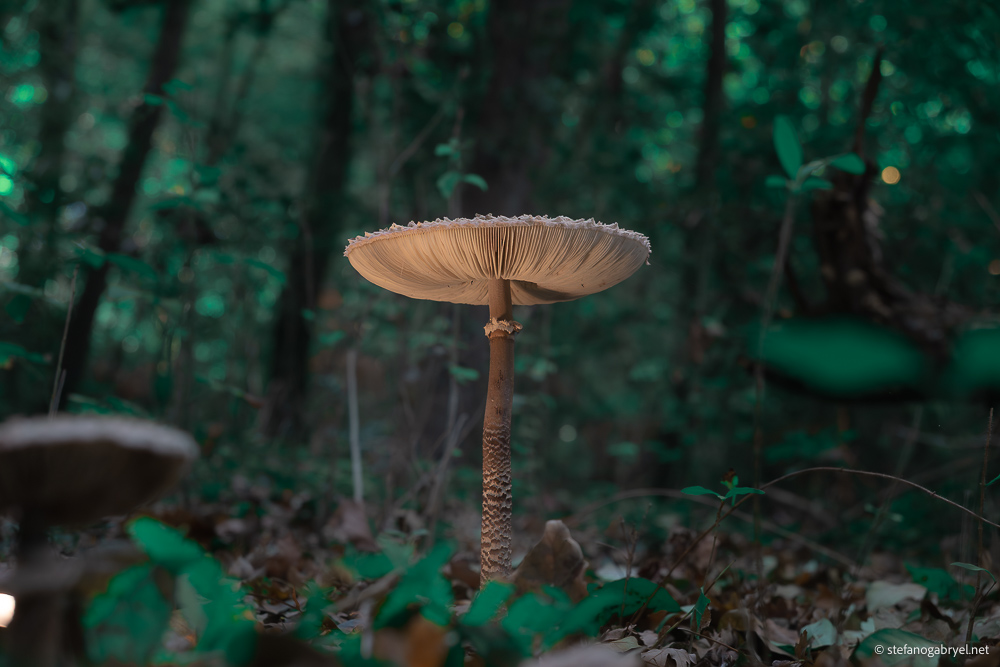
Every autumn at Riserva Acquerino, there’s a moment when the meadows transform into something almost fantastical.
After the first substantial September rains, Macrolepiota procera emerges by the dozens—sometimes hundreds—creating a landscape that looks like someone scattered umbrellas across the grass.
The Italian names are wonderfully descriptive: “mazza di tamburo” (drumstick), “parasole” (parasol), “bubbola maggiore.”
All capture something essential about this mushroom’s appearance, but none quite convey the surprise of encountering one for the first time.
At full maturity, a parasol mushroom can reach 30-40 centimeters tall with a cap spanning 20-30 centimeters.
This is not a mushroom you overlook.
Why Acquerino is Parasol Paradise
The Riserva Naturale Acquerino Cantagallo, in the Appennino Pistoiese, represents some of the finest mixed forest and meadow habitat in Tuscany.
The combination of open grassland, forest edges, and well-managed trails creates ideal conditions for Macrolepiota procera.
Unlike mycorrhizal species that require specific tree partnerships, the parasol mushroom is saprotrophic—a decomposer that feeds on dead organic matter in the soil.
This gives it flexibility in where it can grow.
What it needs is nutrient-rich soil with plenty of organic material, moderate moisture, and open or semi-open conditions.
The meadows at Acquerino provide all of this perfectly.
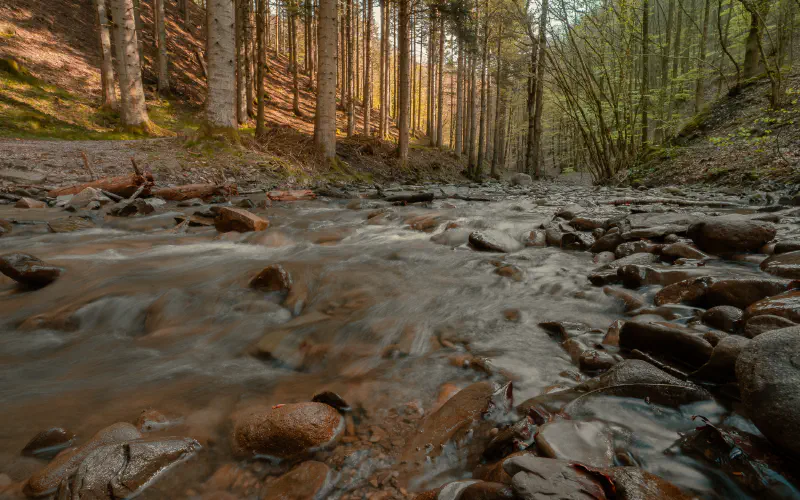
Guided private hike in Riserva Acquerino. Trek the Red Deer Kingdom near Florence & Pistoia. Certified local guide. Book your mountain tour today!
Years of leaf fall from surrounding mixed forests, the decomposition of grasses, the slightly acidic soil characteristic of the area—all contribute to productive parasol habitat.
During my regular autumn hikes through the reserve, I’ve counted over fifty individual parasols visible from a single meadow viewpoint.
They fruit in fairy rings and scattered groupings, often returning to the same productive spots year after year.
The mycelium beneath the soil is perennial; once established, it continues producing fruiting bodies annually if conditions remain favorable.
Recognition: A Mushroom Difficult to Mistake
One reason I confidently recommend Macrolepiota procera to careful beginners is its distinctive appearance.
When fully developed, this mushroom is nearly impossible to confuse with anything dangerous.
The key identifying features include:
Physical characteristics:
Extreme height and size. While young buttons can be confused with toxic Amanita species, mature parasols are unmistakable in their scale.
The snakeskin stem. The stalk is covered in brown, scaly patterns that create a distinctive zigzag or snakeskin appearance. This is diagnostic—no toxic look-alike shares this feature.
The moveable ring. The annulus (ring) around the stem is double-edged and slides freely up and down the stalk. You can physically move it with your finger. This mobile ring is unique to Macrolepiota species.
The scaly cap pattern. The tan-brown cap has darker scales radiating from a central boss, creating a pattern reminiscent of a parasol or sunshade—hence the common names.
Important safety note:
Young buttons before the cap expands can superficially resemble deadly Amanita species.
The critical rule: never harvest parasol mushrooms in the button stage.
Wait until the cap has fully expanded and you can verify the snakeskin stem pattern and moveable ring.
This patience eliminates any risk of confusion.
The Saprotrophic Lifestyle: Feeding on Decay
Understanding what Macrolepiota procera does in the ecosystem helps you predict where to find it.
As a saprotroph, this mushroom is a decomposer—it breaks down dead plant material and returns nutrients to the soil.
This is fundamentally different from the mycorrhizal relationships I’ve described for porcini, Lactarius deliciosus, and Laccaria amethystina.
Those species cannot exist without living tree partners.
Macrolepiota procera doesn’t need trees at all—it needs dead organic matter.
This explains why you find it in:
- Meadows and grasslands with accumulated organic material
- Forest edges where leaf litter meets open ground
- Along trails and paths where soil has been enriched with decomposing plant matter
- Pastures and fields, particularly where livestock have grazed (the organic enrichment from manure helps)
At Acquerino specifically, the transition zones between forest and meadow are particularly productive.
These edges accumulate leaf fall from the surrounding trees while maintaining the open conditions and grass growth that parasols prefer.
Seasonality and Fruiting Patterns
In Tuscany, Macrolepiota procera has a reliable autumn season.
The main fruiting period runs from late August through November, with peak abundance typically in September and October.
Unlike some mushrooms that appear suddenly after rain and disappear quickly, parasols have good longevity.
A mature specimen can persist for a week or more in favorable conditions, making them forgiving for the casual mushroom hunter.
You don’t need to race to the forest at dawn—the parasols will likely still be there in the afternoon.
The trigger for fruiting is rainfall following the summer dry period.
At Acquerino, which sits at around 900 meters elevation, the first September rains consistently bring parasols.
I’ve learned to schedule my autumn mycology hikes for about 7-10 days after substantial rainfall—that’s when the meadows truly come alive.
Culinary Excellence: More Than Just Size
While the parasol mushroom’s dramatic appearance might suggest it’s more spectacle than substance, this is genuinely excellent eating.
In my opinion, Macrolepiota procera rivals porcini for culinary quality, though it receives far less cultural prestige.
The flavor is rich and nutty, the texture when properly prepared is firm and almost meaty, and the sheer size means one or two caps can feed a family.
Harvest considerations:
Use only the caps. The stems are fibrous and tough—discard them in the field or save them for mushroom stock.
Harvest before the cap flattens completely. While fully mature parasols are edible, younger specimens with caps still slightly convex have better texture.
They’re prolific enough that sustainable harvest is straightforward. Unlike rare porcini, you can take what you’ll use without guilt. The mycelium will fruit again.
What I’ve Learned From the Parasols
Over hundreds of hikes through Acquerino and similar habitats, Macrolepiota procera has taught me something about abundance and accessibility.
This mushroom democratizes the foraging experience.
You don’t need secret locations passed down through generations.
You don’t need to wake at dawn and race competitors to hidden groves.
You don’t need decades of experience to identify it safely.
The parasol mushroom simply grows, obviously and abundantly, in publicly accessible meadows where anyone can find it.
When I bring hiking groups to Acquerino in autumn, watching someone discover their first parasol mushroom is always rewarding.
The sheer size generates genuine wonder—that something this large, this dramatic, this edible, is simply growing wild in a meadow.
The Photographer’s Gift
From my work photographing Tuscany’s landscapes and nature, I’ve found Macrolepiota procera particularly generous as a subject.
The scale and structure create natural compositional interest.
A single parasol in a meadow with the Appennines in the background tells a complete story about season, place, and ecosystem.
Fairy rings of parasols create patterns that work beautifully from above—I’ve occasionally used a small drone to capture these natural geometries.
The progression from button to mature umbrella offers time-lapse possibilities.
The dramatic contrast between the mushroom’s size and the delicate meadow flowers around it creates images that surprise people.
They expect mushrooms to be small, hidden, subtle.
Macrolepiota procera is none of those things.
An Invitation to Observation
Here’s what I propose: if you’re in Tuscany during autumn, particularly in the Appennino Pistoiese, visit Acquerino.
Walk the meadow trails.
You will find parasol mushrooms—this is almost guaranteed in season.
Whether you harvest them for eating is your choice, but take time to simply observe.
Notice the snakeskin stem pattern up close.
Move the ring up and down the stalk.
Appreciate the engineering of that broad cap supported by such a relatively slender stem.
Consider the mycelium beneath your feet, threading through the soil, feeding on last year’s grass and leaves, converting death into new life.
This is the fundamental process sustaining the ecosystem, made visible in mushroom form.
And if you do harvest some for dinner, remember: this abundance is a gift.
Take only what you’ll use, leave plenty for spores to disperse and for others to discover.
The meadows of Acquerino will fruit again next autumn, as they have for centuries.
Are you a beginner?
If you’re just beginning to explore mushroom foraging, Geoff Dann’s Edible Mushrooms is the field guide I recommend to all my clients. It’s an excellent starting point for learning safe identification. Read my full review here.
Want to learn in the field? Join me for a hands-on mushroom hunting experience ⬇️ ⬇️ ⬇️ ⬇️
Ready to move from photos to field identification?
Experience these fascinating fungi firsthand on a guided autumn hike through Tuscan woodlands. Learn professional identification techniques, understand ecosystem roles, and capture your own stunning mushroom photography.
Attention!
While the content of this blog post is aimed at providing you with information as accurate as possible, it should be treated as what it is: simply a blog post on the internet.
Mushroom identification should only be performed by experts, as a mistake can lead to dire consequences. Attempting to identify a mushroom on your own, without prior experience, based solely on the content of this blog post is strongly discouraged.
Explore Hidden Tuscany
Guided hiking experiences combining expert trail knowledge, professional photography, and wilderness mindfulness.
Latest posts
 4 March 2026
Galium Aparine: Cleavers in Tuscan Hedgerows
4 March 2026
Galium Aparine: Cleavers in Tuscan Hedgerows 3 March 2026
Umbilicus Rupestris: Wall Pennywort in Tuscany
3 March 2026
Umbilicus Rupestris: Wall Pennywort in Tuscany 3 March 2026
Laurus Nobilis: Bay Laurel in Tuscan Landscapes
3 March 2026
Laurus Nobilis: Bay Laurel in Tuscan Landscapes 2 March 2026
Guided Tours for Exploring Marble Quarries in Apuan Alps
2 March 2026
Guided Tours for Exploring Marble Quarries in Apuan Alps 26 February 2026
Photographing Nottolini Aqueduct: Light & Geometry
26 February 2026
Photographing Nottolini Aqueduct: Light & Geometry