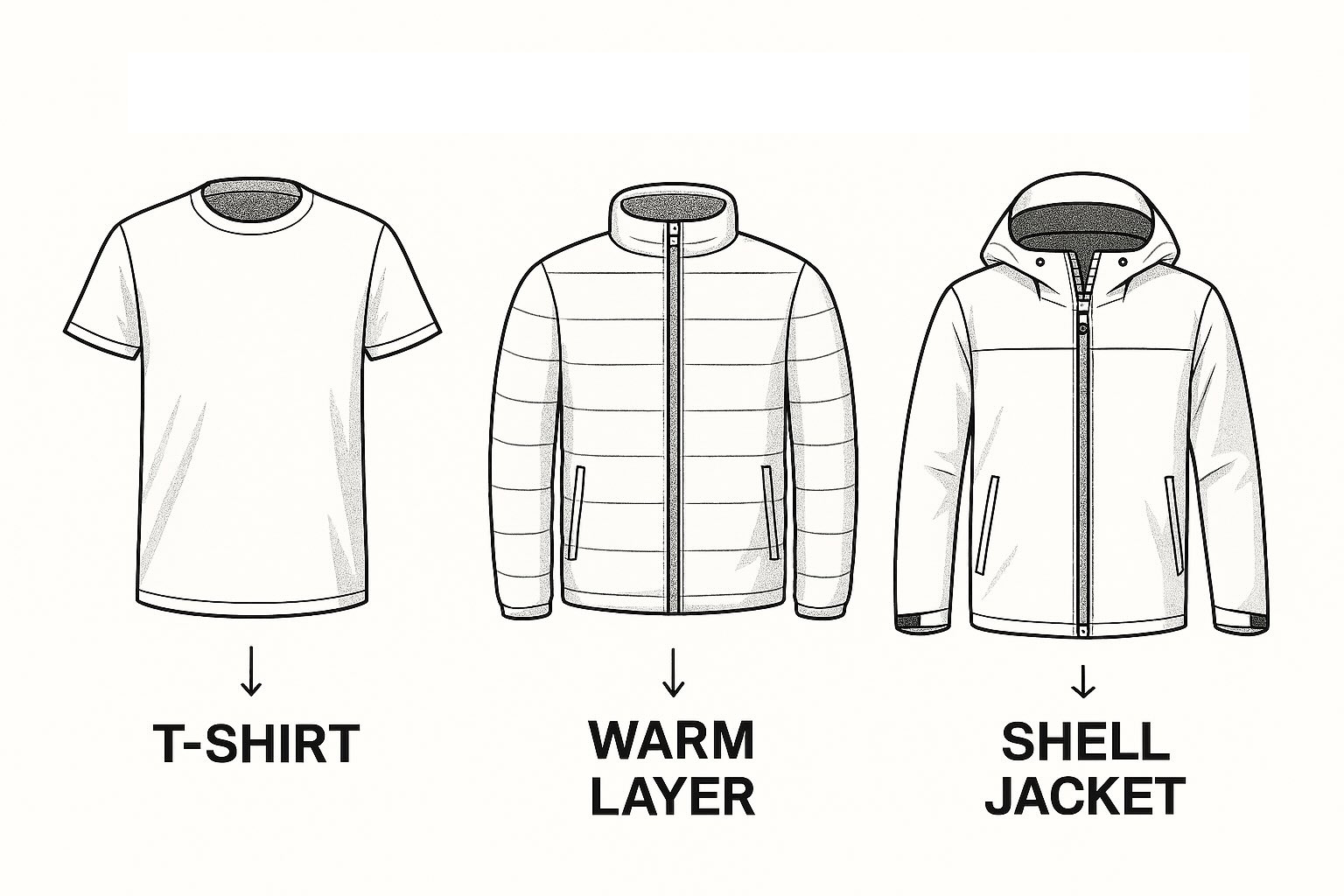
After guiding countless treks through the Apuan Alps and Appennines, I’ve seen firsthand how proper clothing can make or break a mountain experience.
The three-layer system I recommend to every client isn’t just about comfort—it’s a fundamental safety practice that adapts to the dramatic weather changes we encounter in these mountains.
First Layer: The Technical Foundation
Your base layer should be a technical shirt made from synthetic materials or merino wool.
Never, and I cannot stress this enough, wear cotton.
Cotton absorbs and retains moisture from sweat, which during the demanding climbs up to places like Riserva Acquerino, will leave you damp and dangerously cold when you stop moving.
Technical fabrics wick moisture away from your skin, keeping you dry and regulating your body temperature throughout the day.
Second Layer: Insulation That Breathes
The middle layer provides warmth through insulation.
I typically recommend fleece or pile, though the thickness varies with the season.
For summer hikes in the Appennino Pistoiese, a lightweight fleece suffices.
Come autumn or early spring, especially when approaching higher elevations, you’ll want something more substantial.
The beauty of this layer is its flexibility—you can easily add or remove it based on conditions and exertion level.
Third Layer: Your Essential Shield
This is the layer you must never leave behind. Your shell jacket serves one purpose: protection from wind and rain.
It should not be designed to keep you warm—that’s the second layer’s job.
What matters here is breathability combined with weather protection. Gore-Tex or similar breathable membranes are ideal because they allow your body’s moisture to escape while blocking external elements.
Avoid purely plastic shells like K-Way jackets.
While they’ll keep rain out, they trap all your perspiration inside, essentially creating a personal sauna.
On a strenuous mountain ascent, where you’re generating significant body heat and sweating, this becomes counterproductive and uncomfortable.
The Strategy: When to Wear What
Here’s my standard approach for most treks: during the ascent, keep your shell jacket packed in your backpack. Hike in your technical base layer and warm middle layer.
This allows maximum breathability as you work your way uphill.
When you reach a summit, a ridge with strong winds, or stop for lunch, that’s when the shell jacket comes out. Your body will cool down rapidly when stationary, especially if you’re slightly damp from exertion. The shell blocks the wind chill and, if weather turns, keeps you dry.
This is particularly important in our mountains, where conditions can shift dramatically within an hour.
The warm second layer can be optional in summer, but the shell jacket never is. Mountain weather is unpredictable, and being caught in sudden rain without protection can turn a beautiful day into a dangerous situation.
Go Independent: Final Gear Check
Planning a solo trek? Book a quick, pre-trip consultation call. We will review your entire pack list and get my expert feedback on your clothing, footwear, and emergency kit for your specific route.

or head to the contact page
Explore Hidden Tuscany
Guided hiking experiences combining expert trail knowledge, professional photography, and wilderness mindfulness.
Latest posts
 5 March 2026
Salamandra Salamandra: Fire Salamander in Tuscany
5 March 2026
Salamandra Salamandra: Fire Salamander in Tuscany 5 March 2026
Pisa: Base for Exploring Tuscany's Hidden Nature
5 March 2026
Pisa: Base for Exploring Tuscany's Hidden Nature 5 March 2026
Montecatini Terme: Base for Exploring Tuscany's Nature
5 March 2026
Montecatini Terme: Base for Exploring Tuscany's Nature 4 March 2026
Galium Aparine: Cleavers in Tuscan Hedgerows
4 March 2026
Galium Aparine: Cleavers in Tuscan Hedgerows 3 March 2026
Umbilicus Rupestris: Wall Pennywort in Tuscany
3 March 2026
Umbilicus Rupestris: Wall Pennywort in Tuscany