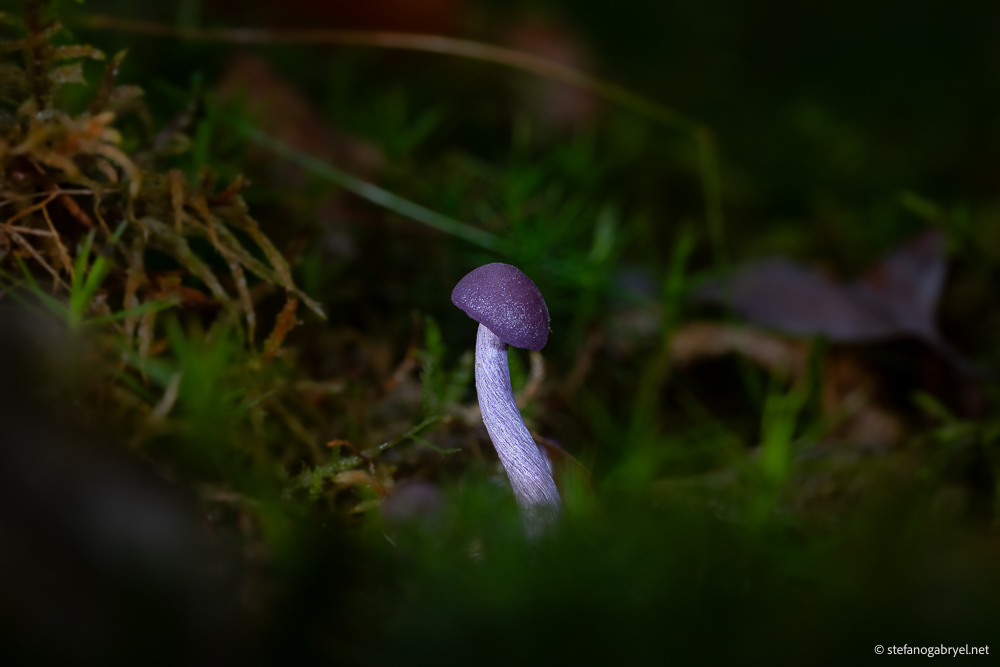
There are mushrooms you eat for flavor, mushrooms you eat for abundance, and then there’s Laccaria amethystina—a mushroom you might eat primarily for the sheer joy of adding violet-purple to your plate.
In the damp oak, beech, and chestnut forests of the Appennines, this small mushroom glows like a jewel against the brown leaf litter.
The English call it the amethyst deceiver, “deceiver” because it fades to pale buff as it ages, potentially confusing it with other Laccaria species.
But catch it young, especially after autumn rains, and there’s no deception—just that unmistakable, almost surreal purple color that seems too vivid to be natural.
It’s beautiful. It’s edible. And it comes with an important caveat that every forager should understand.
A Mushroom With a Toxic Talent
Laccaria amethystina possesses a remarkable and somewhat disturbing ability: it bioaccumulates arsenic from the soil.
This mushroom is extraordinarily efficient at absorbing and concentrating arsenic in its tissues—far more so than most other fungi or plants.
We’re not talking about producing arsenic; the mushroom doesn’t create this toxic element.
Rather, it acts like a biological pump, extracting arsenic that exists in the soil and concentrating it in the fruiting body you might consider eating.
In clean forest soils with naturally low arsenic levels, Laccaria amethystina remains safe to consume in reasonable quantities.
But in contaminated soils, this mushroom can accumulate dangerous concentrations.
This is where Tuscany’s agricultural history becomes relevant to modern foraging.
The Persistent Legacy of Historical Agriculture
Throughout the 19th and much of the 20th century, arsenic-based compounds were widely used in agriculture across Europe, including Italy.
Arsenic was a common ingredient in pesticides, herbicides, and fungicides.
Vineyards, orchards, and croplands were regularly treated with these arsenical compounds to control pests and diseases.
The practice was eventually banned as the health risks became undeniable, but here’s the problem: arsenic doesn’t decompose or break down in soil.
Unlike organic pesticides that degrade over time, arsenic is an element—it persists indefinitely.
Former agricultural lands, even those that haven’t seen arsenical treatments in fifty or seventy years, can still harbor elevated arsenic levels in the topsoil.
This is particularly relevant in Tuscany, where:
- Former vineyard sites are now often returned to woodland or converted to other uses
- Abandoned orchards have been reclaimed by forest
- Old agricultural terraces in the mountains were once intensively cultivated and treated
When I’m scouting locations for my guided hikes, I pay attention to stone walls, terracing patterns, and local historical knowledge.
These indicate former agricultural use—valuable information for understanding the landscape’s ecology and potential contamination history.
Where and When to Find Them Safely
Laccaria amethystina is mycorrhizal, forming partnerships primarily with broadleaf trees—particularly oaks, beeches, and chestnuts in our region.
Unlike specialists like porcini, this mushroom is somewhat generalist in its partnerships.
I’ve found them in mixed deciduous forests throughout the Apuan Alps and Appennino Pistoiese, from around 400 to 1200 meters elevation.
The season runs from late summer through autumn (August-November), with peak fruiting following sustained rainfall in September and October.
They prefer acidic soils and are often found in the same general areas where you might encounter other acid-loving species.
Look for them in mossy areas, near rotting wood, or emerging from leaf litter in mature forest.
Foraging safely means choosing locations wisely:
- Deep forest areas far from historical agriculture are safest
- High-elevation beech forests in protected areas unlikely to have been cultivated
- Sites with documented clean soil if you have access to such information
Avoid collecting from:
- Former vineyard sites or near old wine-producing areas
- Abandoned orchards or areas with fruit trees showing signs of age
- Proximity to old agricultural terraces, stone walls indicating cultivation, or anywhere locals mention former farming
The Mycorrhizal Partnership and Soil Preference
Like Lactarius deliciosus and Boletus edulis, Laccaria amethystina cannot survive without its tree partners.
The mycorrhizal relationship is obligate—no trees, no mushrooms.
The fungus colonizes the fine roots of its host trees, extending their effective absorption area and helping them access nutrients and water from a larger soil volume.
In return, the tree provides the fungus with carbohydrates from photosynthesis.
Culinary Use: Color as the Prize
Let me be direct about Laccaria amethystina’s culinary value: it’s not prized for intense flavor or substantial texture.
The appeal is almost entirely visual.
That vibrant purple color—so unusual in the culinary world—persists through cooking, though it does darken somewhat.
When sautéed with other mushrooms in a mixed plate, when added to risotto, or when used as a garnish, Laccaria amethystina provides something most ingredients cannot: natural purple.
Preparation considerations:
- Use sparingly even from clean areas—this is not a mushroom to consume in large quantities given its bioaccumulation tendency
- Mix with other species rather than eating it as the primary mushroom in a dish
- The flavor is mild, slightly earthy, not particularly distinctive—you’re cooking with color more than taste
Safety and cultural context:
- Knowledgeable Italian foragers typically avoid this species entirely, or consume it very occasionally in small amounts
- The risk-benefit calculation is straightforward: minimal culinary value versus potential arsenic exposure makes it easy to simply appreciate visually and leave in the forest
The Honest Assessment
If you’re keeping score: yes, Laccaria amethystina is technically edible.
In clean soils, small quantities pose minimal risk to healthy adults.
But here’s my professional recommendation as a guide: admire it, photograph it, appreciate its role in the ecosystem, and leave it in the forest.
Tuscany offers dozens of better culinary mushrooms—Lactarius deliciosus, various Russula species, Macrolepiota procera, and if you’re extraordinarily lucky, porcini.
These alternatives don’t bioaccumulate arsenic, don’t require careful site selection to avoid contamination, and generally offer superior culinary experiences.
Laccaria amethystina’s greatest gift isn’t as food—it’s as a reminder that the forest contains beauty we can appreciate without needing to possess or consume.
That purple gleam in the autumn forest, that’s enough.
Are you a beginner?
If you’re just beginning to explore mushroom foraging, Geoff Dann’s Edible Mushrooms is the field guide I recommend to all my clients. It’s an excellent starting point for learning safe identification. Read my full review here.
Want to learn in the field? Join me for a hands-on mushroom hunting experience ⬇️ ⬇️ ⬇️ ⬇️
Ready to move from photos to field identification?
Experience these fascinating fungi firsthand on a guided autumn hike through Tuscan woodlands. Learn professional identification techniques, understand ecosystem roles, and capture your own stunning mushroom photography.
Attention!
While the content of this blog post is aimed at providing you with information as accurate as possible, it should be treated as what it is: simply a blog post on the internet.
Mushroom identification should only be performed by experts, as a mistake can lead to dire consequences. Attempting to identify a mushroom on your own, without prior experience, based solely on the content of this blog post is strongly discouraged.
Explore Hidden Tuscany
Guided hiking experiences combining expert trail knowledge, professional photography, and wilderness mindfulness.
Latest posts
 4 March 2026
Galium Aparine: Cleavers in Tuscan Hedgerows
4 March 2026
Galium Aparine: Cleavers in Tuscan Hedgerows 3 March 2026
Umbilicus Rupestris: Wall Pennywort in Tuscany
3 March 2026
Umbilicus Rupestris: Wall Pennywort in Tuscany 3 March 2026
Laurus Nobilis: Bay Laurel in Tuscan Landscapes
3 March 2026
Laurus Nobilis: Bay Laurel in Tuscan Landscapes 2 March 2026
Guided Tours for Exploring Marble Quarries in Apuan Alps
2 March 2026
Guided Tours for Exploring Marble Quarries in Apuan Alps 26 February 2026
Photographing Nottolini Aqueduct: Light & Geometry
26 February 2026
Photographing Nottolini Aqueduct: Light & Geometry