Not everyone who comes to Tuscany wants a six-hour mountain day.
Some visitors have never hiked at all. Some haven’t walked more than a few kilometres since school. Some are fit enough — they run, they cycle, they swim — but have never been on a trail and don’t know what to expect.
This post is for all of them.
I guide everything from flat countryside walks to demanding ridge crossings in the Apennines. But the question I hear most often from first-time clients isn’t about the hard stuff. It’s this: where do I start?
The answer is simpler than you think. Tuscany has trails that require nothing more than comfortable shoes and a willingness to walk. And even the “easy” ones offer landscapes that most visitors never discover.
How I Think About Difficulty
Before the trail-by-trail breakdown, it helps to understand what makes a hike easy or hard in this region.
Elevation gain matters more than distance. Walking 9 km on flat ground is a pleasant stroll. Walking 9 km with 500 metres of climbing is a serious day out. When you’re choosing a trail, look at the elevation number first.
Terrain matters. A paved path and a rocky mountain trail are completely different experiences, even at the same distance and elevation. Loose rocks, mud, and steep descents are harder on your body — and your confidence — than smooth surfaces.
Duration includes stops. When I say a hike takes 2.5 hours, that’s walking time plus reasonable breaks. You’re not racing. If you stop to take photos, eat lunch, or just sit and look at something, add that time on top.
“Easy” means no technical skills required. You don’t need to know how to read a map, use trekking poles, or navigate via GPS. You need to be able to walk, and to be comfortable being outdoors for a few hours.
The Easiest Trails in Tuscany, Ranked
I’m going to walk you through eight guided routes, from the most accessible to the most demanding. The first three are genuine beginner territory. The middle ones are the step up. The last two are where hiking starts to feel like a proper mountain activity.
Find where you fit, and start there.
1. Acquedotto Nottolini — The Flattest Walk in Tuscany
9.1 km | 50 m elevation | 2.5 hours | Easy
This is as gentle as hiking gets.
The Nottolini Aqueduct stretches from just outside Lucca’s medieval walls into the countryside — over 400 neoclassical stone arches crossing the plain toward the hills of Guamo. You walk alongside them on flat terrain, mostly compacted paths and quiet roads.
Fifty metres of elevation gain over nine kilometres is essentially nothing. Your body won’t notice it.
What to expect: A relaxed walk through open countryside with a remarkable architectural structure as your companion. The light through the arches shifts throughout the day — morning is soft, late afternoon is golden. This is also the walk I recommend for photography.
What you need: Comfortable shoes. Any shoes. This isn’t a trail in the mountain sense — it’s a walk.
Getting there: Starts directly from Lucca. Train accessible, no car required.
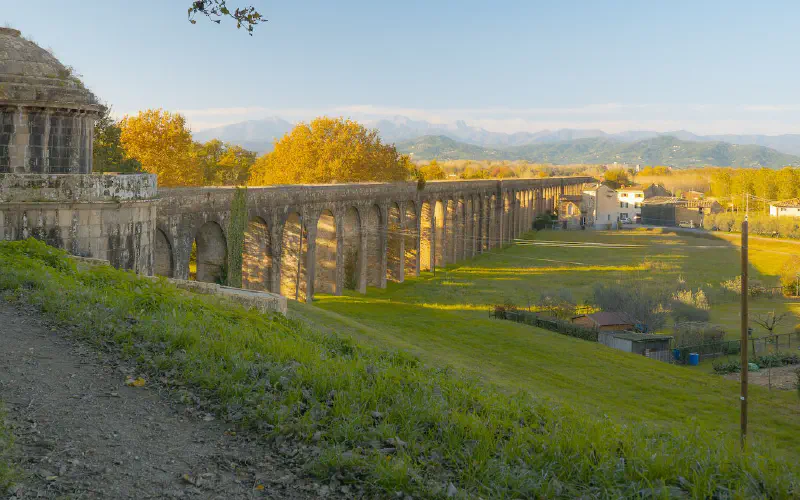
No car required: Walk the 400 arches of Nottolini Aqueduct from Lucca. Guided tour accessible by train. Discover 'Parole d'Oro'. Book now!
2. Rocca di San Paolino, Ripafratta — Your First Real Climb
3.3 km | 130 m elevation | 2.5 hours | Easy
This is where hiking begins to feel like hiking.
The trail climbs from the village of Ripafratta through a bay laurel forest to a medieval fortress overlooking the plains of Pisa and Lucca. 130 metres of elevation gain is noticeable — you’ll feel it in your legs — but the distance is short enough that anyone with basic fitness can manage it.
What to expect: A steady uphill walk through aromatic forest, with a ruined castle and panoramic views at the top. The descent follows the same route. Total commitment: a comfortable half-day.
What you need: Shoes with some grip — trainers are fine in dry weather, but the path gets slippery when wet. Sandals are a bad idea.
Getting there: Ripafratta has its own train station on the Pisa–Lucca line. Six minutes from Lucca, fifteen from Pisa.
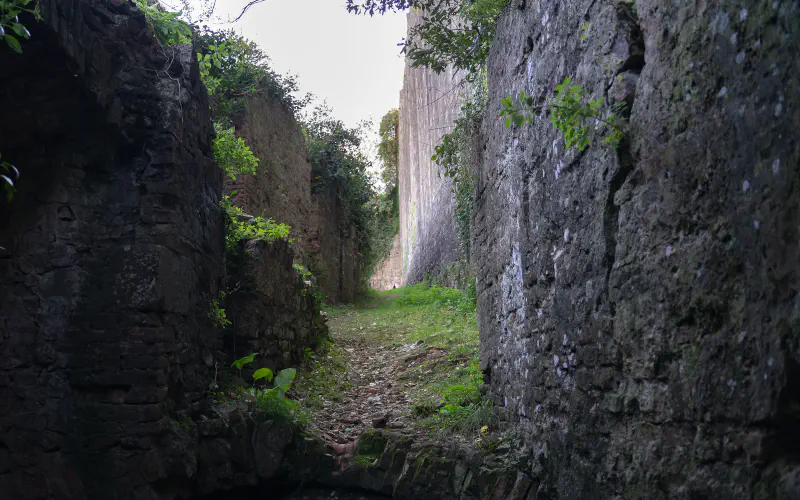
Book a private guided hike to Ripafratta Castle. Easy historical trekking from Pisa & Lucca. Discover 13th-century secrets. Reserve your tour now!
3. Marmifera del Corchia — Drama Without Difficulty
7 km | 420 m elevation | 3.5 hours | Medium-Easy
This one looks harder than it is.
The marble quarry road in the Apuan Alps follows a wide, unpaved mountain road — a strada bianca — through active quarries where white marble reflects the sun against grey rock faces. The landscape is dramatic, almost lunar.
420 metres of elevation sounds like a lot, and it is — but it’s all concentrated in the first half, on a road wide enough to drive a truck on. No scrambles, no exposed edges, no technical terrain. You walk uphill on a road, and then you walk back down.
What to expect: The most visually striking landscape in Tuscany, accessible to anyone who can sustain a steady uphill walk for about 90 minutes. This is the same stone Michelangelo used for his statues. The scale of the quarries is genuinely impressive.
What you need: Sturdy shoes — the road surface is compacted gravel and stone. Trekking poles help on the descent if your knees are sensitive. Sun protection — there’s minimal shade on the quarry road.
Getting there: Car required. Weekends only, when quarry trucks aren’t operating.
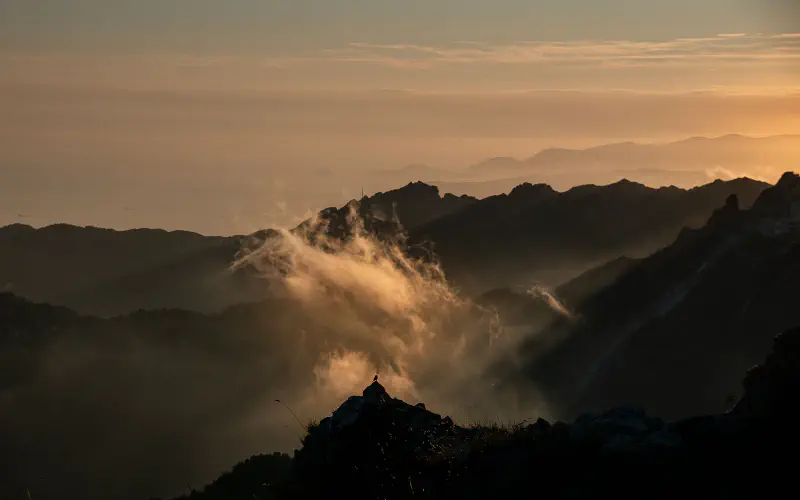
Hike a marble quarry road into the heart of the Apuan Alps, near Lucca, Pisa, Viareggio. A private guided adventure on the Marmifera del Corchia.
4. Riserva Acquerino (Pistoia) — Your First Forest Day
10.9 km | 375 m elevation | 6 hours | Medium-Easy
This is the transition from “easy hike” to “proper day out.”
The Acquerino nature reserve is ancient forest — beech, chestnut, Douglas fir — managed for conservation in the Pistoiese Apennines. The route follows wide forest roads with no technical sections. The difficulty is simply the duration: you’re on your feet for most of a day, with sustained but gentle climbing.
What to expect: A full immersion in one of Tuscany’s finest forest ecosystems. Red deer territory, woodpecker calls from the canopy, and in autumn, a forest floor scattered with mushrooms. The route can be shortened if energy runs low.
What you need: Proper hiking shoes. Layers — mountain forest is cooler than you expect. Water, lunch, rain jacket. This is where gear starts to matter.
Getting there: Car required. 24 km from Pistoia.
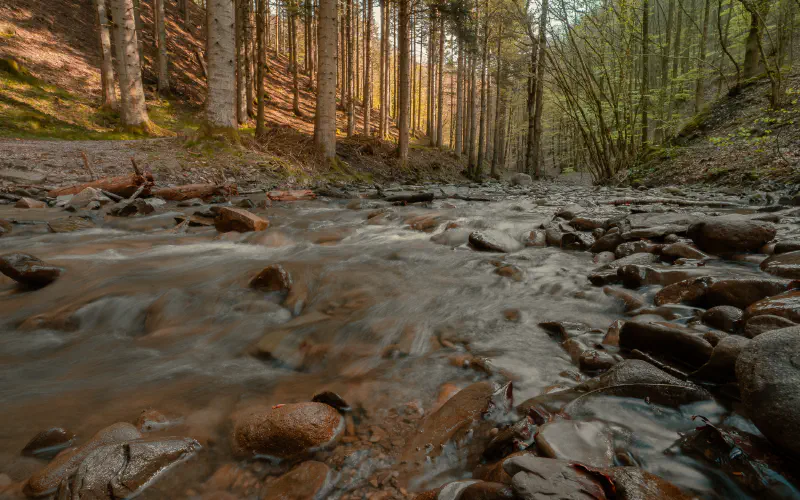
Guided private hike in Riserva Acquerino. Trek the Red Deer Kingdom near Florence & Pistoia. Certified local guide. Book your mountain tour today!
5. Acquerino-Cantagallo (Prato) — Deeper Into the Forest
9.5 km | 350 m elevation | 6 hours | Medium
Similar terrain to the Pistoia Acquerino route, but a different section of the same continuous forest, accessed from the Prato side. The trails here are slightly more varied — forest paths alongside the wider roads — and the biodiversity is exceptional.
What to expect: Old-growth forest with high canopy, stream crossings, and the kind of quiet that only remote woodland provides. This is a step beyond “easy” — you need to be comfortable walking for extended periods on uneven ground.
What you need: Full hiking gear. Sturdy boots, not trainers. The terrain is more varied than the Pistoia route.
Getting there: Car required. About 36 km from Prato.
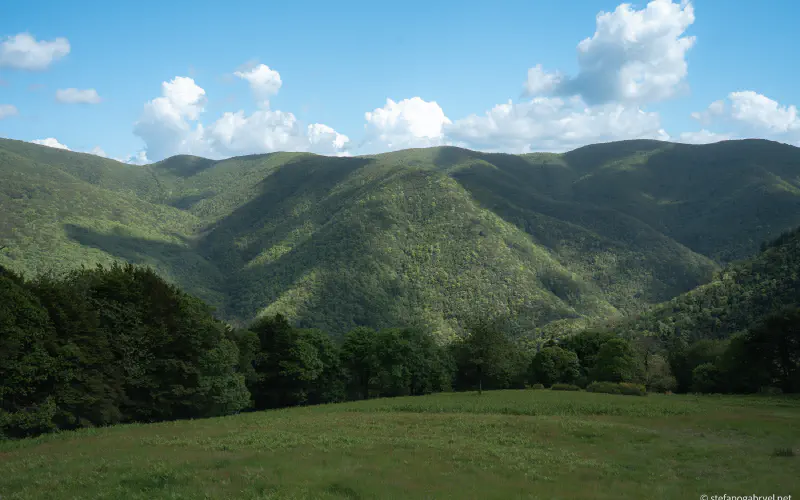
Book a private guided hike in Riserva Acquerino-Cantagallo. Expert trekking tours from Pistoia, Prato & Florence. Escape the crowds—reserve your tour!
6. Scaffaiolo Lake — Your First High Mountain Experience
9.5 km | 370 m elevation | 6 hours | Medium
This is where the landscape changes entirely.
Lago Scaffaiolo sits at 1,787 metres on the ridge between Tuscany and Emilia-Romagna. The trail starts high — around 1,500 metres — so the elevation gain is moderate, but you’re walking at altitude, which changes everything. The air is thinner. The wind is stronger. The views extend across both regions to the sea on clear days.
What to expect: Ridge walking above the treeline. A glacial lake with no tributaries and no outflow. 360-degree panoramas. The feeling of being in genuine mountains — because you are.
What you need: Full mountain gear. Layers are critical — temperatures drop dramatically at altitude. Wind protection. The path is well-marked but exposed.
Not suitable for beginners. This is a full-day mountain commitment. If you haven’t done trails 1–4 or equivalent, build up to this one.
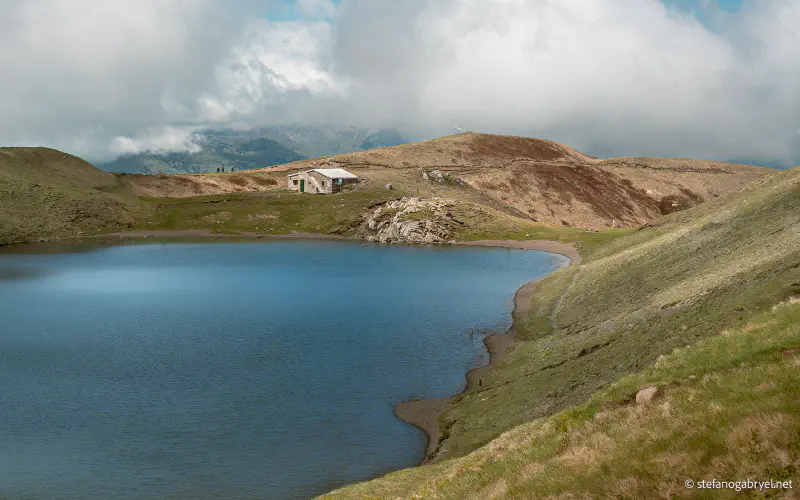
Book a private guided hike to Scaffaiolo Lake. 360° Apennine views & Rifugio visit. Expert tours from Lucca, Pistoia & Pisa. Reserve your trek!
7. Lago Nero — Remote and Rewarding
8 km | 450 m elevation | 5 hours | Medium
Lago Nero is a glacial lake at 1,730 metres — dark, reflective, surrounded by mountain terrain. The approach is steeper than Scaffaiolo, with sustained climbing that tests your cardiovascular fitness.
What to expect: A linear out-and-back route into high Apennine landscape. The lake itself is atmospheric — the dark water against the surrounding rock creates a distinctly different mood from Scaffaiolo’s open ridge.
What you need: Full mountain gear. Good fitness. This hike demands sustained uphill effort.
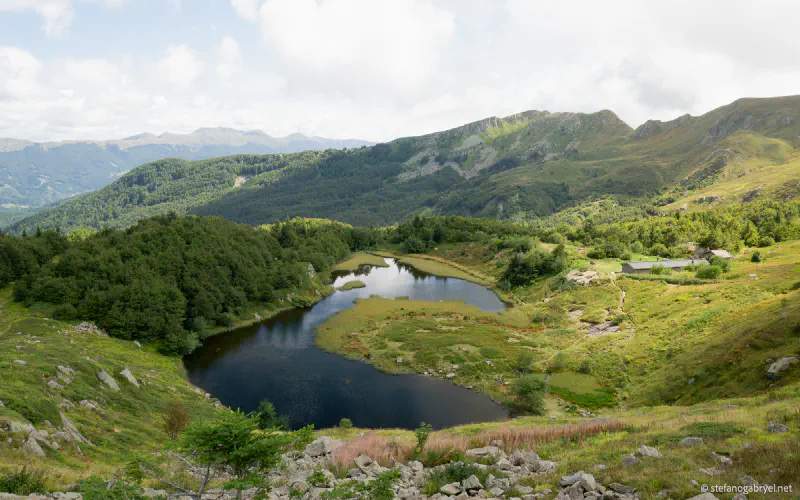
Book a private guided hike to Lago Nero. Professional trekking tours from Pistoia, Lucca & Florence. Discover Tuscany's glacial lakes. Reserve now!
8. Monte Gennaio — The Summit Experience
9.5 km | 500 m elevation | 6 hours | Medium-Hard
The hardest route I currently guide as a standard offering.
Monte Gennaio reaches 1,814 metres via a demanding ascent with a steep final section and exposed ridge walking along the Tuscany–Emilia-Romagna border. The views are extraordinary — 360 degrees of mountain ranges in every direction.
What to expect: A proper summit day. The ascent is challenging, the ridge is exposed to weather, and the descent requires careful footing. This is hiking that rewards fitness and experience.
What you need: Mountain boots, trekking poles recommended, full weather protection. Experience on trails 5–7 or equivalent.
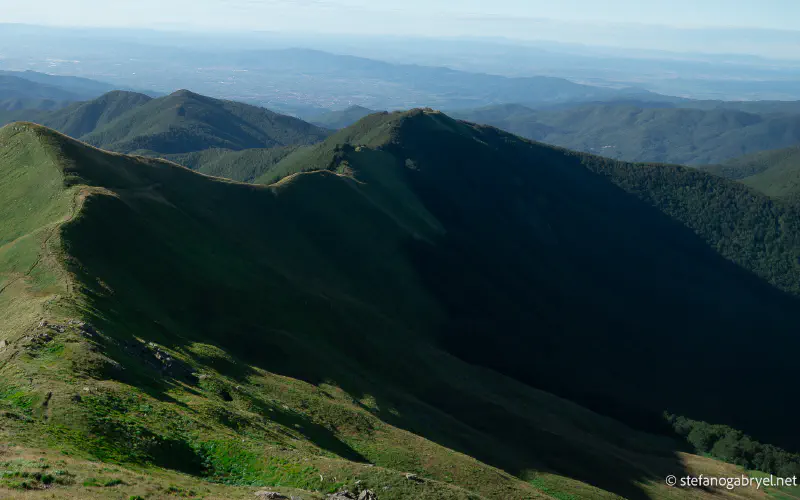
Book a private guided ascent of Monte Gennaio. 360° summit views & expert trekking from Pistoia, Florence & Lucca. Reserve your mountain tour now!
Where to Start: Honest Advice
If you’ve never hiked before, start with the Nottolini Aqueduct. It costs you nothing in terms of fitness or equipment, and it gives you the experience of being outdoors in Tuscan landscape for an extended period. If you enjoy that — if you find yourself wanting more — Ripafratta is the natural next step.
If you’re fit but new to hiking specifically, Marmifera del Corchia or Acquerino are your entry points. You have the physical capacity; you just need to learn what a trail day feels like — the pacing, the terrain awareness, the way a mountain day unfolds.
Don’t skip levels. The temptation is always to aim for the most dramatic option — the glacial lake, the summit, the ridge walk. Those experiences are better when you arrive prepared. A beginner on Scaffaiolo spends the whole day managing discomfort instead of absorbing the landscape. The same person, after two or three easier hikes, arrives at the same lake and actually sees it.
Hiking in Tuscany isn’t a single thing. It ranges from flat countryside walks to genuine mountain experiences. The region offers a progression — and working through that progression, at your own pace, is one of the most rewarding ways to discover what lies beyond the cities and hilltop towns.
For the full picture of what’s available across the region, see my complete guide to hiking in Tuscany. And if trail markings and navigation feel daunting, that’s exactly what a guide is for.
Not Sure Where to Start?
If you’re new to hiking and not sure which trail matches your fitness level, book a consultation. I’ll help you choose the right experience — no pressure, no upselling, just honest advice about what will work for you.

or head to the contact page
Explore Hidden Tuscany
Guided hiking experiences combining expert trail knowledge, professional photography, and wilderness mindfulness.