Viareggio is a beach town. Everyone knows this — the promenade, the Liberty architecture, the summer crowds, the Carnival floats. It’s where Tuscans go to swim and where tourists go to eat seafood.
What most visitors don’t realise is what’s directly behind them.
Turn your back to the sea and look inland. Those jagged white peaks aren’t clouds. They’re the Apuan Alps — a mountain range that rises from sea level to nearly 2,000 meters in less than 20 kilometers. Some of Italy’s most dramatic hiking terrain sits less than an hour from your beach umbrella.
Viareggio is, quietly, one of the best bases for day trekking in all of Tuscany. And almost nobody uses it that way.
The Apuan Alps: The Mountains You Can See From the Beach
The Apuan Alps are not the gentle, rolling hills that Tuscany is famous for. They’re sharp, steep, and raw — more Dolomites than Chianti. The white you see from the coast isn’t snow; it’s marble. The same Carrara marble that Michelangelo carved.
From Viareggio, the heart of the Apuan Alps is 40-50 minutes by car. That’s it. You can have breakfast on the seafront, be hiking at 800 meters by mid-morning, and be back in time for an evening aperitivo with sand still between your toes.
This proximity creates something unusual in European hiking: the combination of a proper coastal holiday town with serious mountain terrain accessible as a day trip. You don’t need to choose between beach and mountains. You can have both.
Marmifera del Corchia: The Marble Road
This is the hike I recommend first to anyone staying in Viareggio who wants to understand what the Apuan Alps actually are.
The Marmifera del Corchia is a strada bianca — an unpaved mountain road originally built to transport marble blocks from the quarries on Monte Corchia down to the valley. Today, the road is a walking trail, and it’s spectacular.
The drive from Viareggio takes about 50 minutes, climbing through the valley past the marble-working towns of Pietrasanta and Seravezza into the mountains above Levigliani.
What makes this hike special:
- The landscape is unlike anything else in Tuscany. White marble scree slopes, exposed rock faces, quarry walls rising overhead. The Apuan Alps look more like the Alps than anything in the Apennines.
- The views open progressively as you climb the road. The Versilia coast — Viareggio, Forte dei Marmi, the sea — spreads out below. On clear days, you can see Corsica.
- The road itself tells a story. Every switchback, every retaining wall, every widened section was carved into the mountain to move blocks of stone weighing tons. Walking it, you understand the scale of human effort that marble extraction demands.
- Available only on weekends (Saturday and Sunday), when the marble trucks aren’t running. The silence is part of the experience.
I’ve written about this hike in detail in my guide to marble quarry tours in the Apuan Alps, including the story of Kobra’s monumental David mural painted directly onto a quarry wall above Colonnata.
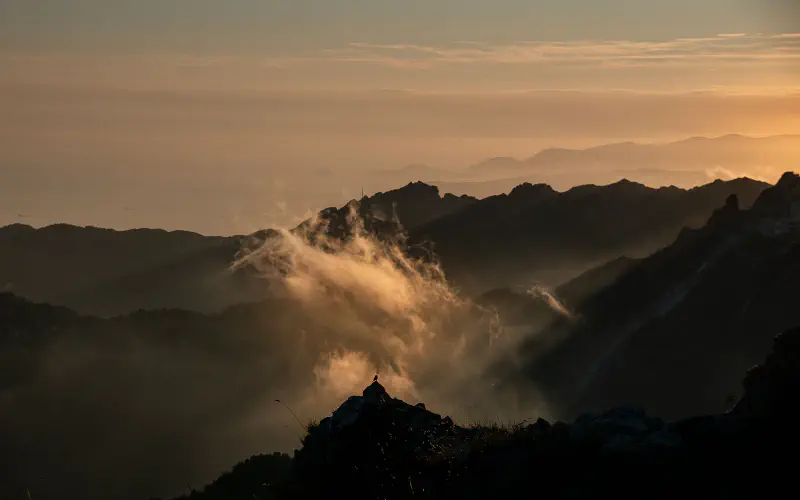
Hike a marble quarry road into the heart of the Apuan Alps, near Lucca, Pisa, Viareggio. A private guided adventure on the Marmifera del Corchia.
Lake Massaciuccoli and the Oasi LIPU
In the opposite direction from the mountains — south of Viareggio, near Torre del Lago — Lake Massaciuccoli offers a completely different kind of day out.
The lake is 15 minutes from central Viareggio. You’re barely out of town before the landscape shifts from urban to wetland.
The Oasi LIPU at Massaciuccoli is a protected nature reserve managed by Italy’s BirdLife partner. It sounds like a birdwatching destination, and it is — over 300 species recorded — but what surprised me is how much it offers beyond the birds.
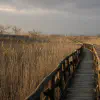
Volunteer-maintained boardwalks and paths wind through the swampy lake-edge vegetation, putting you at water level among reeds, channels, and open marsh. The landscape is horizontal — all sky and reflection — and the atmosphere is completely different from mountain hiking.
Herons, egrets, kingfishers, marsh harriers — the wildlife here is visible and abundant in a way that forest animals rarely are. Even if you’ve never picked up binoculars in your life, the sightings are hard to ignore when a grey heron is standing three meters from the boardwalk.
Massaciuccoli works beautifully as a morning activity before the beach, or as an alternative on a day when the weather is too hot for mountain hiking but too interesting to waste entirely indoors.
The Coastal Paths: Parco di San Rossore
South of Massaciuccoli and Lake Viareggio, the Parco Regionale Migliarino San Rossore Massaciuccoli stretches along the coast toward Pisa. This is a large protected area — over 23,000 hectares — covering coastal dunes, maritime pine forests, wetlands, and the wild beach at Spiaggia del Gombo.
I’ve written about accessible hiking in this park, which includes a paved trail named after Sabrina Bulleri and one of the few genuinely wild beaches left on the Tuscan coast.
From Viareggio, the northern edge of the park is about 20 minutes south. The combination of flat coastal walking, Mediterranean pine shade, and the chance of spotting fallow deer makes this a good option for families or anyone who wants nature without elevation gain.
Monte Pisano: A Quieter Mountain Option
Between Lucca and Pisa, Monte Pisano rises to about 900 meters — modest compared to the Apuan Alps, but with excellent trails through Mediterranean scrub, olive terraces, and chestnut forest.
From Viareggio, the trailheads on Monte Pisano are about 30-40 minutes away.
The Ripafratta trail is one I guide regularly. It climbs through forest to the ruins of a medieval fortress — Rocca di Ripafratta — perched on a ridge between the Serchio and Arno valleys. The views from the top are excellent, the history is genuinely interesting, and the difficulty is moderate enough for most fitness levels.
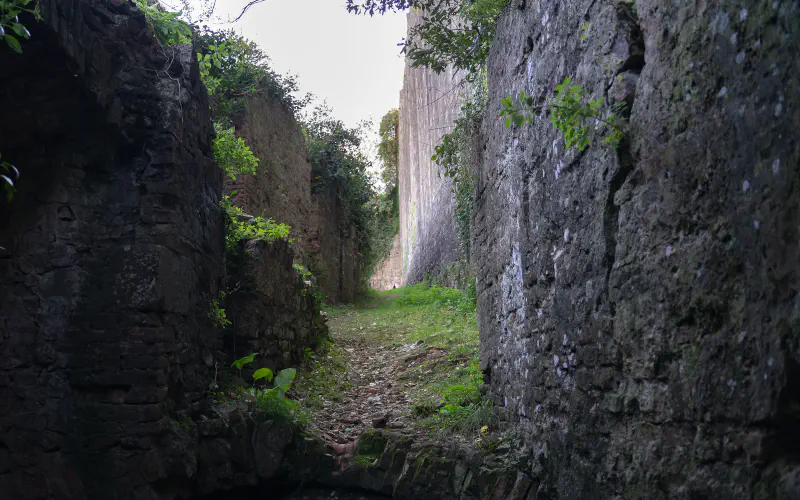
Book a private guided hike to Ripafratta Castle. Easy historical trekking from Pisa & Lucca. Discover 13th-century secrets. Reserve your tour now!
The Nottolini Aqueduct: Architecture You Can Walk
If you drive 30 minutes south from Viareggio to the outskirts of Lucca, you’ll find something extraordinary: a 19th-century aqueduct stretching on 460 stone arches from the city walls into the hills of Monte Pisano.
The Nottolini Aqueduct is both an engineering marvel and a walking trail. The maintenance path along its length takes you from urban Lucca into forested hills, with the arches as your constant companion. The light through the arches at different times of day makes this one of the most photographed walks in the province.
It’s flat, shaded, family-friendly, and starts walking distance from Lucca’s centre. As a half-day addition to a Viareggio beach holiday, it’s hard to beat.
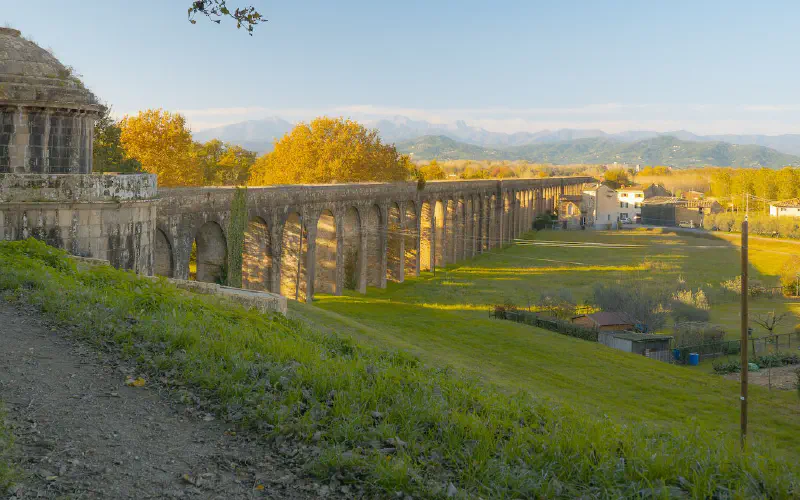
No car required: Walk the 400 arches of Nottolini Aqueduct from Lucca. Guided tour accessible by train. Discover 'Parole d'Oro'. Book now!
Planning Your Trekking Days From Viareggio
Here’s how I’d structure a week in Viareggio if you wanted to mix beach with hiking:
For a dramatic mountain day: The Marmifera del Corchia in the Apuan Alps. Allow the full day — 50 minutes each way plus the hike itself. Weekends only.
For a gentle nature morning: Lake Massaciuccoli and the Oasi LIPU. 15 minutes from town, 2-3 hours at the reserve, back by lunch.
For a family-friendly walk: The Nottolini Aqueduct near Lucca (30 minutes) or San Rossore park (20 minutes). Both are flat, accessible, and rewarding without requiring hiking fitness.
For a moderate hike with history: Ripafratta and the medieval fortress on Monte Pisano. 35 minutes to the trailhead, half-day hike.
For a rest day that isn’t rest: Lucca itself is 25 minutes away and one of Tuscany’s most walkable cities. Combine it with the Nottolini Aqueduct for a full day that covers culture and nature. I’ve written about day trips from Lucca and trekking from Lucca if you want to explore further.
Getting Around
A car gives you the most flexibility, especially for reaching Apuan Alps trailheads. Roads from Viareggio into the mountains are well-maintained if winding.
Without a car, your options are more limited but not zero:
- Massaciuccoli is reachable by local bus or a short train to Torre del Lago
- Lucca is a 20-minute train ride — frequent service on the Viareggio–Firenze line
- Pisa is 15 minutes by train, giving you access to Monte Pisano and San Rossore
- The Apuan Alps are harder without a car, though buses to Castelnuovo di Garfagnana and some valley towns exist
For more on car-free hiking options in this area, see my guide to car-free hikes near Lucca and Pisa.
Beyond Viareggio
If this article has you thinking about Tuscan hiking more broadly, I’ve written city-by-city guides for most of the major bases in northern Tuscany:
- Day treks from Pisa
- Trekking from Lucca
- Best hikes near Florence
- Trekking near Pistoia
- Best hikes near Prato
- Hiking near Pescia
- Hiking from Montecatini Terme
And for an overview of what Tuscan hiking actually involves — terrain, seasons, what to expect — start with my guide to hiking in Tuscany.
Want a Guided Day Trek From Viareggio?
I guide hikes in the Apuan Alps, Monte Pisano, and the hills between Lucca and Pisa. Whether you want marble quarries or forest trails, I’ll match the hike to your fitness and interests.

or head to the contact page
Explore Hidden Tuscany
Guided hiking experiences combining expert trail knowledge, professional photography, and wilderness mindfulness.