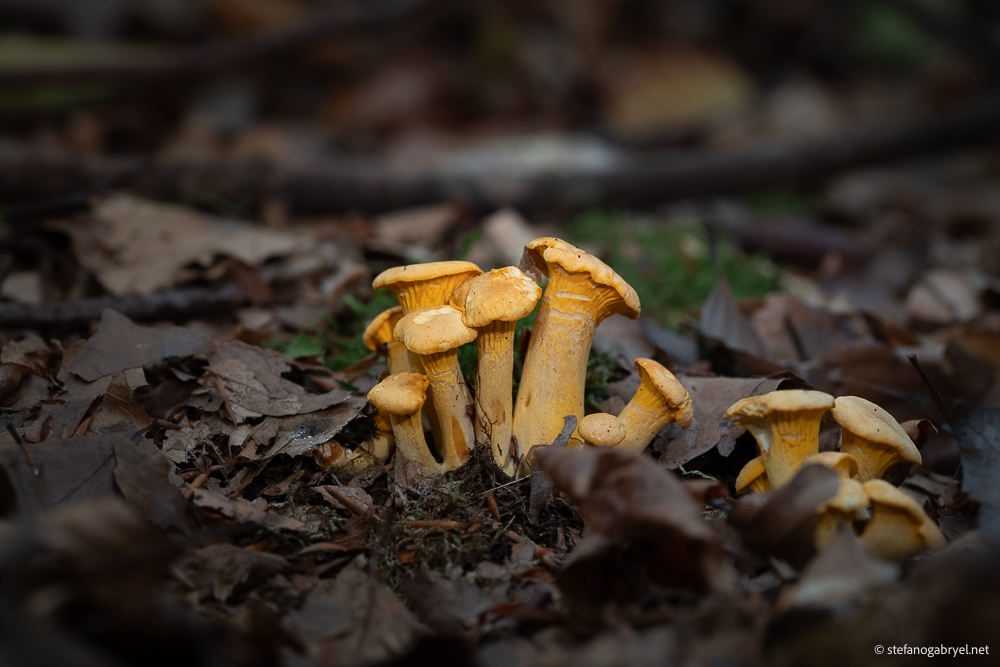
Among the many fungi that grace Tuscany’s forests, few inspire as much enthusiasm among foragers as Cantharellus cibarius—known locally as galletti or gallinacci. These golden treasures are not just prized for their culinary qualities, but represent one of the most rewarding finds for both novice and experienced mushroom hunters.
Identifying the Chanterelle
The chanterelle’s distinctive appearance makes it relatively beginner-friendly compared to many fungi. Its egg-yolk yellow color immediately draws the eye against the forest floor. The cap, typically 3-10 cm across, has a funnel or vase-like shape with wavy, irregular margins that give it an almost whimsical character.
But here’s what separates careful foragers from careless ones: the underside. True chanterelles don’t have gills in the traditional sense. Instead, they have blunt, forked ridges that run down the stem—these are technically called false gills or veins. This feature is crucial for distinguishing Cantharellus cibarius from the toxic false chanterelle (like Hygrophoropsis aurantiaca), which has true, blade-like gills.
The flesh is pale yellow to white, firm, and has a distinctive fruity aroma often described as apricot-like. When you find them fresh in the forest, this scent is unmistakable.
Where and When to Look
Guiding through the Appennines and locations like Acquerino, I’ve found chanterelles growing in specific ecological niches. They form mycorrhizal relationships with trees—particularly beech, oak, and chestnut—meaning they live in symbiosis with the roots of these species.
The season typically runs from late spring through autumn, with peak abundance often occurring after summer rains when temperatures moderate. In higher elevations of the Apuan Alps, I’ve found them as late as October, while lower mixed forests might produce them as early as June.
Look for them in mossy areas, near old growth trees, and in spots where the canopy allows dappled sunlight to reach the forest floor. They often grow in the same locations year after year—veteran foragers guard these spots jealously.
Foraging Responsibly
When harvesting chanterelles, cut them cleanly at the base with a knife rather than pulling them up. This preserves the underground mycelium and ensures future fruiting. Take only what you’ll use, and never harvest every specimen you find—leave some to spread spores and maintain the population.
Understanding these mushrooms goes beyond recognition and consumption. It’s about reading the forest, understanding ecological relationships, and practicing sustainable interaction with wild spaces. This is the philosophy I bring to every mycological expedition I lead through Tuscany’s diverse forest ecosystems.
Are you a beginner?
If you’re just beginning to explore mushroom foraging, Geoff Dann’s Edible Mushrooms is the field guide I recommend to all my clients. It’s an excellent starting point for learning safe identification. Read my full review here.
Want to learn in the field? Join me for a hands-on mushroom hunting experience ⬇️ ⬇️ ⬇️ ⬇️
Ready to move from photos to field identification?
Experience these fascinating fungi firsthand on a guided autumn hike through Tuscan woodlands. Learn professional identification techniques, understand ecosystem roles, and capture your own stunning mushroom photography.
Attention!
While the content of this blog post is aimed at providing you with information as accurate as possible, it should be treated as what it is: simply a blog post on the internet.
Mushroom identification should only be performed by experts, as a mistake can lead to dire consequences. Attempting to identify a mushroom on your own, without prior experience, based solely on the content of this blog post is strongly discouraged.
Explore Hidden Tuscany
Guided hiking experiences combining expert trail knowledge, professional photography, and wilderness mindfulness.
Latest posts
 4 March 2026
Galium Aparine: Cleavers in Tuscan Hedgerows
4 March 2026
Galium Aparine: Cleavers in Tuscan Hedgerows 3 March 2026
Umbilicus Rupestris: Wall Pennywort in Tuscany
3 March 2026
Umbilicus Rupestris: Wall Pennywort in Tuscany 3 March 2026
Laurus Nobilis: Bay Laurel in Tuscan Landscapes
3 March 2026
Laurus Nobilis: Bay Laurel in Tuscan Landscapes 2 March 2026
Guided Tours for Exploring Marble Quarries in Apuan Alps
2 March 2026
Guided Tours for Exploring Marble Quarries in Apuan Alps 26 February 2026
Photographing Nottolini Aqueduct: Light & Geometry
26 February 2026
Photographing Nottolini Aqueduct: Light & Geometry