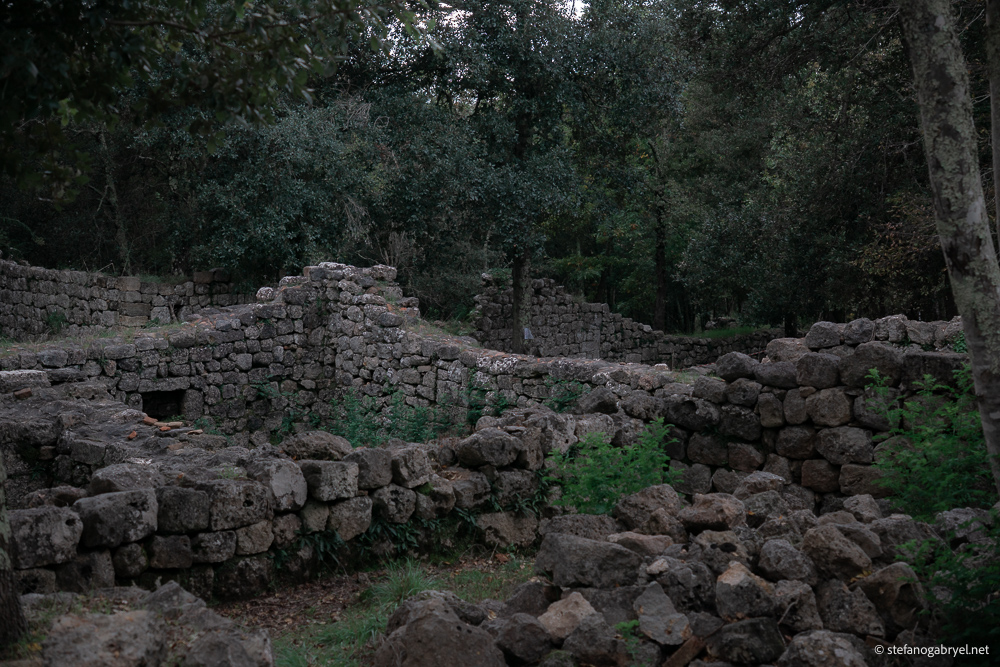
Last autumn, I spent an afternoon among ruins that have stood silent since the year 1000.
Not at a famous archaeological site with ticket booths and tour buses—but at Castelvecchio, a forgotten medieval village in the hills near San Gimignano that most tourists will never know exists.
To access it, I had to contact an archaeologist who works at the site.
There are no signs pointing the way, no official visiting hours, no infrastructure for mass tourism.
This is Tuscany as it exists beneath the surface—layered, ancient, and accessible only to those who look beyond the obvious.
The Problem With “Doing Tuscany”
Here’s what typically happens: you arrive in Tuscany with a list.
Florence’s Duomo. Pisa’s tower. San Gimignano’s medieval towers. The Chianti wine route.
All beautiful. All worth seeing. All experienced by millions of people following essentially the same itinerary.
You’ll take similar photos, eat at restaurants that cater to international tourists, and return home having seen a version of Tuscany that exists, in large part, for visitors.
Nothing wrong with this—those famous sites are famous for good reasons.
But this is surface-level Tuscany.
The region has existed for over a thousand years. Humans have shaped these hills, built on these mountains, and abandoned settlements here for centuries before tourism existed.
That deeper Tuscany—the one that requires context, local knowledge, and often special access—is what most people miss entirely.
What Castelvecchio Reveals
The ruins sit on a hillside with views San Gimignano’s towers in the distance.
Nature reclaimed what remained.
What you see now are fragmentary walls emerging from the forest floor, the outline of structures visible in the vegetation, the ghost of a community that thrived and then vanished.
The archaeologist who granted me access explained that systematic excavation has only covered a fraction of the site.
Ground-penetrating surveys suggest extensive remains still buried beneath centuries of leaf fall and soil accumulation.
This isn’t a reconstructed tourist attraction—it’s an active archaeological site where our understanding of medieval Tuscan life continues to evolve.
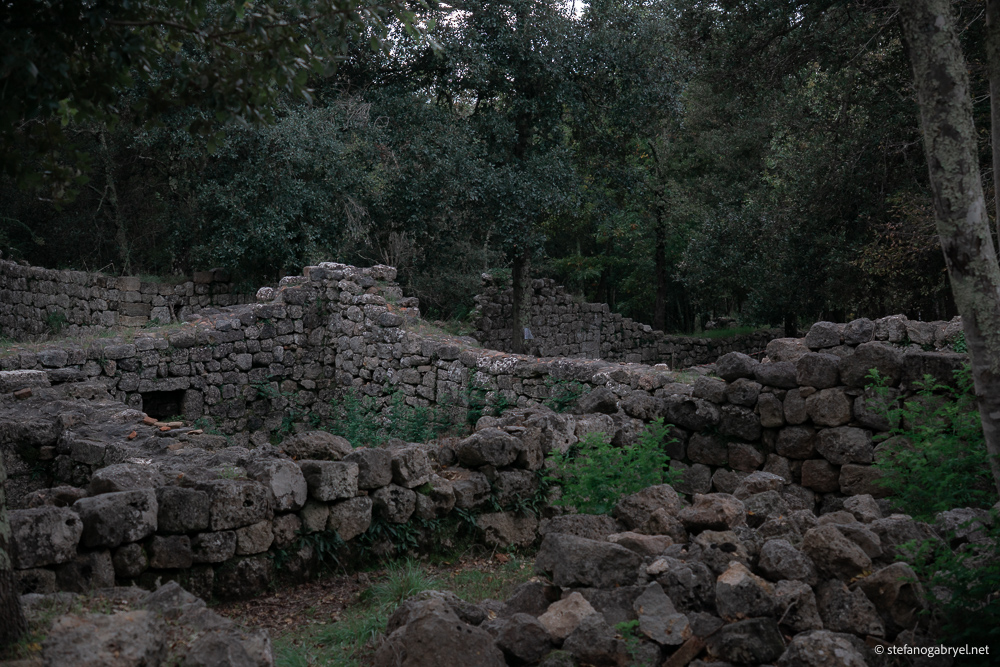
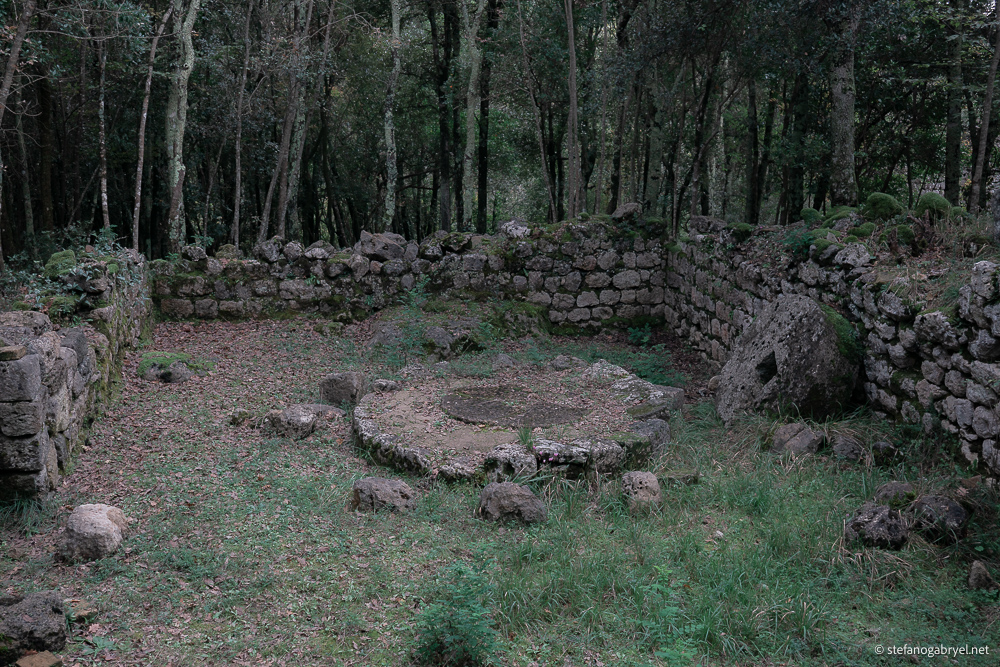
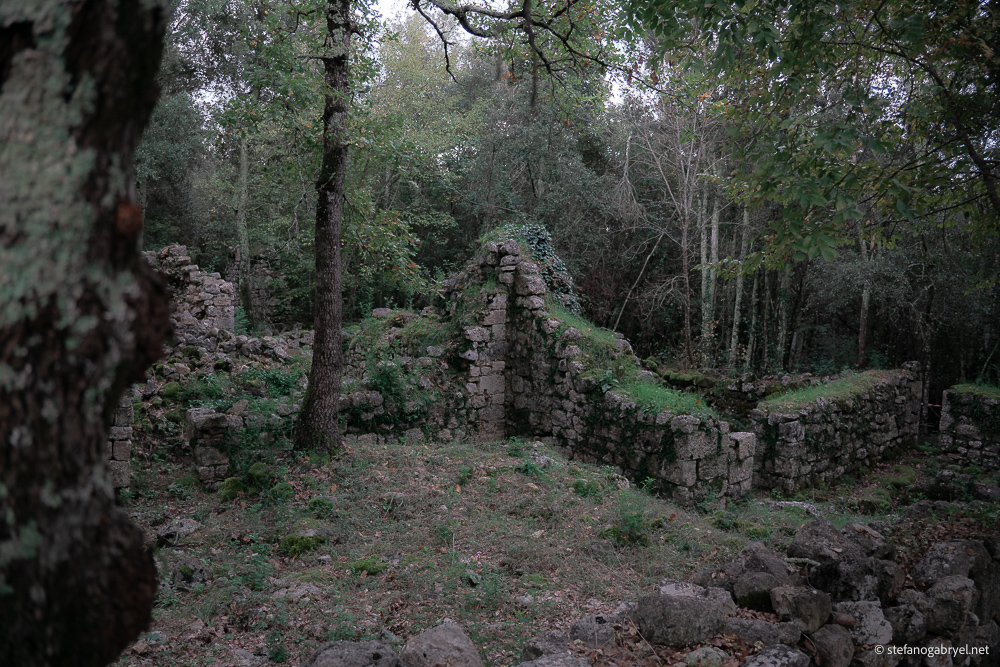
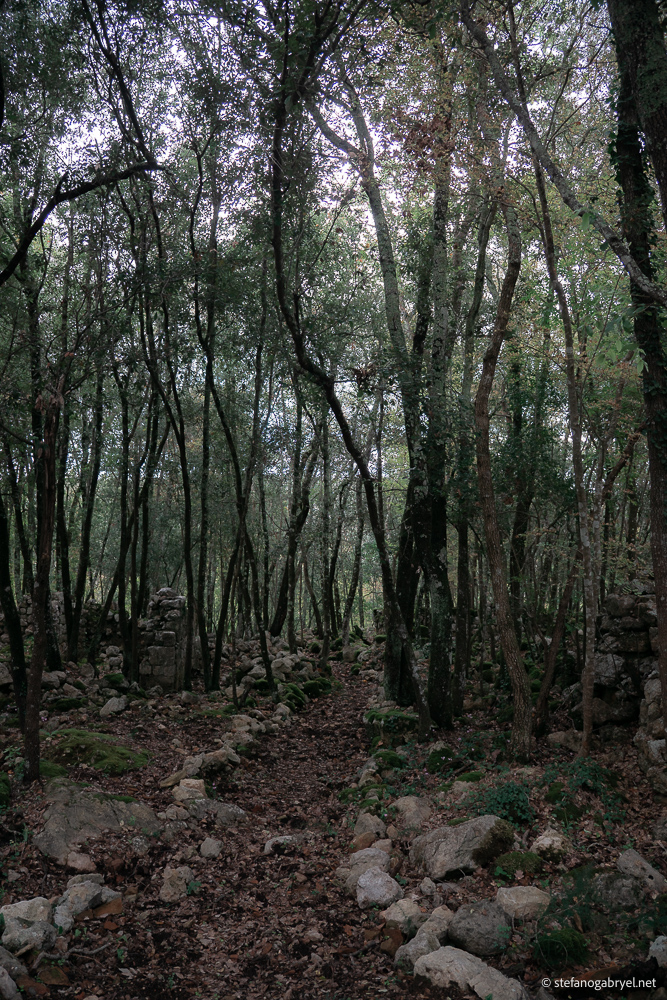
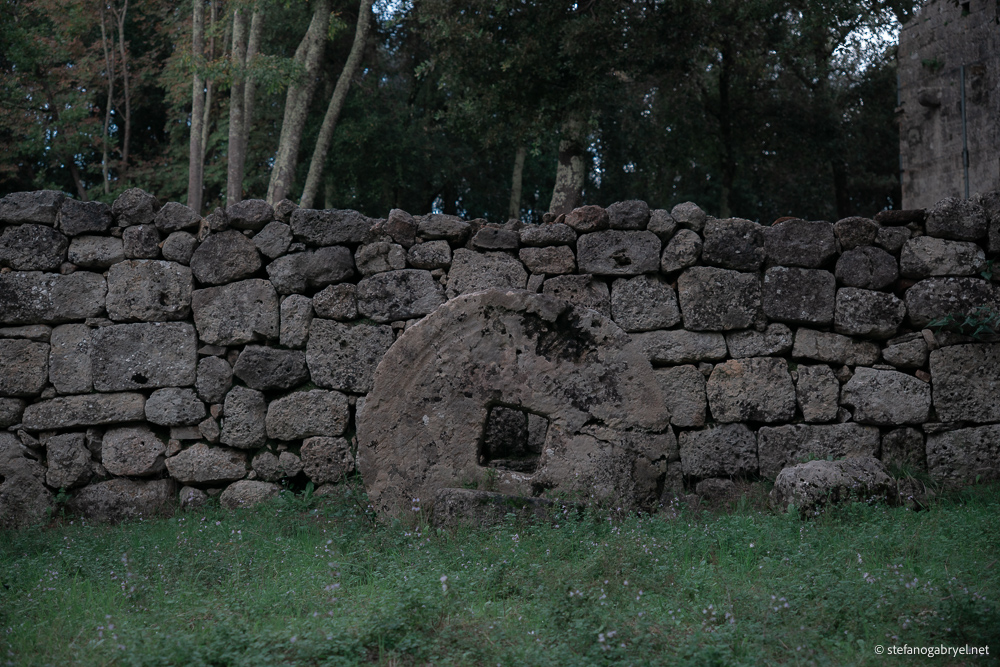
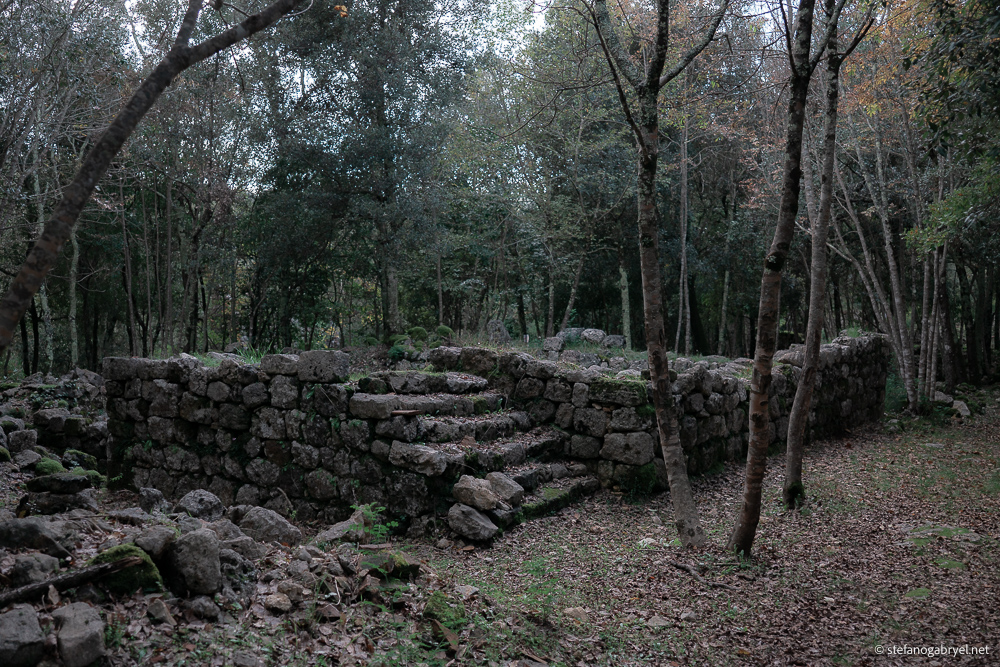
All gallery images are original photographs taken by me.
Why Access is Limited (And Why That Matters)
You cannot simply drive to Castelvecchio and walk in.
The site is on private land, partially excavated, and managed carefully to preserve what remains while research continues.
This limited access means something important: the experience cannot be commodified or mass-produced.
You need either personal connections to the researchers, permission from landowners, or—most practically for visitors—a guide who has established these relationships and can facilitate access.
This is fundamentally different from buying a ticket to the Uffizi.
This is Tuscany that requires mediation, context, and respect for the work of preservation happening on-site.
The Contrast With San Gimignano
The irony is perfect: Castelvecchio sits within view of San Gimignano, one of Tuscany’s most visited medieval towns.
On any given day, thousands of people crowd San Gimignano’s streets, photographing the famous towers, eating gelato, shopping for local products.
Meanwhile, a few kilometers away, Castelvecchio receives perhaps a handful of visitors per month—researchers, the occasional guided group, almost no one else.
Both are medieval. Both are significant. Both tell important stories about Tuscan history.
The difference is simply that one has been preserved and promoted for tourism, while the other remains partially hidden, known primarily to specialists and those willing to seek beyond the obvious.
This contrast illustrates something essential about how we experience places.
Proximity to famous sites doesn’t guarantee discovery.
You can be within sight of hidden treasures and never know they exist if you’re following only the well-marked paths.
It’s the same phenomenon at Ripafratta Castle—an impressive medieval fortress publicly accessible near Pisa, yet virtually unknown to tourists who never venture beyond the Leaning Tower.
The difference isn’t always restricted access; sometimes it’s simply knowing these places exist.
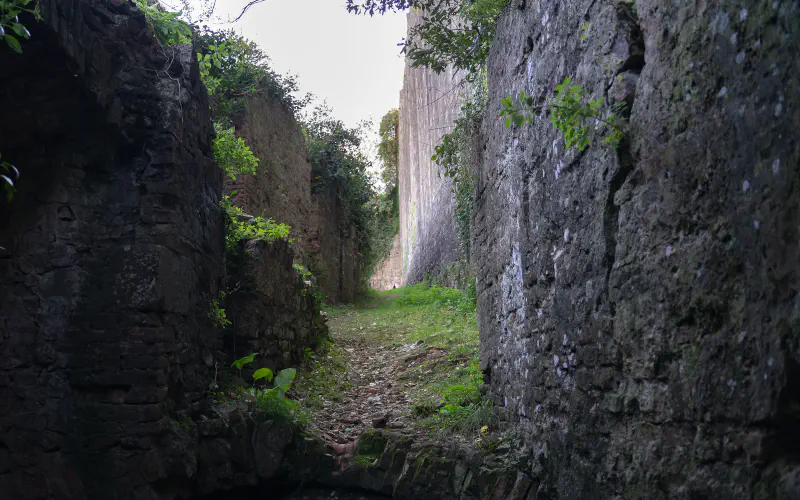
Book a private guided hike to Ripafratta Castle. Easy historical trekking from Pisa & Lucca. Discover 13th-century secrets. Reserve your tour now!
What “Hidden Tuscany” Actually Means
I need to be honest about what I’m describing here.
I’m not offering tours of Castelvecchio.
I’m not advertising this as a service I sell.
I’m sharing this experience to illustrate a reality about Tuscany that matters if you want to understand what you might be missing.
The region contains layers of history, landscape, and culture that don’t appear in guidebooks or on tourism websites.
Some of these hidden elements require special access, like Castelvecchio.
Others simply require knowing where to look—the right valley, the right season, the right trail that doesn’t appear on tourist maps.
My work as a guide specializes in these less-traveled experiences.
Not because the famous sites aren’t worthwhile, but because the contrast between mass tourism and authentic discovery creates entirely different relationships with place.
When you encounter something that required effort to access, that exists outside the standard tourism infrastructure, that connects you to local people doing real work (whether archaeological research, agricultural production, or forest management), the experience resonates differently.
You’re not consuming a pre-packaged version of Tuscany.
You’re encountering it as it actually exists—complex, layered, sometimes requiring patience and context to appreciate.
The Question This Raises
So here’s what I want you to consider: what do you actually want from Tuscany?
If the answer is “the greatest hits,” then by all means, follow the standard itinerary.
You’ll see beautiful things and have a perfectly good trip.
But if you’re reading this and feeling something else—a desire for depth rather than breadth, for understanding rather than just seeing, for experiences that can’t be replicated by following a guidebook—then the standard approach won’t satisfy you.
The Tuscany I know best includes:
- Medieval ruins accessible only through relationships with researchers
- Mountain trails where I might encounter a handful of other hikers all day
- Seasonal mushroom sites known to locals but absent from foraging guides
- Photography locations chosen not for iconic views but for light quality and ecological interest
None of this fits neatly into a three-day itinerary or a bus tour schedule.
It requires time, flexibility, and trust in someone who knows the region beyond its tourism infrastructure.
What I’m Really Offering
When I describe places like Castelvecchio, I’m not trying to sell you a specific tour or package.
I’m trying to communicate a different way of approaching Tuscany entirely.
Instead of asking “What are the must-see sites?”, ask “What exists here that most people never experience?”
Instead of maximizing the number of locations visited, invest time in fewer places with greater depth.
Instead of relying on mass-market tourism infrastructure, work with someone who can provide access to the elements that infrastructure doesn’t reach.
My expertise isn’t about knowing where to find the best restaurants in Florence.
It’s about knowing which archaeologist to contact for access to medieval ruins.
Which valley has the best autumn light for photography.
Where the mycorrhizal networks are healthy enough to support diverse mushroom populations.
These aren’t things you can easily discover on your own in a week-long visit.
They emerge from years of exploring these mountains, building relationships with people who work the land, developing the naturalist skills to read what the forest is revealing.
The Invitation
So this post isn’t exactly a sales pitch.
It’s more like showing you a door you didn’t know existed and explaining that yes, it can be opened, but not through the usual channels.
Castelvecchio sits there in the hills, partially excavated, mostly unknown, preserving its secrets for those willing to approach with patience and respect.
It represents hundreds of similar “hidden Tuscanys”—places and experiences that exist outside the standard tourism economy.
If this resonates with you, if you’re reading this and thinking “yes, that’s what I want,” then we should talk.
Not because I’m trying to convince you to book something, but because the kind of person drawn to Castelvecchio rather than just San Gimignano is exactly the kind of person who would appreciate the way I approach guiding in Tuscany.
The famous sites will still be there.
They’re not going anywhere.
But the archaeologist’s availability changes, the autumn light is fleeting, the mushroom season is brief, and the experience of encountering Tuscany beyond its tourism facade requires intention and local knowledge.
That’s what I offer: access to the layers beneath the surface.
Explore Tuscany Beyond the Obvious
If Castelvecchio intrigues you more than another Chianti wine tour, let’s discuss what a different kind of Tuscan experience might look like.

or head to the contact page
Explore Hidden Tuscany
Guided hiking experiences combining expert trail knowledge, professional photography, and wilderness mindfulness.
Latest posts
 4 March 2026
Galium Aparine: Cleavers in Tuscan Hedgerows
4 March 2026
Galium Aparine: Cleavers in Tuscan Hedgerows 3 March 2026
Umbilicus Rupestris: Wall Pennywort in Tuscany
3 March 2026
Umbilicus Rupestris: Wall Pennywort in Tuscany 3 March 2026
Laurus Nobilis: Bay Laurel in Tuscan Landscapes
3 March 2026
Laurus Nobilis: Bay Laurel in Tuscan Landscapes 2 March 2026
Guided Tours for Exploring Marble Quarries in Apuan Alps
2 March 2026
Guided Tours for Exploring Marble Quarries in Apuan Alps 26 February 2026
Photographing Nottolini Aqueduct: Light & Geometry
26 February 2026
Photographing Nottolini Aqueduct: Light & Geometry