
I'm Stefano, and I guide people through the Tuscany most tourists never see. Want to hike in Tuscany with me?
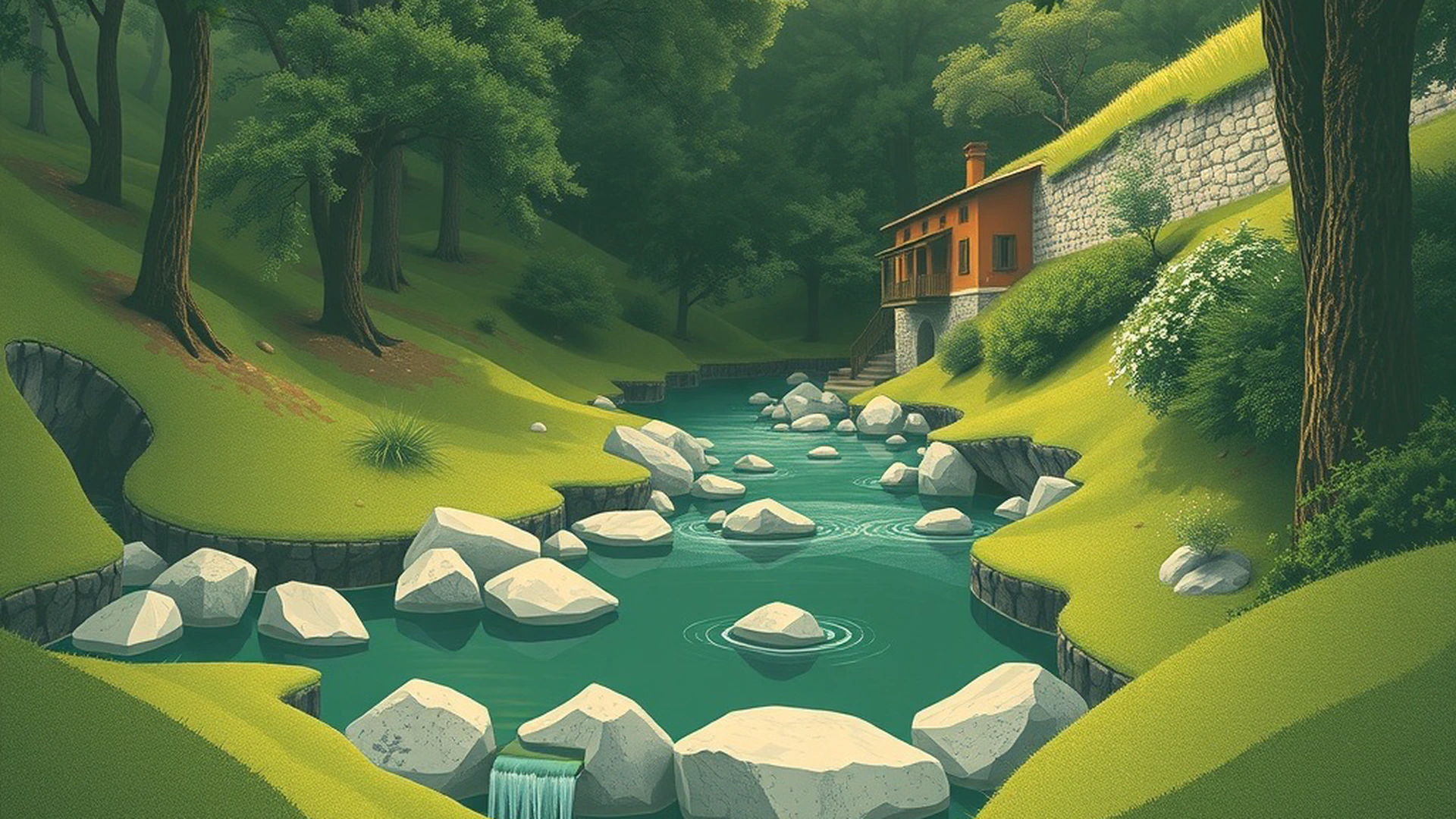
The first thing to say about the Candalla waterfalls is that there’s no waterfall, or not the kind the name promises. What the stream above Camaiore has is a staircase of cold green pools, short drops between them, and stretches where the water has cut a slot through the rock so narrow you could touch both walls. People come for the pools. In July and August they come in numbers that the lane up the valley was never built for, and the town has had to put parking bans on one side of it and, in recent summers, a free weekend shuttle from Camaiore. Go on a weekday in June, or in September, and you get something closer to what the place is: a wooded valley on the Versilia side of the Apuan Alps, with four hundred years of water-powered industry rusting quietly along the bank.
Where Candalla Is
Camaiore sits a few kilometres inland from Viareggio, where the Versilia plain meets the first Apuan foothills. Candalla is the valley that climbs out of the back of the town towards the hamlets of Lombrici and Casoli, under Monte Matanna, which at 1,317 metres is the highest of the southern Apuans. Monte Prana, a little over 1,200 metres, closes the other side. The stream runs cold even in August, fed from inside the limestone and kept out of the sun, and the shade in the lower valley is near total.
Above the pools the valley keeps going, and the paths keep going with it, up through oak woods to Casoli and higher. The pools are the reason the car park fills; the mountains above them are the reason I’d put the place on this site.
The Mills, the Pasta Factory and the Forge
Water that drops this steeply gets used. The earliest mills on the stream go back to the fifteenth or sixteenth century, and over the following centuries the bank held flour mills, oil presses, gunpowder works and pasta factories, all running off the same current. The walk up passes the ruin of the Pastificio Bertagna, a nineteenth-century pasta works, and the old mills that gave the place its name: one of them is now an osteria, while the Molino di Candalla beside the main pool stands empty and waiting for someone to save it.
The one that still works is the forge. The Ferriera Barsi appears in archives from 1808, when it belonged to the Cerù family; the Barsi family, blacksmiths from Basso Matanna on the far side of the mountain, bought it in the early 1900s, and the family still drives the hammer with water. You can hear it before you see it. I don’t know of another valley this close to the coast where a water-powered trip hammer is still in use, and it’s a couple of hundred metres from the pools everyone photographs.
Casoli and the Cave
Casoli, the hamlet at the top of the valley, is painted. A sculptor and painter named Rosario Murabito settled there in the 1950s and started a tradition of sgraffito murals on the house walls, in reds, yellows and earth tones. The villagers kept it up. There are around 120 now, and his house is a small museum. A loop links Candalla, Casoli and Metato, so you can walk the pools and the murals in one day.
Above Casoli, on the flank of Monte Matanna at about 710 metres, is the Grotta all’Onda. People have been digging in it since 1867, when Carlo Regnoli reported pottery, flint and animal bones to a Florentine committee on human prehistory; big campaigns followed between 1914 and 1944, and the Camaiore museum has run its own since 1996. The finds run from the Middle Palaeolithic through the Neolithic and Copper Age, and include Neolithic obsidian from Sardinia, which doesn’t occur anywhere near here, so somebody was trading across the sea close to six thousand years ago. The archaeological museum in town keeps the best of it. One odd footnote: for a few months in 1910 a hydrogen balloon guided along a cable, with a basket slung underneath, carried people from the cave up to the Foce del Pallone, the pass on Matanna.
Practical Notes
- Water. Cold all year. The rocks beside it are polished and wet, and the pebble beaches move from one winter to the next, so what you saw in a photo from last year may have shifted.
- Crowds. Summer weekends and the week around 15 August are the busy times. Early morning or a weekday changes the valley completely.
- Parking. Restricted on the lane up the valley, and fines are real. In recent summers Camaiore has run a free shuttle from town on weekend days; check with the Comune for the current year before relying on it.
- Climbing and canyoning. A steep rock face above the path is used by climbers, and the slots in the stream draw canyoning groups. Walkers share the valley with both.
- Camaiore itself. The Badia di San Pietro, first recorded in the 750s, stands just outside the centre, and the town is a stage on the Via Francigena between Pietrasanta and Lucca.
Where It Fits
Candalla is the easy side of the Apuans: no marble, no exposed ridge, water instead of rock. The hard side, the quarry roads and the limestone walls, is what I write about in the marble quarry hike in the Apuan Alps and what I guide from the coast; the whole range as seen from the beach is in day trekking from Viareggio. If you’re staying in Versilia with children, or with someone who doesn’t want altitude, this valley is the gentle option, and it’s a real one. I’d go in late spring, before the summer crowds, when the stream usually still carries the winter’s rain and the oak woods above Casoli are fresh.
Would you like to experience this?
Tell me when you’re in Tuscany and what you have in mind, and I’ll get back to you.Frequently asked questions
Looking for private hiking in Tuscany?
Browse my full collection of small-group, fully private hikes across the region.