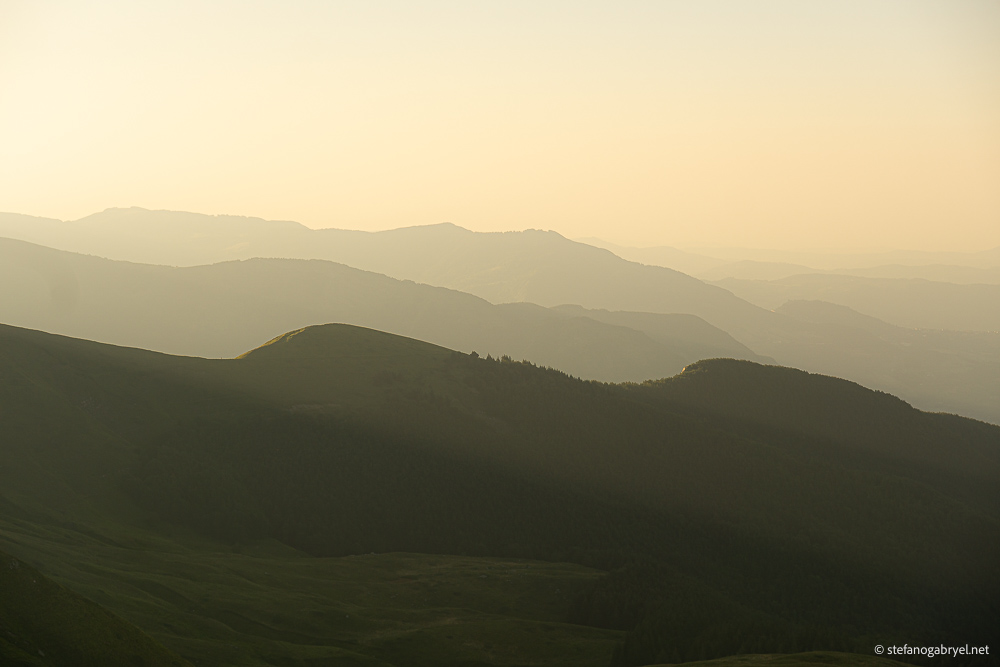
Most people know Prato as Italy’s textile capital, a working industrial city overshadowed by its famous neighbor Florence. What they don’t know is that from Prato’s outskirts, you’re closer to genuine mountain wilderness than tourists in Florence ever realize.
Within an hour’s drive north, the landscape transforms completely. Ancient forests, abandoned mountain villages, wild horses roaming limestone ridges, and glacial lakes wait for those willing to look beyond the city limits.
Prato’s location—nestled against the Apennines—makes it one of the best bases for exploring Tuscany’s wild side. What follows are the trails I return to repeatedly, the places that remind me why I chose this work.
In This Guide
- Riserva Acquerino: My Sanctuary
- Lago Scaffaiolo: The Mysterious Border Lake
- Monte Gennaio: The Apennines at Their Best
- Acquedotto del Nottolini: History on the Trail
- Calvana Ridge and Monte Maggiore: Where Wild Horses Roam
- Orsigna Valley: Terzani’s Mountains
Riserva Acquerino: My Sanctuary
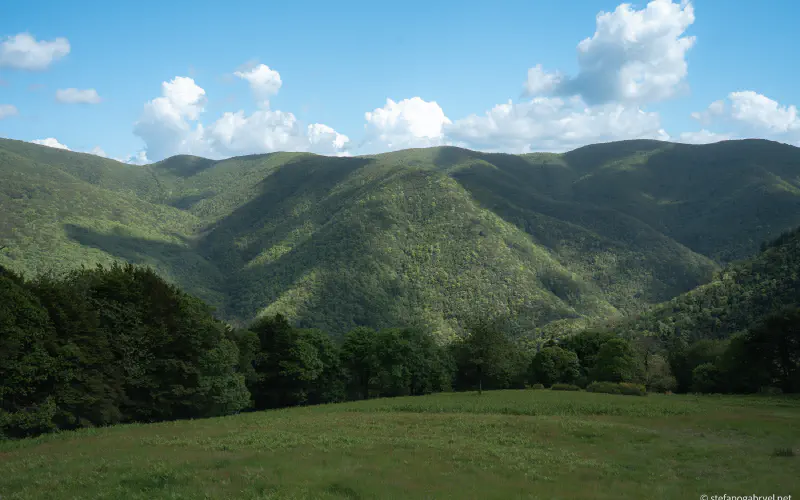
Twenty kilometers north of Prato, the Riserva Naturale Acquerino-Cantagallo and Riserva Biogenetica Acquerino form a continuous wilderness that has become my personal refuge. I’ve written extensively about Acquerino because it represents everything I value about mountain guiding: genuine solitude, ecological richness, and landscapes that heal.
From Prato, you can reach the reserve in 30-40 minutes. The Douglas fir groves glow gold at dawn. Wild boar, deer, foxes, and badgers move through ancient beech and chestnut forests. Spring brings meadows of white asphodel. Autumn transforms the woods into a mushroom hunter’s paradise—though expect company during peak porcini season, as word of Acquerino’s bounty has spread among local foragers.
The reserve offers trails for every ability level, from gentle forest roads suitable for families to demanding ridge traverses for experienced hikers. What matters most is the silence. Walk deep enough into Acquerino and the only sounds are streams, wind, and your own thoughts.
Book a private guided hike in Riserva Acquerino-Cantagallo. Expert trekking tours from Pistoia, Prato & Florence. Escape the crowds—reserve your tour!
Lago Scaffaiolo: The Mysterious Border Lake
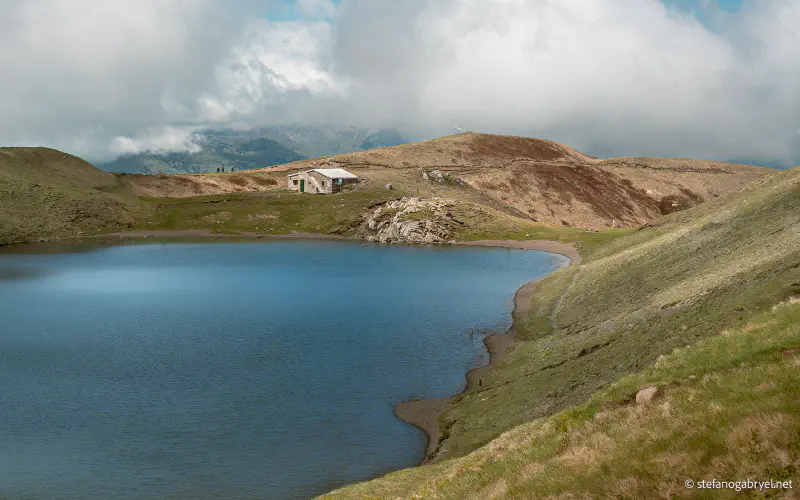
At 1,787 meters, precisely on the border between Tuscany and Emilia-Romagna, Lago Scaffaiolo sits in a glacial cirque with a peculiarity that has fascinated people for centuries: the lake has no tributaries flowing in and no visible outflow. Water simply appears and stays, held in the bowl between regions.
From Prato, it’s about 1 hour and 20 minutes to the trailhead, making it one of the more distant destinations on this list but absolutely worth the drive.
Dante Alighieri referenced Scaffaiolo in his writings. Giovanni Boccaccio mentioned it in the Decameron. Local legends speak of strange winds and unexplained phenomena. Modern meteorologists note that the lake sits in a zone where weather systems from opposite coasts collide, creating unique atmospheric conditions. Stand at the water’s edge on a windy day and you’ll feel why this place has accumulated centuries of stories.
The summit of Corno alle Scale (1,944 meters) rises nearby, accessible via the same trail system for those wanting to extend the day.
What makes Scaffaiolo special isn’t just the lake itself but the sense of being between worlds—geographically on a border, meteorologically where weather systems meet, culturally between two regions with different traditions and dialects. It’s liminal space made physical.
Book a private guided hike to Scaffaiolo Lake. 360° Apennine views & Rifugio visit. Expert tours from Lucca, Pistoia & Pisa. Reserve your trek!
Monte Gennaio: The Apennines at Their Best
At 1,812 meters, Monte Gennaio sits on the Tuscan-Emilian border about 1 hour and 15 minutes from Prato. It’s less famous than nearby Corno alle Scale, which means it sees fewer hikers—a significant advantage for those seeking solitude.
But Monte Gennaio deserves attention for another reason: it perfectly exemplifies what makes the Apennines unique among Italian mountain ranges.
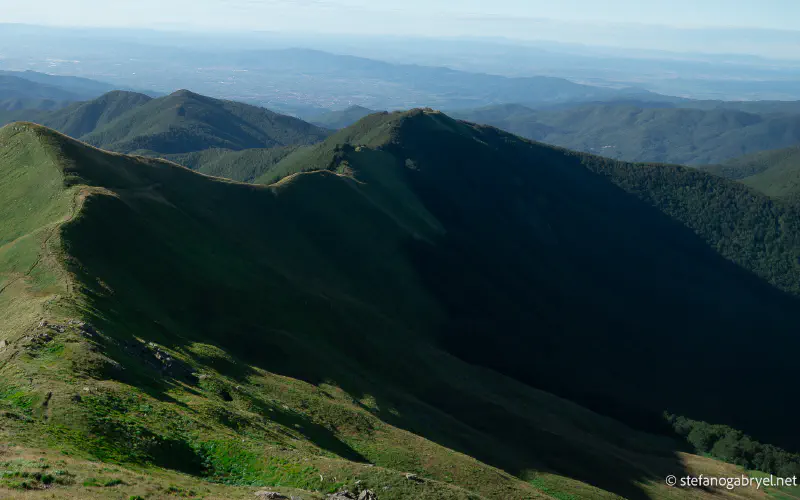
These aren’t the jagged Dolomites or the glaciated Alps. The Apennines present rounded ridges that open into unexpected panoramas, dense forests giving way to high meadows, and a particular quality of light that comes from sitting on the watershed between the Tyrrhenian and Adriatic coasts. The beauty is patient, earned through hours of walking rather than announced from a parking lot.
From Monte Gennaio’s summit, views extend across both Tuscany and Emilia-Romagna. On clear days, you can see the distant Mediterranean. The ridge walks connecting to Poggio delle Ignude, Passo della Nevaia, and beyond follow ancient smugglers’ routes with evocative names like “Pedata del Diavolo” (Devil’s Footprint) and “Passo Rombiciaio.”
The approach from Orsigna or from the Teso Forest passes through beech groves that photographers dream about—cathedral-like spaces where light filters through leaves in ways that make you understand why people worship in forests.
For Prato residents or visitors, Monte Gennaio represents the furthest reasonable day trip. It’s a commitment—early start, long drive, substantial hiking—but it rewards that commitment with the kind of mountain experience that stays with you.
Book a private guided ascent of Monte Gennaio. 360° summit views & expert trekking from Pistoia, Florence & Lucca. Reserve your mountain tour now!
Acquedotto del Nottolini: History on the Trail
Not every remarkable hike requires driving into remote mountains. Sometimes the most interesting trails sit almost in plain sight.
From Prato, you can reach the Acquedotto del Nottolini near Lucca in under an hour by car, or by train via Lucca station followed by a short bus or bike ride. This nineteenth-century aqueduct, designed by architect Lorenzo Nottolini, stretches for several kilometers through the countryside between Lucca and the hills, supported by over 400 elegant arches.
Walking along or beside the aqueduct combines engineering history with pleasant countryside hiking. The stone arches create constantly changing compositions for photographers. The route is essentially flat and accessible, making it perfect for families, older hikers, or anyone wanting a beautiful walk without significant elevation gain.
What I appreciate about the Nottolini is how it proves that remarkable hiking experiences don’t always require wilderness. Sometimes a well-designed human structure integrated into landscape creates something equally compelling. The aqueduct also reminds us that Tuscany’s beauty isn’t accidental—it’s the result of centuries of humans shaping land thoughtfully.
For visitors staying in Prato without cars, this represents one of the most accessible quality hiking experiences via public transport. Train to Lucca, explore the city walls, then follow the aqueduct into the countryside before returning for aperitivo in Lucca’s piazzas.
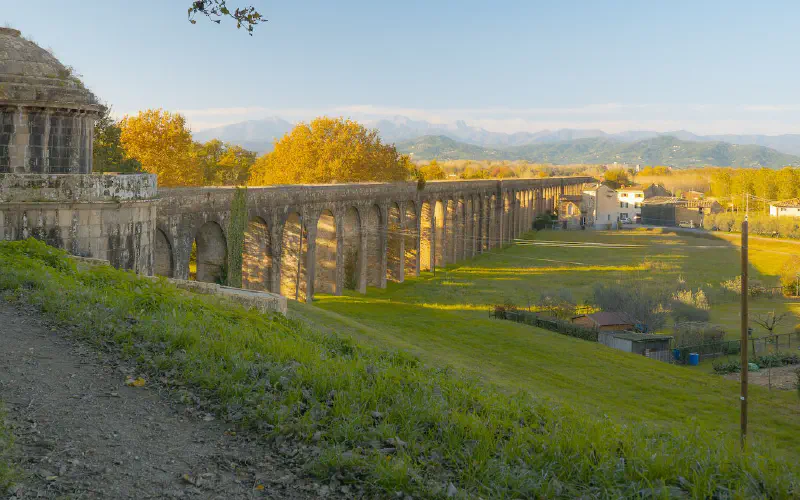
No car required: Walk the 400 arches of Nottolini Aqueduct from Lucca. Guided tour accessible by train. Discover 'Parole d'Oro'. Book now!
Calvana Ridge and Monte Maggiore: Where Wild Horses Roam
Rising dramatically just west of Prato, the Calvana massif forms a natural barrier between the Bisenzio Valley and Mugello. Monte Maggiore, at 916 meters, crowns this limestone ridge with panoramic views that extend across the plains of Prato, Florence, and Pistoia.
But the real attraction isn’t the summit—it’s what you encounter on the way up.
Wild horses roam freely across Calvana’s grasslands. These aren’t domesticated animals; they’re a feral population descended from horses abandoned roughly forty years ago that have since rewilded, living in herds shaped entirely by the landscape. Walking the ridge paths, you might round a bend to find a dozen horses grazing the alpine meadows, completely unbothered by your presence.
The ridge also supports the endangered Calvana cattle breed, about sixty species of wild orchids, and rare amphibians like the spectacled salamander. The karst terrain creates caves, sinkholes, and springs throughout the massif. The grasslands at higher elevations offer what ecologists call “apical grasslands”—never sown, historically grazed, now protected as a Natura 2000 site.
The hike from Vaiano or from the Croci plateau to Monte Maggiore takes roughly 1.5-2 hours of steady climbing through oak and hornbeam woods, then across open meadows where the views open dramatically. It’s not technically difficult, but the elevation gain demands reasonable fitness.
What I love about Calvana is its proximity to Prato combined with its wildness. You can leave the city after breakfast and stand among wild horses by mid-morning, then return for lunch in civilization. This accessibility makes it perfect for visitors with limited time who still want authentic mountain experience.
I’ll be writing more extensively about Calvana and its unique ecosystem in a dedicated post, but for now, know that it belongs on any serious hiker’s list of Tuscan destinations.
Orsigna Valley: Terzani’s Mountains
About 45 minutes north of Prato, the small mountain village of Orsigna sits in a valley surrounded by Monte Gennaio and Poggio delle Ignude. The village itself is tiny—a handful of stone houses, a church, and the kind of quiet that makes urban noise feel like a distant memory.
The valley gained literary fame when journalist and writer Tiziano Terzani chose it as his residence during his final years, after his Himalayan hermitages. He wrote about these mountains with the same depth he brought to his coverage of Asia, recognizing something essential in the Apennine landscape that resonated with his search for meaning.
From Orsigna, trails radiate in every direction through magnificent chestnut and beech forests. The most famous local landmark is “L’Albero con gli Occhi” (The Tree with Eyes)—a peculiar tree formation that has become something of a pilgrimage site for Italian hikers. Beyond the novelty, the forests here are simply spectacular, particularly in autumn when the foliage transforms into every shade of gold and red.
The valley serves as a gateway to longer expeditions toward Monte Gennaio, Rifugio Porta Franca, and Passo della Nevaia. But it’s equally rewarding for shorter, contemplative walks through the woods where Terzani spent his final days thinking about mortality, spirituality, and the natural world.
What strikes me most about Orsigna is how it represents the Apennines at their most characteristic—not dramatic peaks or technical challenges, but quiet valleys, ancient forests, and the kind of beauty that reveals itself slowly to those willing to walk at a human pace.
Why Prato Works as a Base
Florence gets all the attention, but Prato offers something Florence doesn’t: proximity to mountains without sacrificing urban amenities.
From Prato, you can:
- Reach Acquerino in 30-40 minutes
- Access Calvana in 20-30 minutes
- Drive to Monte Gennaio in 75 minutes
- Get to Lago Scaffaiolo in 80 minutes
- Train to Lucca/Nottolini in under an hour
You’re closer to wilderness than tourists in Florence, with better parking, fewer crowds, and—honestly—better prices for accommodation and food.
Prato also sits on the Cammino di San Jacopo, the pilgrimage route connecting Florence to Pisa, meaning you’re integrated into a larger network of trails and cultural routes spanning the region.
For serious hikers planning extended time in Tuscany, consider this: base yourself in Prato rather than Florence. You’ll save money, avoid tourist chaos, and position yourself perfectly for daily mountain expeditions while still having easy train access to Florence, Lucca, Pistoia, and other art cities.
The Mountains That Wait
Every morning, thousands of people in Prato wake to views of the Calvana ridge or the distant Apennine peaks. Most of them never walk those ridges, never discover what exists an hour from their doorstep.
The trails I’ve described don’t require expedition-level preparation. They require a car (or train to Lucca), appropriate clothing, reasonable fitness, and the curiosity to look beyond the obvious.
If you’re visiting Tuscany and staying in Florence, remember that Prato is twenty minutes away by train. If you’re staying in Prato, remember that these mountains are closer than you think.
What changes is whether you make the choice to go.
Explore Prato's Mountain Trails
Ready to discover the wilderness near Prato? Whether you want easy family walks, challenging summit hikes, or photography-focused expeditions, I design custom itineraries that match your abilities and interests—showing you the Tuscany most visitors never see.

or head to the contact page
Explore Hidden Tuscany
Guided hiking experiences combining expert trail knowledge, professional photography, and wilderness mindfulness.
Latest posts
 4 March 2026
Galium Aparine: Cleavers in Tuscan Hedgerows
4 March 2026
Galium Aparine: Cleavers in Tuscan Hedgerows 3 March 2026
Umbilicus Rupestris: Wall Pennywort in Tuscany
3 March 2026
Umbilicus Rupestris: Wall Pennywort in Tuscany 3 March 2026
Laurus Nobilis: Bay Laurel in Tuscan Landscapes
3 March 2026
Laurus Nobilis: Bay Laurel in Tuscan Landscapes 2 March 2026
Guided Tours for Exploring Marble Quarries in Apuan Alps
2 March 2026
Guided Tours for Exploring Marble Quarries in Apuan Alps 26 February 2026
Photographing Nottolini Aqueduct: Light & Geometry
26 February 2026
Photographing Nottolini Aqueduct: Light & Geometry