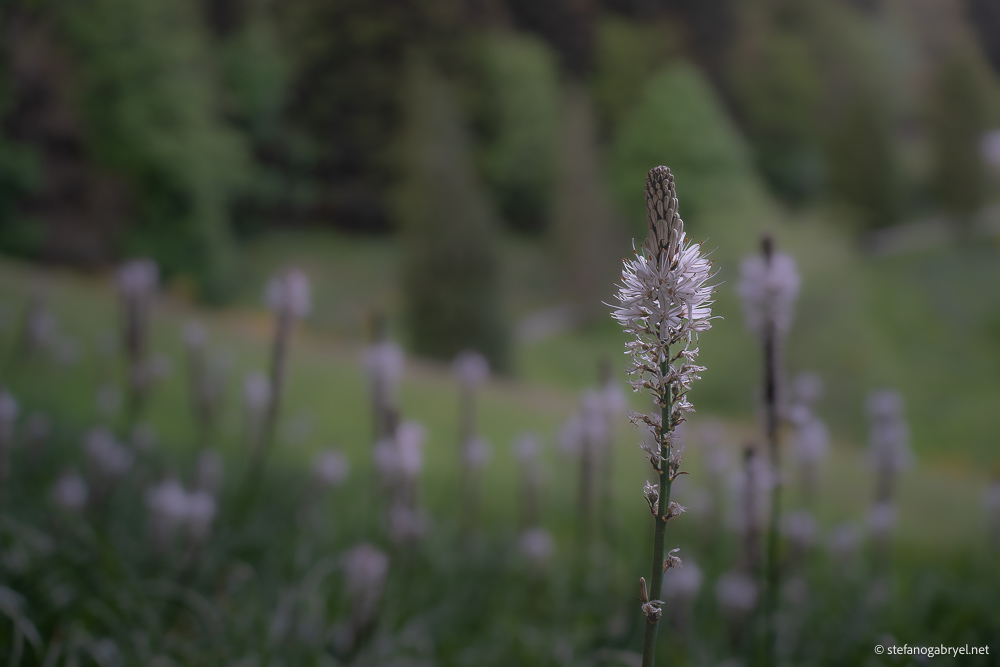
There are botanical moments in the Tuscan Apennines that stop you mid-stride, that make you forget the trail ahead and simply stand in wonder. For me, encountering meadows transformed by Asphodelus albus in full bloom is one of those moments.
The white asphodel isn’t a plant you stumble upon easily—it requires being in the right place at precisely the right time, which is exactly why discovering it feels like finding a secret that most visitors to Tuscany never learn.
A Mediterranean Native With Mountain Soul
Asphodelus albus, known in Italy simply as asfodelo or asfodelo bianco, is a herbaceous perennial native to the Mediterranean Basin. While it ranges from sea level to high elevations across southern Europe and northern Africa, in our Tuscan mountains it thrives in the meadows and clearings between 800 and 2,000 meters, particularly in areas with well-drained, alkaline soils.
The plant grows from a cluster of fleshy, tuberous roots that store water and nutrients, allowing it to survive the dry Mediterranean summers by going dormant after flowering. This geophytic strategy—the technical term for plants that retreat underground during unfavorable seasons—is what makes the spring bloom so spectacular and so ephemeral.
At full height, mature plants reach 60-120 centimeters, with tall, unbranched flowering stalks rising from basal rosettes of glaucous, grass-like leaves. Those leaves, with their distinctive blue-green waxy coating and gutter-shaped profile, remain close to the ground, creating architectural clumps that catch light beautifully even before the flowers emerge.
The Spring Spectacle: Timing Is Everything
In the Tuscan Apennines, Asphodelus albus blooms from late April through June, with peak flowering typically occurring in May. The exact timing varies with elevation and aspect—south-facing meadows at lower altitudes bloom earlier, while protected valleys at higher elevations might not reach peak until early June.
When the flowers emerge, they appear as dense racemes along the upper portion of those tall stalks. Each individual flower is star-shaped, about 4 centimeters in diameter, with six elongated white petals marked by delicate brown or pink veining down the center. Long stamens tipped with reddish-orange anthers protrude beyond the petals, giving each bloom a distinctive “whiskered” appearance.
The flowers open progressively from the bottom of the spike upward, meaning a single plant displays flowers at various stages of development—buds at the top, fully open blooms in the middle, developing seed capsules at the base. This sequential blooming extends the display period and creates visual interest for photographers who understand how to work with it.
Where to Find White Asphodel in Tuscany
While Asphodelus albus occurs scattered throughout Mediterranean Europe, finding the dense colonies that create those ethereal landscape transformations requires knowledge of specific locations and habitat preferences.
The species favors alkaline soils with good drainage, often appearing in meadows, rocky hillsides, and forest clearings where trees provide some shelter without creating dense shade. It’s particularly abundant in areas with shallow, calcareous soils—exactly the conditions found in many of our mountain nature reserves.
At Riserva Acquerino, certain meadows transform into seas of white asphodel each spring. The timing must be precise—arrive in early April and you’ll see only the emerging leaves; come in late June and you’ve missed the peak bloom. But catch it right in mid-May, and you’ll walk through landscapes that feel otherworldly, with thousands of white flower spikes rising from the grass like a field of delicate lances.
The plant forms colonies through its tuberous root system, meaning once established in a location, it returns year after year, often expanding the colony gradually. These aren’t random scattered individuals but cohesive populations that dominate entire meadows during their bloom period.
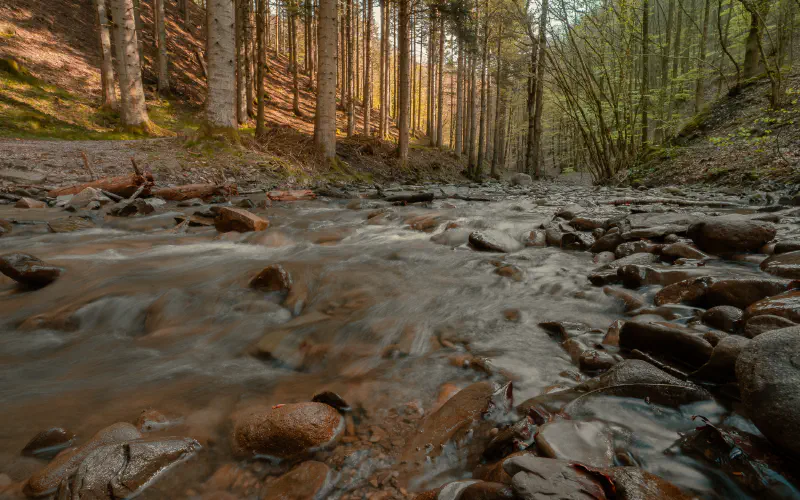
Guided private hike in Riserva Acquerino. Trek the Red Deer Kingdom near Florence & Pistoia. Certified local guide. Book your mountain tour today!
Photographing the White Asphodel
From a photographer’s perspective, Asphodelus albus offers extraordinary opportunities that demand specific technical and creative approaches.
The challenge lies in the white flowers themselves. Pure white subjects against varying backgrounds require careful exposure management. In bright midday sun, the petals can blow out to featureless white, losing all the subtle detail of those pink veins and the texture of the petals. In deep shade, they can appear grey and lifeless.
The ideal light for asphodel photography is soft and directional—overcast conditions with breaks that allow occasional sunlight, or the warm, angled light of early morning and late afternoon. Golden hour transforms these meadows into something magical, with backlighting making the white petals glow while the brown veining creates delicate tracery.
Compositional approaches vary based on what story you want to tell:
For landscape-scale images showing the meadow transformation, position yourself low to include foreground flowers while the colony extends into the background. Use apertures around f/8 to f/11 to maintain sharpness throughout the depth of field, and include environmental context—the surrounding forest edge, distant peaks, the texture of the meadow itself.
For intimate portraits of individual plants or small groups, work with wider apertures (f/2.8 to f/5.6) to isolate subjects against softly blurred backgrounds. Get low—at or below the height of the flowers—to photograph against the sky or the distant landscape rather than directly down onto the meadow. This perspective creates separation and emphasizes the architectural quality of those tall stalks.
Macro work reveals details invisible to casual observers: the structure of the stamens, the pattern of veining on each petal, the way morning dew collects in the furrows of the leaves. For these shots, stability is crucial—use a tripod, work in calm conditions, and consider focus stacking if you need extensive depth of field at high magnification.
The sequential blooming pattern I mentioned earlier creates natural visual rhythm. Compose to show buds, open flowers, and developing seed capsules in a single frame, telling the story of the plant’s reproductive cycle within one image.
One technical consideration: white subjects require exposure compensation. Your camera’s meter will often underexpose white flowers, rendering them grey. Depending on the scene, I typically add +2/3 to +1 stop of exposure compensation, checking the histogram to ensure the whites remain just below clipping while retaining detail.

Cultural Echoes: Death, Memory, and Ancient Greece
The white asphodel carries cultural weight that adds depth to the photographic and botanical experience.
In ancient Greek mythology, asphodel was intimately connected with death and the afterlife. Homer describes the “asphodel meadows” as part of the underworld, where ordinary souls wandered after death. The plant was planted on graves and associated with Persephone, queen of the underworld, who was sometimes depicted crowned with asphodel garlands.
This connection likely stems from the plant’s pale color and its habit of dying back in summer—the greyish leaves and white flowers suggested the pallor of death and the gloom of the underworld to ancient observers.
Practically, asphodel roots were a food source for poorer Greeks. Theophrastus and Pliny the Elder both mention that the tuberous roots could be roasted and eaten, with a single plant sometimes producing dozens or even hundreds of small tubers. This dual role—food for the living poor, symbol of the realm of the dead—gave asphodel a peculiar position in ancient Greek culture.
The plant appears throughout classical and later literature in connection with death, mourning, and the afterlife. From Hesiod to contemporary poets, the asphodel meadow serves as a symbol of the liminal space between life and death, the ordinary and the eternal.
Understanding this cultural dimension enriches the photographic experience. These aren’t just pretty white flowers—they’re plants that have carried symbolic meaning for millennia, that represent humanity’s long relationship with death, memory, and the passage between worlds.
Ecological Role: Early Food for Pollinators
Beyond aesthetics and symbolism, Asphodelus albus serves crucial ecological functions in mountain meadow ecosystems.
The flowers bloom relatively early in the season, providing nectar and pollen when few other resources are available. Bees, particularly, are attracted to the blooms, and you’ll often see them working methodically up the flower spikes, visiting each open blossom in turn.
This early flowering is especially valuable in mountain environments where spring arrives late and the window for insect activity is compressed. The asphodel bridges the gap between the last of winter and the full flush of summer wildflowers, supporting pollinator populations during a critical period.
The plant’s preference for disturbed or degraded soils—including areas overgrazed by livestock or recovering from fire—makes it an important colonizer that helps stabilize and enrich poor soils while providing floral resources in otherwise sparse environments.
Planning Your White Asphodel Experience
If you want to experience Asphodelus albus in bloom during a visit to Tuscany, timing and location are critical.
The bloom window is relatively narrow—roughly four to six weeks depending on the year’s weather patterns and the specific location’s microclimate. I plan spring expeditions specifically around the expected peak bloom periods, adjusting dates based on that season’s conditions, recent weather, and elevation of the target locations.
For photography-focused tours, I scout the meadows before bringing clients, ensuring we arrive when conditions are optimal. There’s no point hiking to a location only to find you’re two weeks too early or one week too late—the difference between encountering closed buds versus fading blooms versus the perfect peak can make or break the experience.
The weather also matters enormously. Clear, harsh sun creates difficult lighting for white flowers. Overcast days with occasional breaks, or stable weather allowing early morning or late afternoon shoots, produce far better results.
My spring itineraries often combine asphodel meadows with other seasonal highlights—early fungi emerging after spring rains, the first wildflowers at lower elevations, migrating birds, and the general awakening of the mountain environment after winter dormancy. The white asphodel becomes part of a larger narrative about spring in the Apennines rather than an isolated destination.
The Value of Ephemeral Beauty
Part of what makes encountering Asphodelus albus in full bloom so powerful is its transience.
These plants spend most of the year as unremarkable clumps of grass-like leaves or completely dormant underground. For perhaps four weeks each spring, they transform entire meadows into something extraordinary, then fade back into invisibility.
This ephemeral quality demands presence and timing. You can’t visit casually and hope to see it—you must plan, must commit to being in a specific place during a narrow window. And there’s something deeply satisfying about that intentionality, about earning the experience through preparation and local knowledge.
For visitors to Tuscany who only know the famous hill towns, the vineyards, and the classic postcard landscapes, discovering these mountain meadows in spring bloom reveals an entirely different dimension of the region. It’s the Tuscany that requires effort to reach, that demands understanding of seasons and ecology, that rewards those willing to go beyond the obvious.
This is what I mean when I describe my guided experiences as premium and exclusive. I’m not selling access to famous landmarks that anyone can visit—I’m offering knowledge of timing, location, and conditions that transform an ordinary hike into an encounter with something genuinely special.
The white asphodel meadows embody this philosophy perfectly. They exist whether anyone sees them or not, blooming on their own schedule in remote mountain locations. But knowing where they are, when they bloom, how to photograph them, and what cultural and ecological stories they tell—that’s the value of expertise and local knowledge.
Experience Spring Wildflowers in the Apennines
Interested in timing your visit to catch Asphodelus albus and other spring botanical treasures? I design custom spring expeditions around peak bloom periods, combining hiking, photography, and botanical knowledge for an unforgettable mountain experience.

or head to the contact page
Explore Hidden Tuscany
Guided hiking experiences combining expert trail knowledge, professional photography, and wilderness mindfulness.
Latest posts
 4 March 2026
Galium Aparine: Cleavers in Tuscan Hedgerows
4 March 2026
Galium Aparine: Cleavers in Tuscan Hedgerows 3 March 2026
Umbilicus Rupestris: Wall Pennywort in Tuscany
3 March 2026
Umbilicus Rupestris: Wall Pennywort in Tuscany 3 March 2026
Laurus Nobilis: Bay Laurel in Tuscan Landscapes
3 March 2026
Laurus Nobilis: Bay Laurel in Tuscan Landscapes 2 March 2026
Guided Tours for Exploring Marble Quarries in Apuan Alps
2 March 2026
Guided Tours for Exploring Marble Quarries in Apuan Alps 26 February 2026
Photographing Nottolini Aqueduct: Light & Geometry
26 February 2026
Photographing Nottolini Aqueduct: Light & Geometry