
I'm Stefano, and I guide people through the Tuscany most tourists never see. Want to hike in Tuscany with me?
Last updated 1 October 2026
You find a cap with a clean bite taken out of the edge, or the shallow grazed tracks a slug leaves overnight. The old rule says that settles it: something ate this and lived, so you can eat it too. It sounds like the most sensible test in the world, and it’s the kind of reasoning that has been putting people in hospital for as long as anyone has kept records.
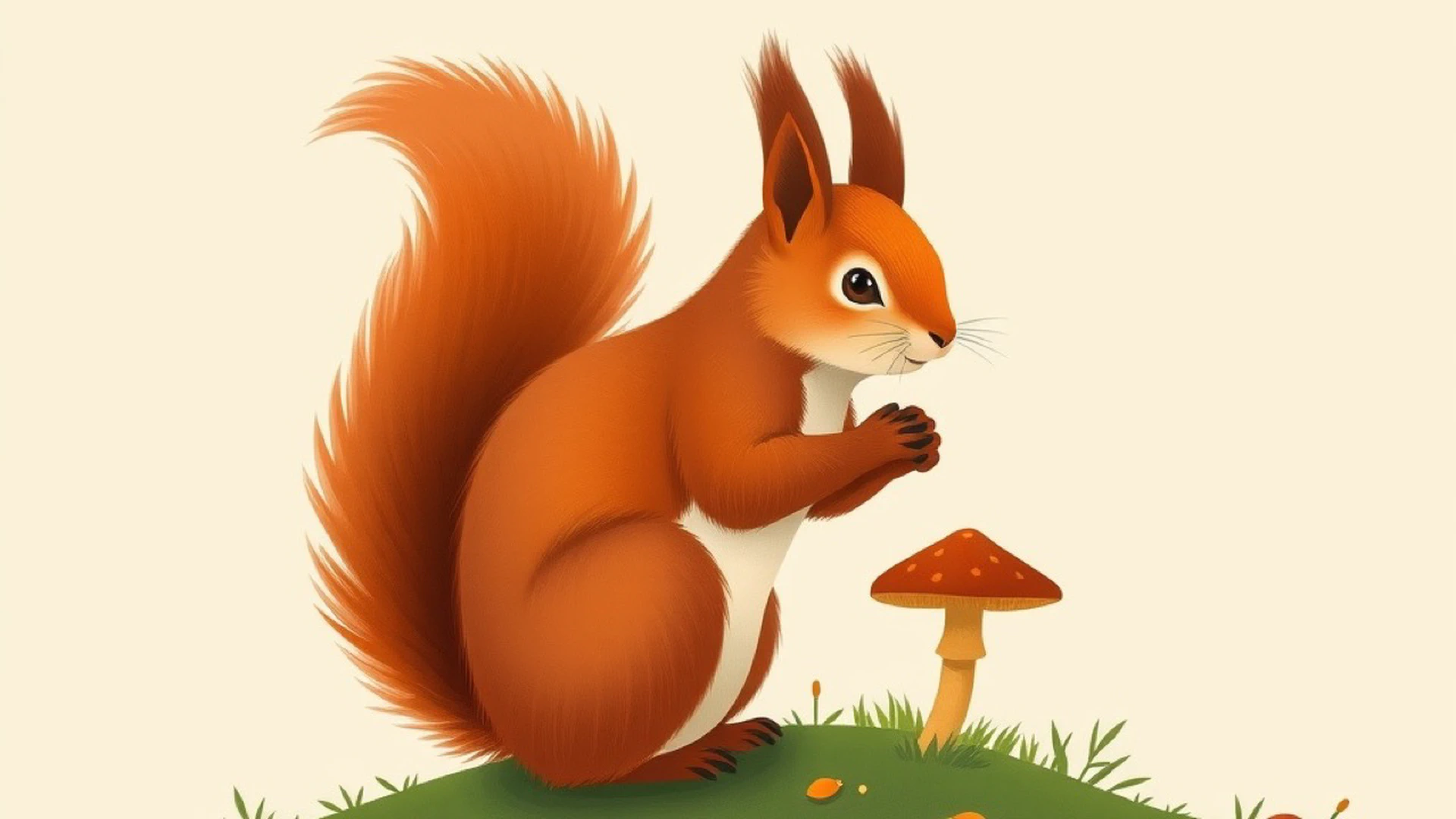
Squirrels eat death caps. Slugs graze them. Both walk away.
What squirrels actually do
Squirrels eat amanitas that would put an adult human into liver failure, and they do it as a matter of routine. Some species cache mushrooms in tree forks to dry them out, then come back through the winter to finish them, which puts the relationship closer to farming than to accident. Researchers working on Japanese squirrels reported in 2022 that the animals eat Amanita species considered poisonous with no sign of harm, and suggested the fungus gets something out of the arrangement too.
The mechanism is where I have to be honest with you. Enhanced liver detoxification, specialised gut bacteria, toxin-binding proteins in the gut: all of these have been proposed and none is settled. I don’t know why the squirrels get away with it, and at the moment neither does anyone else.
What the slug bite means
Slugs work through amanitas the same way, and molluscan digestion appears to handle compounds our livers cannot. A slug’s physiology has almost nothing in common with yours: it has no liver in the sense that matters here, and the route an amatoxin takes into a human liver cell, through one specific transport protein and then into the machinery that transcribes DNA, is a route that doesn’t exist in the animal that left the bite mark.
So the grazed edge tells you what a slug found worth eating. About what happens to a mammal, it says nothing.
The animal that proves the point
Take the same argument to a dog and it collapses.
Amanita species are the most commonly documented cause of fatal mushroom poisoning in dogs. A dog scavenges, a dog eats things off the forest floor without asking, and a dog weighs a fraction of what you weigh, so the dose that matters is much smaller. The pattern veterinary literature describes is the cruel one: some vomiting, then a day or two where the animal seems to have recovered, then severe liver failure at three or four days. Even with aggressive treatment the outlook is poor.
So within the same autumn wood, on the same afternoon, the same mushroom is a meal for a squirrel, a snack for a slug, and lethal to the labrador walking past. Tolerance is a property of the animal, never of the mushroom.
If you’re walking with a dog in Tuscany between September and November, this is the part I’d want you to carry out of the article. Autumn woods here are full of fruiting amanitas, and a dog that hoovers up something at the base of an oak has given you a problem you won’t see for days. If it happens, don’t wait for symptoms. Take what’s left of the mushroom, or one from the same spot, and get to a vet.

Come mushroom hunting in the Tuscan Apennines
A private day in the woods between Pistoia and Florence: identification in the field, the habitats each species needs, and time to photograph what you find. September to November, when the ground is actually producing.
Why tolerance never transfers
The habit of thinking a thing is either poisonous or not is the root of the error. Toxicity is a relationship between a molecule and a particular body, and the same molecule can be food for one animal and a death sentence for another.
You already accept this everywhere else. Chocolate is fine for you and dangerous for your dog, onions are dinner for you and a problem for a cat, and blackbirds strip yew berries off the hedges all winter without coming to any harm. Nobody watches a blackbird on a yew and concludes the berries are safe for a child. Put the same reasoning in a wood, with a mushroom in it, and it convinces people every single autumn.
The mushrooms that kill in Italy are mostly plain. Whitish, olive, brown, unremarkable, and often chewed, because the local wildlife has no objection to them at all. There is no signal in that. The only thing standing between a forager and a death cap is knowing the species, which takes work and cannot be shortcut by watching what the animals do.
The bite marks are a nice detail to notice on a walk. Notice them, then identify the mushroom anyway.
Attention!
While the content of this blog post is aimed at providing you with information as accurate as possible, it should be treated as what it is: simply a blog post on the internet.
Mushroom identification should only be performed by experts, as a mistake can lead to dire consequences. Attempting to identify a mushroom on your own, without prior experience, based solely on the content of this blog post is strongly discouraged.