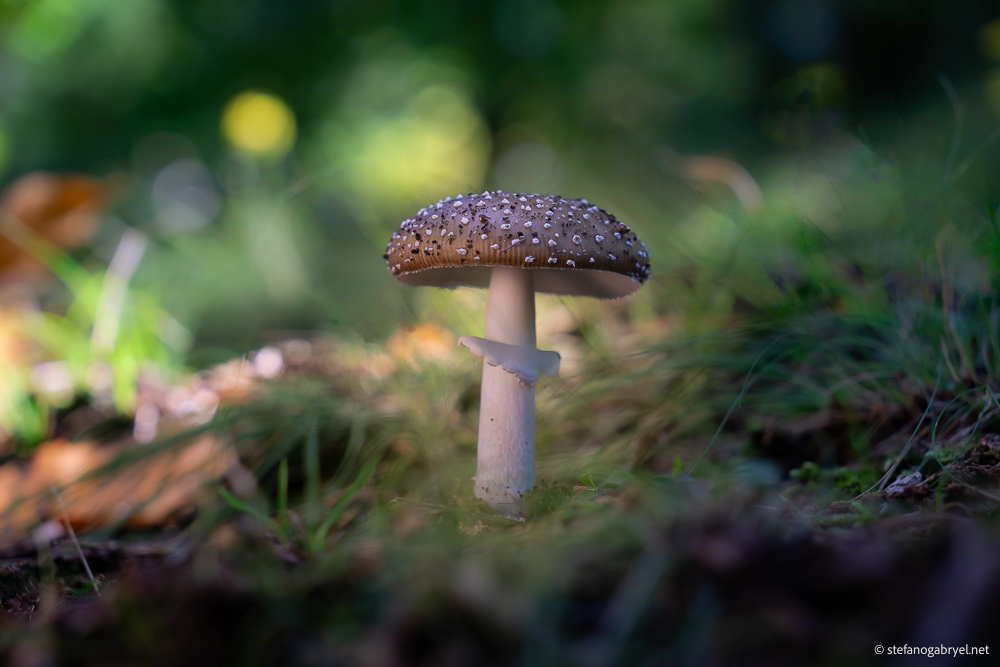
Walking through the beech and oak forests of the Appennino Pistoiese each autumn, I inevitably encounter one of nature’s most deceptive mushrooms: Amanita pantherina, the Panther Cap.
Its beauty is undeniable, but this is one species every forager must learn to identify and avoid.
Seasonality: Late Summer Through Autumn
In Tuscany, Amanita pantherina typically appears from August through November, with peak fruiting in September and October.
I’ve found the most specimens during those perfect post-rain days in early autumn, when the forest floor comes alive with fungi.
The timing often overlaps with edible mushroom season, which makes correct identification absolutely critical.
Where to Find Them: Acidic Soils Under Conifers and Broadleaves
Amanita pantherina is mycorrhizal, forming essential symbiotic relationships with tree roots.
In our region, I most commonly find them beneath beech, oak, and occasionally pine.
Unlike some mushrooms that prefer neutral soils, the Panther Cap thrives in acidic conditions.
When you spot ferns, heather, or bilberry plants in a forest area, you’re looking at natural indicators of the acidic soil this Amanita loves.
The mycorrhizal nature means this mushroom cannot grow without its tree partners—they exchange nutrients in a relationship millions of years old.
The Critical Details: How to Recognize It
The Panther Cap earns its name from the distinctive pattern on its brown cap, covered in small white warts arranged almost geometrically.
Here’s what separates it from safer look-alikes: the ring on the stem is smooth and delicate, not grooved.
The bulbous base features distinct rings or bands of tissue, never a sack-like volva.
This distinction has saved lives.
Many confuse it with Amanita rubescens (the Blusher), which is edible when cooked. The Blusher, however, has a grooved ring and flesh that reddens when damaged—hence its name.
The Danger: Powerful Neurotoxins
Amanita pantherina contains ibotenic acid and muscimol, potent neurotoxins that affect the central nervous system.
Symptoms appear within thirty minutes to two hours: confusion, visual disturbances, loss of coordination, and in severe cases, seizures.
Unlike its deadly cousin Amanita phalloides, the Panther Cap rarely kills, but the experience is terrifying and requires immediate medical attention.
A Mycological Curiosity
Here’s a fascinating detail: despite its toxicity to humans, deer and other wildlife consume Amanita pantherina with apparent enjoyment.
Some researchers believe they may seek out the psychoactive effects, though this remains debated.
What’s certain is that animal consumption helps distribute the spores, making the Panther Cap an important part of forest ecology even if it’s dangerous to us.
When photographing or observing this species during our nature walks, I always emphasize the same principle: admire with your eyes and camera, never with your hands or mouth.
Ready to move from photos to field identification?
Experience these fascinating fungi firsthand on a guided autumn hike through Tuscan woodlands. Learn professional identification techniques, understand ecosystem roles, and capture your own stunning mushroom photography.
Attention!
While the content of this blog post is aimed at providing you with information as accurate as possible, it should be treated as what it is: simply a blog post on the internet.
Mushroom identification should only be performed by experts, as a mistake can lead to dire consequences. Attempting to identify a mushroom on your own, without prior experience, based solely on the content of this blog post is strongly discouraged.
Explore Hidden Tuscany
Guided hiking experiences combining expert trail knowledge, professional photography, and wilderness mindfulness.
Latest posts
 5 March 2026
Salamandra Salamandra: Fire Salamander in Tuscany
5 March 2026
Salamandra Salamandra: Fire Salamander in Tuscany 5 March 2026
Pisa: Base for Exploring Tuscany's Hidden Nature
5 March 2026
Pisa: Base for Exploring Tuscany's Hidden Nature 5 March 2026
Montecatini Terme: Base for Exploring Tuscany's Nature
5 March 2026
Montecatini Terme: Base for Exploring Tuscany's Nature 4 March 2026
Galium Aparine: Cleavers in Tuscan Hedgerows
4 March 2026
Galium Aparine: Cleavers in Tuscan Hedgerows 3 March 2026
Umbilicus Rupestris: Wall Pennywort in Tuscany
3 March 2026
Umbilicus Rupestris: Wall Pennywort in Tuscany