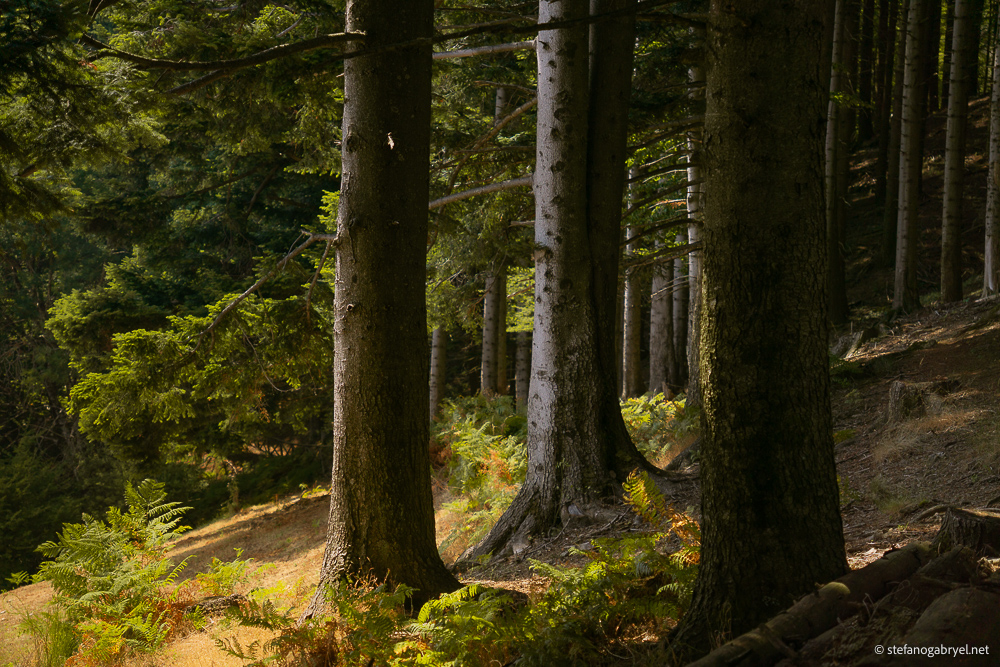
Every mountain guide has a place where they return to find themselves. For me, that place is Acquerino.
When life becomes complicated—when the noise of modern existence grows too loud—I drive the winding road from Pistoia into these mountains. Sometimes alone, sometimes before dawn, always knowing that within hours I’ll feel whole again. There’s something profoundly healing about walking for kilometers without encountering another soul, surrounded only by ancient forests and the constant music of mountain streams.
This is the Tuscany that tourists never see.
Two Reserves, One Wilderness
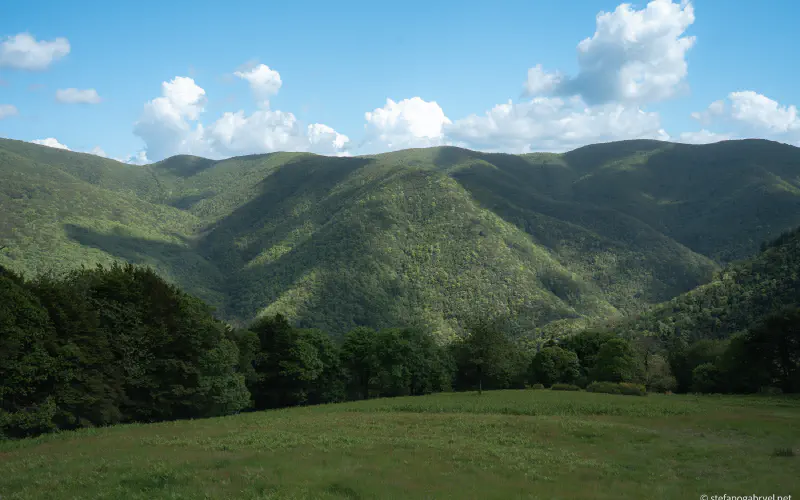
Technically, there are two protected areas here: the Riserva Naturale Acquerino-Cantagallo (1,867 hectares, established 1998) and the Riserva Naturale Biogenetica Acquerino (242.54 hectares, established 1977). But on the ground, they share a border and form a single, continuous piece of protected mountain wilderness in the heart of the Tuscan-Emilian Apennines.
The Biogenetic Reserve was specifically created to preserve and produce seeds of Pseudotsuga menziesii—Douglas fir—an American species that has thrived here since reforestation efforts began in the 1930s. Walking through these stands of towering Douglas firs, particularly at dawn when golden light filters through the canopy like something from a film, ranks among the most ethereal experiences I can offer clients.
The larger Acquerino-Cantagallo reserve encompasses everything from dense beech and chestnut forests to high mountain meadows, all dominated by Monte Bucciana (1,224 meters) and fed by the springs of the Bisenzio River.
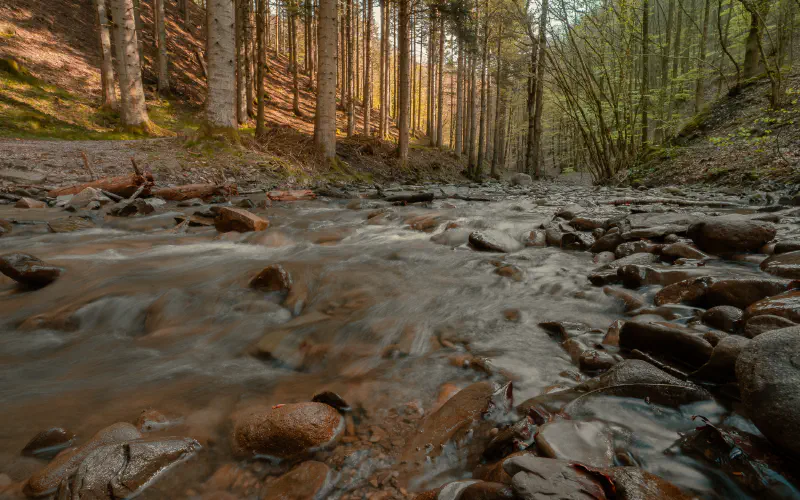
Guided private hike in Riserva Acquerino. Trek the Red Deer Kingdom near Florence & Pistoia. Certified local guide. Book your mountain tour today!
A Landscape Shaped by Human Hands, Reclaimed by Nature
These mountains weren’t always forested. For centuries, they supported human communities through pascolo (grazing) and charcoal production, with beech trees harvested in a careful rotation that provided fuel while maintaining the forest. You can still find the stone ruins of cascine (farmhouses), cannicciaie (chestnut-drying structures), and water-powered mills scattered throughout the reserves—silent witnesses to a way of life that ended only in the mid-20th century.
The semi-abandoned village of Luogomano, perched at the edge of the reserve with sweeping views across the protected area, tells this story clearly. By the 1950s and 60s, mountain depopulation had left these communities with only elderly residents. It was then that the forestry administration began acquiring land, allowing nature to reclaim what humans had released.
Today, you can walk for hours through sections where nature has erased nearly every trace of human presence beyond the trail itself. For someone from the developed world, where human activity is visible everywhere, this experience of true wilderness is increasingly rare—and increasingly valuable.
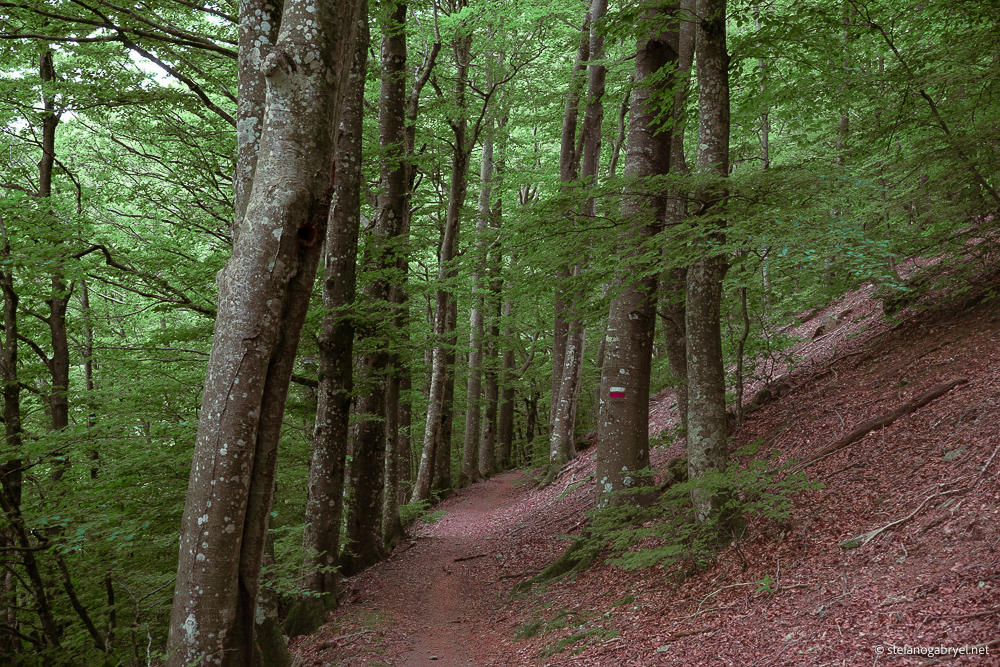
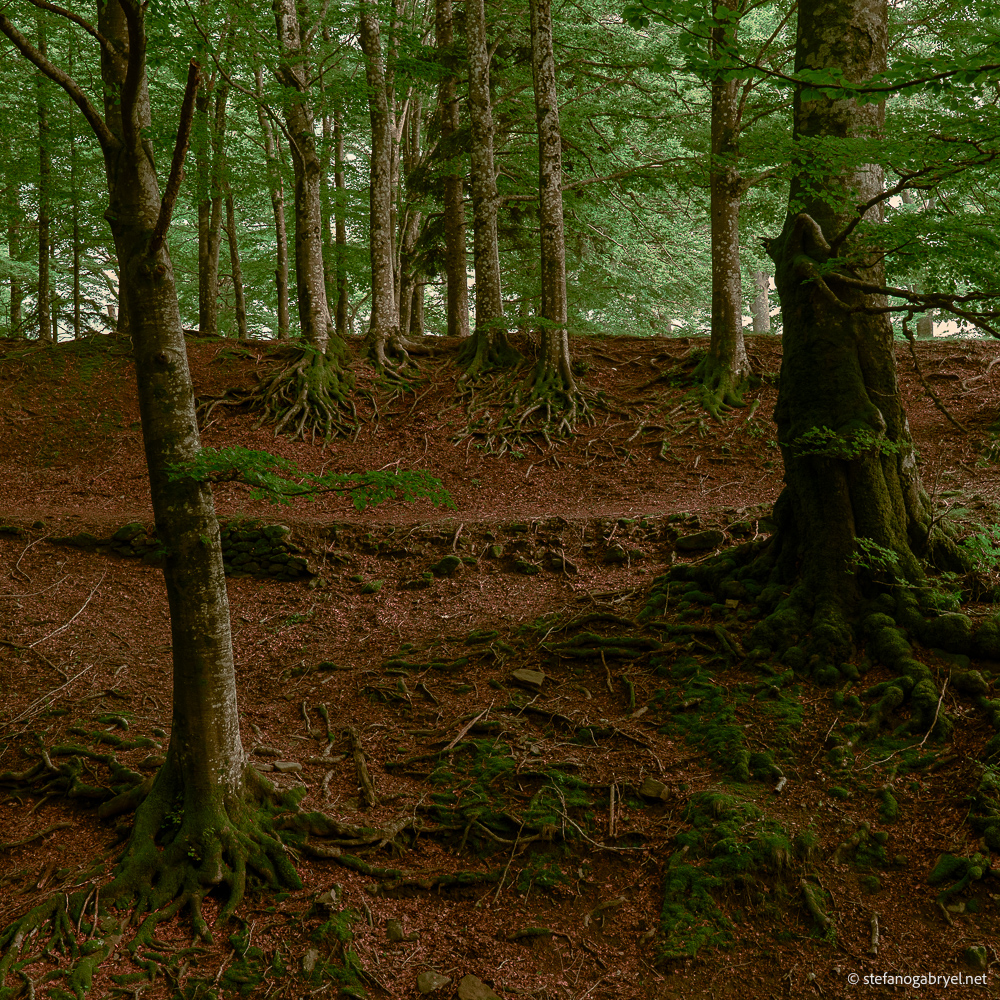
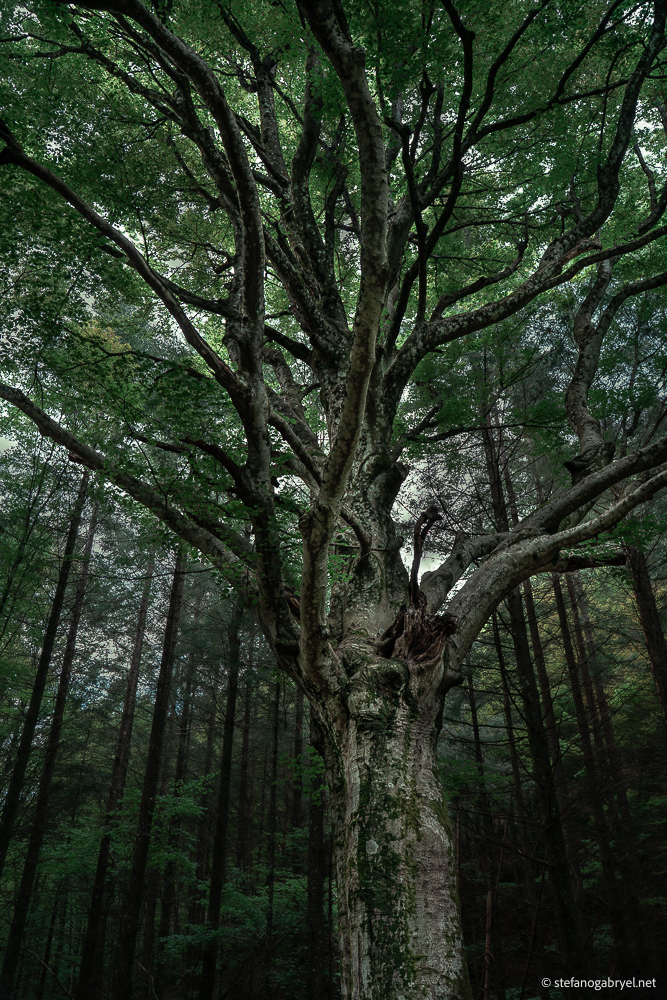
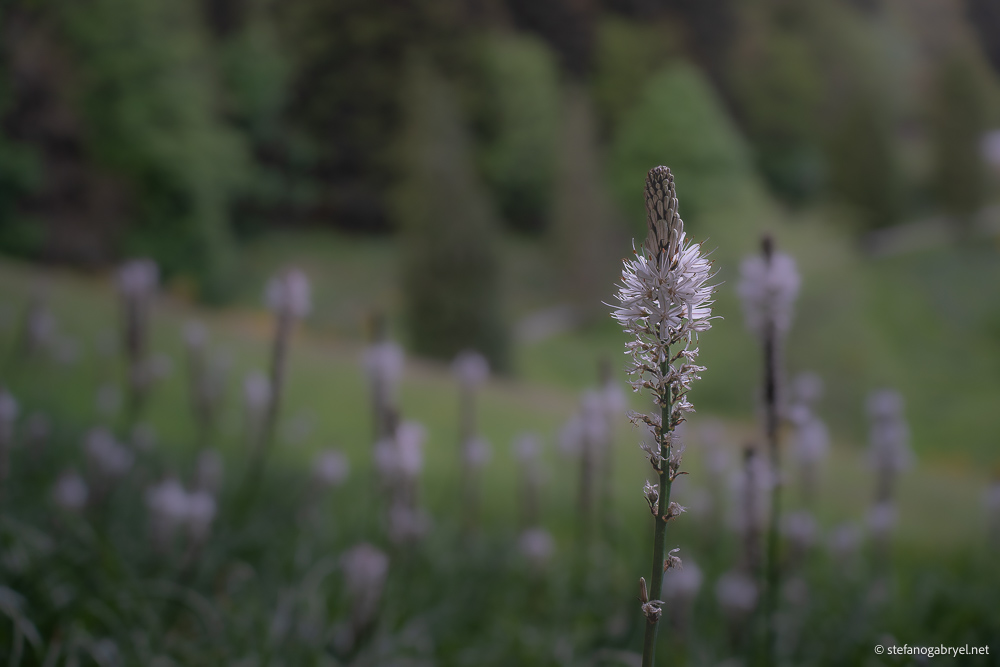
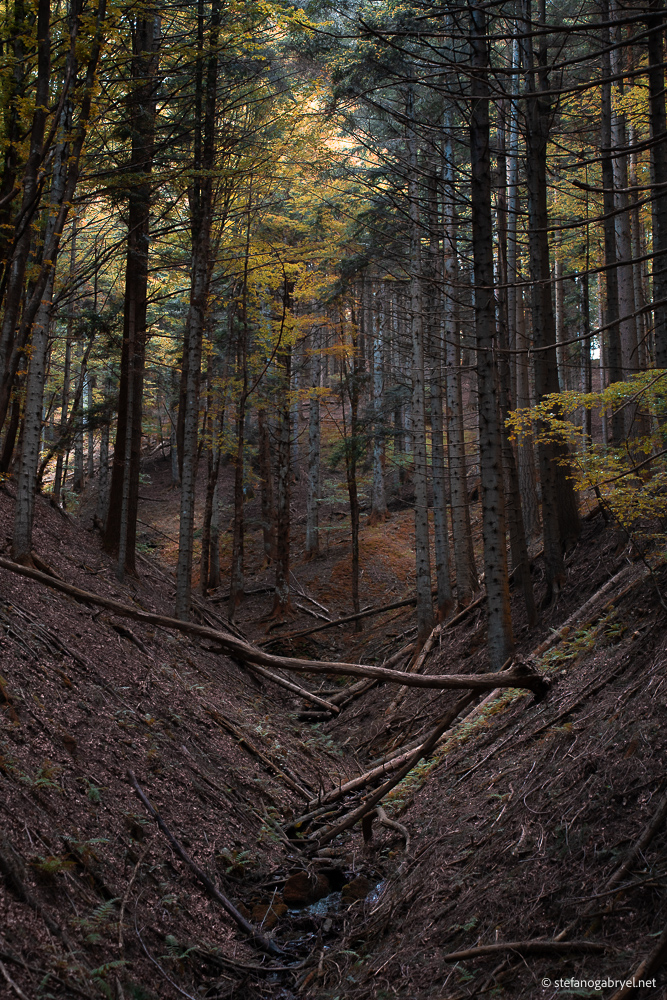
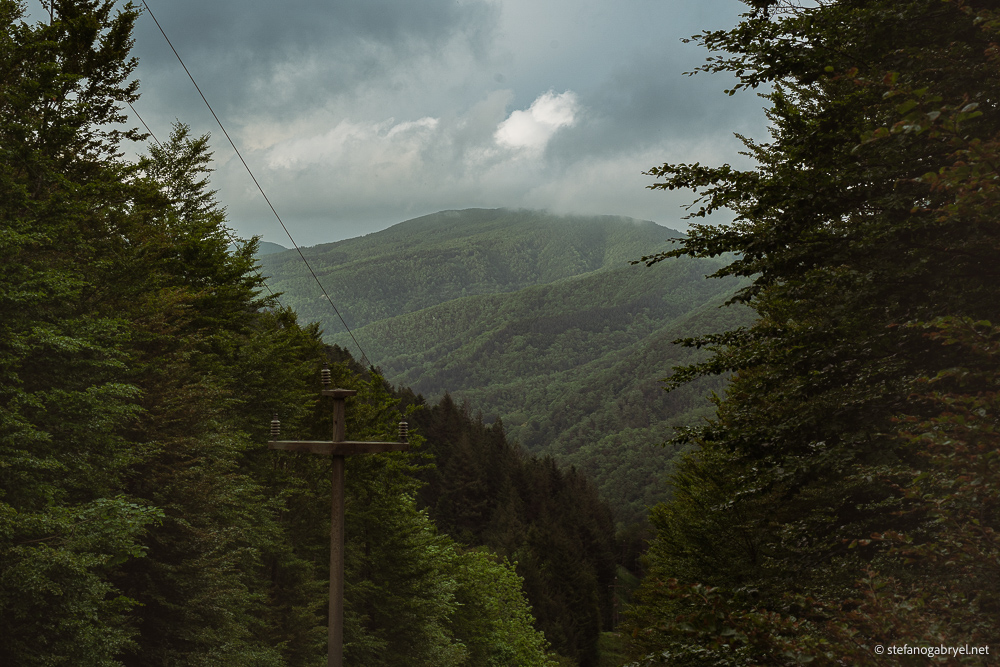
All gallery images are original photographs taken by me.
Water Everywhere: The Name Tells the Story
“Acquerino” derives from acqua—water—and once you’re here, you understand why. The territory is laced with countless streams and torrents. The Fosso delle Barbe and Fosso del Trogola give birth to the Bisenzio River. The Limentra stream cascades through gorges with such clarity and volume that its sound becomes the soundtrack to every hike.
On any given expedition, you’ll cross multiple water sources, walk alongside streams, and hear the distant rush of unseen waterfalls. This abundance creates ideal conditions for amphibians like the spotted salamander and the spectacled salamander—species that thrive in these unpolluted waters.
For photographers, these streams offer endless compositions, particularly when morning light catches the mist rising from cold water meeting warmer air.
Wildlife: From Dawn Encounters to Autumn Bramiti
I’ve witnessed scenes here that seem impossible so close to cities like Pistoia and Prato. A group of sixteen wild boar—adults and young—crossing a forest clearing at dawn. A magnificent stag standing motionless in golden light. Badgers, foxes, and birds of prey going about their lives, unaware of my silent observation.
The reserve is famous throughout Italy for its deer population, particularly the exceptional size and antler development of mature stags. In autumn, during the rut, you can hear their bramiti (calls) echoing through the valleys—a sound that connects you to something ancient and wild.
Roe deer, fallow deer, martens, weasels, and a rich bird population complete the fauna inventory. But it’s the deer that serve as the reserve’s symbol, and for good reason. The population here is studied nationally for its complex social structure and the sheer magnificence of individual specimens.
For Families and Hardcore Hikers Alike
One question I’m often asked: “Is Acquerino only for experienced hikers?”
Absolutely not. The beauty of this reserve system is its diversity of terrain and trail difficulty. Families with children can explore well-maintained strade carrecce (unpaved roads) that offer gentle grades and reliable footing while still providing access to spectacular forest environments and mountain views.
For those seeking challenge, there are steep ascents, technical descents, and routes that demand both fitness and mountain experience. I can design expeditions ranging from leisurely three-hour nature walks to demanding full-day traverses covering serious elevation gain.
What matters is matching the route to your abilities and goals—something a guide who knows every kilometer of this terrain can ensure.
Book a private guided hike in Riserva Acquerino-Cantagallo. Expert trekking tours from Pistoia, Prato & Florence. Escape the crowds—reserve your tour!
Seasons: A Year-Round Sanctuary
Winter brings a particular gift: accessibility. Unlike higher Alpine regions, Acquerino often remains snow-free or sees only light accumulation. This means you can experience genuine mountain hiking in winter without requiring specialized equipment or winter mountaineering skills. The solitude is absolute—I’ve had entire days without seeing another person. The bare trees reveal views obscured in summer, and the silence is profound.
Spring transforms the meadows and clearings. Orchids emerge alongside Asphodelus albus—white asphodel—whose tall spikes of star-shaped flowers create scenes of ethereal beauty that few visitors to Tuscany ever witness. The timing must be precise, but when you catch the peak bloom, the photographs and memories are unforgettable.
Summer offers the full density of forest cover, with chestnut and beech canopies providing natural air conditioning even on hot days. Streams run cold and clear, perfect for cooling off during a midday rest.
Autumn is mushroom season—and this brings both opportunity and crowding. The biodiversity that makes Acquerino famous among mycologists also attracts foragers from Pistoia, Prato, and beyond. On peak weekends, you’ll find cars parked at every roadside pull-off and people with baskets combing the forest for porcini. It can feel surreal, almost urban, despite the wild setting.
This is precisely why local knowledge matters. I know the areas that remain quiet even during mushroom fever, and more importantly, I can time our expeditions to avoid the crowds while still accessing the incredible fungal diversity.
My Mycological Laboratory
Over years of exploring Acquerino, I’ve honed my abilities as a mycologist in these forests. This isn’t theoretical knowledge from books—though I’ve read extensively, including David Arora’s comprehensive Mushrooms Demystified and the authoritative Collins Fungi Guide. This is practical, boots-on-the-ground experience accumulated through hundreds of hours observing how different species interact with specific host trees, soil conditions, and microclimates.
The Douglas fir groves harbor species rarely found elsewhere in Tuscany. The old-growth beech forests support different fungal communities than younger stands. The chestnut woods provide yet another ecological niche. This diversity has allowed me to photograph and study an extraordinary range of species:
Porcini (Boletus edulis) in their classic mycorrhizal relationship with beech and chestnut—the holy grail for most foragers.
Parasol mushrooms (Macrolepiota procera) standing tall in clearings, their scaled caps unmistakable.
Amanita muscaria, the iconic fly agaric with its red cap and white spots—toxic but magnificent, particularly when photographed emerging from moss.
Shaggy mane (Coprinus comatus), those delicate inky caps that must be photographed and consumed within hours of emergence.
Lactarius deliciosus (Lactarius deliciosus), bleeding orange latex when cut, thriving under conifers.
Calocera viscosa, the yellow stagshorn fungus, growing on decaying conifer wood with an almost otherworldly appearance.
Mucidula mucida, that translucent, gelatinous beauty found exclusively on beech.
Sparassis crispa, the wood cauliflower fungus, resembling a brain or sea sponge at the base of conifers.
Chanterelles (Cantharellus cibarius), those golden treasures that reward patient observers.
Fomes fomentarius, the tinder fungus, those hoof-shaped brackets on dead beech that our ancestors used to start fires.
Panther cap (Amanita pantherina), another toxic Amanita that demands respect and careful identification.
And countless others. Each species teaches something about the forest’s ecology, about reading landscapes, about the intricate relationships between trees, soil, climate, and fungi.
The Douglas fir deserves special mention. This American import, planted extensively during the reforestation campaigns, has become an established part of the ecosystem. Walking through these groves—some trees now approaching a century old—feels different from hiking through native beech or chestnut forests. The light quality changes, the understory shifts, and certain fungal species appear that you won’t find under European trees. It’s a fascinating case study in how introduced species can integrate into existing ecosystems.
The Guide’s Advantage: Navigation Through Experience
I’ve explored Acquerino so extensively that I can navigate many sections without a map. This isn’t bravado—it’s the result of years spent testing routes, getting deliberately “lost” to understand the terrain, and building a mental database of landmarks, drainages, and connections that no GPS can replicate.
This intimate knowledge matters enormously in mountain environments. Weather can change rapidly in the Apennines. Fog can descend and erase visibility. A wrong turn can add hours to a day already running long. In winter, when temperatures drop below freezing and daylight is limited, navigation errors can become genuinely dangerous.
When you hike with me, you benefit from this accumulated experience. You’re not gambling on following a downloaded GPX track or hoping that trail markers haven’t been vandalized. You’re walking with someone who knows where the trail fords the stream, where the steep section eases, where the best lunch spot catches midday sun, and—critically—how to adapt the plan if conditions demand it.
This is the value a professional guide brings, particularly when you’re on vacation with limited time. You want to maximize the experience, see the highlights, and return safely with incredible memories and photographs. You don’t want to spend your precious days backtracking from dead-ends or worrying about whether you can complete the route before dark.
An Invitation Into the Wild
I return to Acquerino when I need peace. The wildness here isn’t hostile—it doesn’t trigger fear even when I’m hiking alone at night. It’s simply indifferent to human concerns, operating on its own rhythms of growth, decay, and renewal.
There’s profound comfort in that indifference.
If you’re seeking an authentic mountain experience in Tuscany—something beyond the postcard landscapes of rolling hills and cypress-lined roads—if you want to walk for hours without encountering signs of human presence, to test yourself against real terrain, to photograph fungi that most people never see, to hear a stag’s call echoing through a mountain valley, or simply to find the kind of peace that only true wilderness provides—then I invite you to experience Acquerino with me.
Whether you’re a family wanting to introduce children to authentic nature, a photographer hunting for unique subjects, a mushroom enthusiast ready to learn from someone who’s spent years studying these forests, or simply someone who needs to remember what it feels like to be small in a landscape that doesn’t care about your deadlines and anxieties—there’s a place for you here.
I’ve designed expeditions for all skill levels and interests. Some focus on photography, with carefully timed departures to catch optimal light. Others emphasize mycology, scheduled around seasonal fruiting patterns. Many simply follow the most beautiful routes through the most spectacular terrain, customized to your fitness and interests.
The mountains will still be here tomorrow. But your time in Tuscany is finite.
Let me show you what most visitors never see.
Experience True Tuscan Wilderness
Ready to explore Acquerino’s hidden forests, encounter wildlife, and discover fungi that most people only see in books? Book a customized hiking expedition tailored to your interests and abilities—from gentle family walks to challenging mountain traverses.

or head to the contact page
Explore Hidden Tuscany
Guided hiking experiences combining expert trail knowledge, professional photography, and wilderness mindfulness.
Latest posts
 4 March 2026
Galium Aparine: Cleavers in Tuscan Hedgerows
4 March 2026
Galium Aparine: Cleavers in Tuscan Hedgerows 3 March 2026
Umbilicus Rupestris: Wall Pennywort in Tuscany
3 March 2026
Umbilicus Rupestris: Wall Pennywort in Tuscany 3 March 2026
Laurus Nobilis: Bay Laurel in Tuscan Landscapes
3 March 2026
Laurus Nobilis: Bay Laurel in Tuscan Landscapes 2 March 2026
Guided Tours for Exploring Marble Quarries in Apuan Alps
2 March 2026
Guided Tours for Exploring Marble Quarries in Apuan Alps 26 February 2026
Photographing Nottolini Aqueduct: Light & Geometry
26 February 2026
Photographing Nottolini Aqueduct: Light & Geometry